Cybersecurity
August 19, 2026
Compare EDR, XDR, and MDR solutions in this guide to endpoint detection & response, featuring WhiteDog's unified platform with 24/7 SOC and incident response.
Effective enterprise cybersecurity requires looking far beyond isolated tools or single layers of defense. For business and IT leaders, the real challenge is strategic coordination: Can your organization continuously assess exposure, detect coordinated threats across disparate environments, and act decisively before an incident causes business disruption? A comprehensive cybersecurity framework connects signals across identities, endpoints, networks, and cloud workloads to deliver actionable business context.
In modern hybrid enterprises, where data and users span diverse platforms, cybersecurity must be managed as an integrated ecosystem rather than a collection of disconnected point products. WhiteDog complements existing Microsoft security investments. Its Delta 360 (Δ360), built on WhiteDog's Open XDR framework, adds a unified layer across Microsoft and third-party tools for better visibility, correlation, hardening, exposure management, detection, and response. WhiteDog's continuous attack surface management and 24/7 security operations build on correlated intelligence to help teams identify threats earlier and respond with confidence.
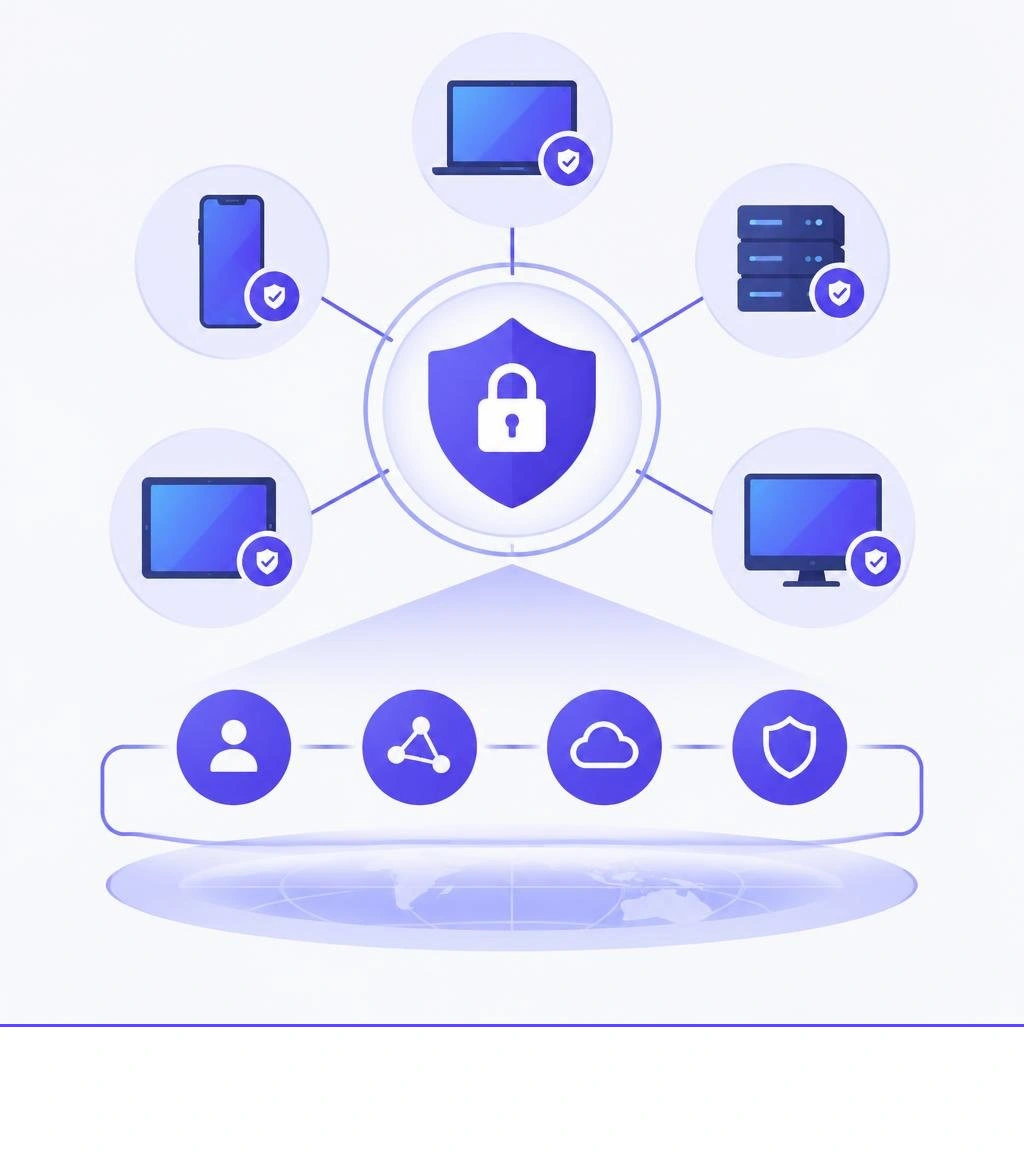
As enterprise infrastructure shifts to decentralized cloud environments and hybrid workforces, traditional perimeter-based security models no longer suffice. Organizations now operate across an expansive attack surface comprising cloud services, SaaS platforms, remote identities, and distributed hardware.
Treating any single security layer in isolation creates dangerous operational blind spots. Modern cyber intrusions rarely stay confined to one system; attackers frequently leverage an initial entry point to harvest credentials, escalate privileges, and pivot toward critical enterprise assets. Understanding why endpoint security isn't enough on its own highlights why enterprise resilience demands broader threat visibility across the entire IT estate.
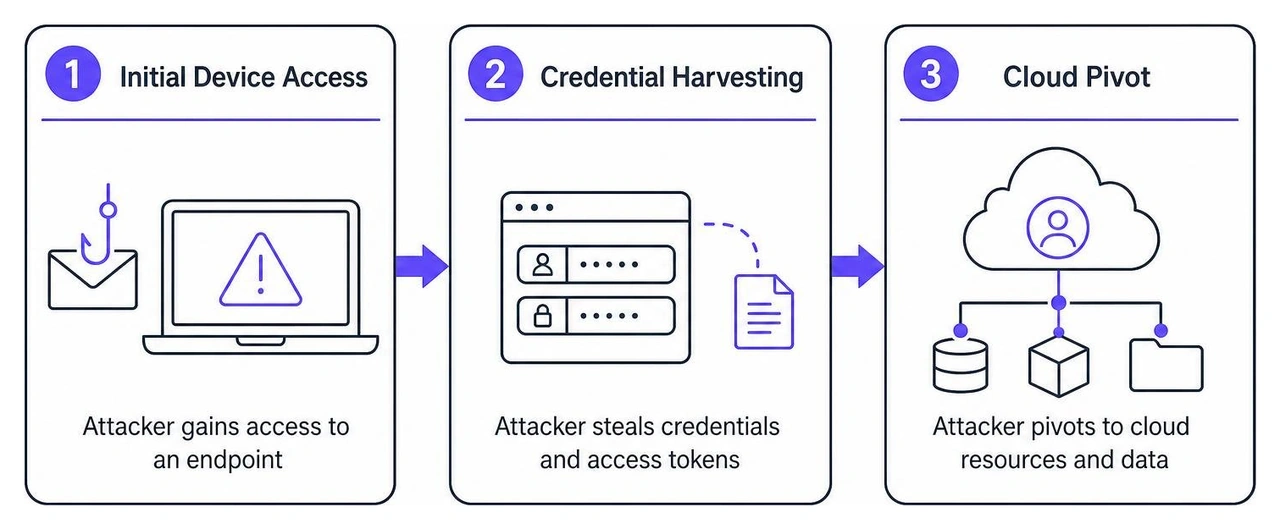
When evaluating the anatomy of a cyber attack, security leaders recognize that actionable defense requires correlating host activity, identity behaviors, and network communications across the enterprise.
A resilient enterprise strategy balances host-level protections with identity governance and network observability, creating multiple interlocking layers of defense:
| Security Domain | Core Focus | Observability Focus | Strategic Value |
|---|---|---|---|
| Host & Device Defense | System integrity and policy enforcement | Host behavior and system state changes | Validates baseline compliance and intercepts malicious actions on hosts |
| Identity & Access | Authentication and privilege governance | User activity and authentication patterns | Enforces least privilege and prevents credential abuse |
| Network Observability | Communication pathways and traffic flows | Data transit and external connection flows | Detects unauthorized lateral movement and command communications |
By building critical multi-layered defenses, organizations eliminate visibility gaps and ensure that an anomaly in one environment is immediately corroborated by signals from another.
As organizations accelerate cloud adoption, security programs must also evolve to protect diverse cloud resources, managed services, and modern application stacks. Incorporating comprehensive cloud security strategies allows enterprises to maintain governance without sacrificing agility. While centralized cloud-based endpoint management helps enforce consistent policy across distributed systems, modern cybersecurity programs must continuously evaluate cloud configurations, API integrations, and access permissions.

Building an effective cybersecurity program requires establishing structured architectural pillars. Organizations often struggle with tool proliferation, accumulating standalone products that create operational friction and alert fatigue. Avoiding security tool sprawl begins by anchoring your strategy in strong operational hygiene and proactive governance.
Advanced analytics cannot compensate for gaps in baseline hygiene. Enterprise teams should maintain consistent security controls across all business systems, as highlighted in best practices for establishing baseline endpoint security defenses:
Beyond administrative baselines, enterprise platforms must protect sensitive assets and intellectual property throughout their lifecycle. Data protection policies, combined with behavioral monitoring, help prevent unauthorized exfiltration and detect suspicious operational patterns across environments. Implementing these unified controls is critical for driving measurable enterprise risk reduction and satisfying regulatory compliance requirements.
Sophisticated cyber threats often bypass traditional static defenses by leveraging legitimate administrative tools and stolen credentials. Navigating these risks requires integrated detection frameworks and continuous operational monitoring, as detailed in modern threat detection frameworks.
Traditional signature-based tools flag known threats, but modern attacks demand proactive visibility across multiple domains. Incorporating modern endpoint detection and response capabilities provides valuable host context as part of a balanced program, while understanding strategic EDR architecture helps security leaders fit host visibility into a broader enterprise monitoring ecosystem.
Connecting these insights across cloud, network, and identity systems through Open XDR frameworks allows security teams to correlate disjointed events into meaningful incident timelines, accelerating the overall speed of enterprise defense.
Proactive security requires continuously assessing where your organization is most vulnerable before adversaries exploit those weaknesses. Continuous threat exposure management identifies misconfigurations, unpatched vulnerabilities, and overprivileged accounts across your environment, allowing teams to harden defenses proactively and reduce the likelihood of successful attacks.
The shift toward hybrid work environments makes enterprise cybersecurity inseparable from identity governance and access control. Employees connect from various locations and networks, requiring modern, policy-driven protection frameworks.
Regulatory and security standards emphasize that every access request must be verified continuously. Enterprises must mandate robust authentication baselines and conditional access policies, aligning directly with the principles of zero trust architecture.
Managing enterprise security across diverse platforms requires balancing strong governance against user productivity. Layering redundant point solutions often degrades system performance and complicates operational workflows. Overcoming security tool traps and maturity plateaus requires unified platforms that provide comprehensive visibility without overwhelming security teams or end users.
As mobile and remote access becomes standard across the enterprise, security architectures must evaluate user risk, device health, and application context before granting access. Transitioning to modern Zero Trust Network Access (ZTNA) ensures users connect only to authorized applications, replacing broad network access with granular, policy-based protection.
An enterprise cybersecurity framework shifts an organization from managing isolated point tools to operating an integrated defense strategy. By correlating telemetry across endpoints, identities, cloud platforms, and networks, security teams gain end-to-end visibility into potential attack paths and can prioritize remediation based on actual business risk.
Zero trust provides the foundational governing principle: never trust, always verify. It requires continuous validation of identity, device compliance, and access permissions for every request, preventing lateral movement and minimizing the impact of potential credential theft.
Organizations reduce complexity by integrating and consolidating controls through unified visibility frameworks rather than purchasing disconnected point tools. This approach simplifies operations, reduces alert fatigue, and helps teams maximize their existing security investments.
Cybersecurity is a continuous operational discipline that extends across people, processes, and technology. Sustainable resilience comes from integrating signals across identity directories, cloud workloads, endpoints, email systems, and networks into a unified defense architecture.
WhiteDog complements and extends existing Microsoft Security investments, helping organizations maximize their return on Microsoft 365 licensing. Built on WhiteDog's Open XDR framework, Delta 360 (Δ360) adds a unified operational and security layer across Microsoft and third-party tools to improve correlation, visibility, security hardening, exposure management, and threat response.
By combining continuous attack surface management and 24/7 security operations with WhiteDog's top-tier Delta Detection & Response (DDR) offering, enterprise teams can transform disconnected security data into correlated intelligence. Discover how to enhance your defense posture by exploring unified enterprise security solutions.

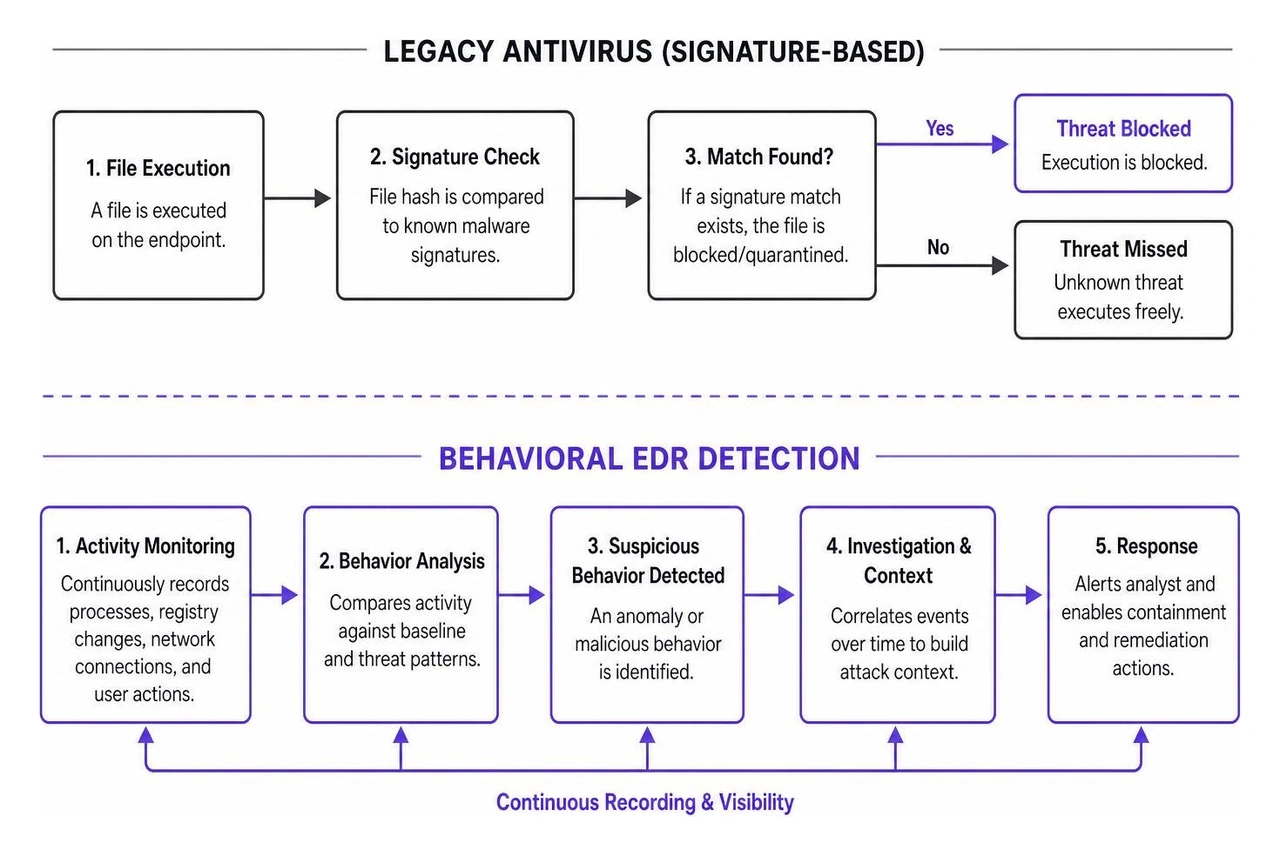
Compare EDR, XDR, and MDR solutions in this guide to endpoint detection & response, featuring WhiteDog's unified platform with 24/7 SOC and incident response.
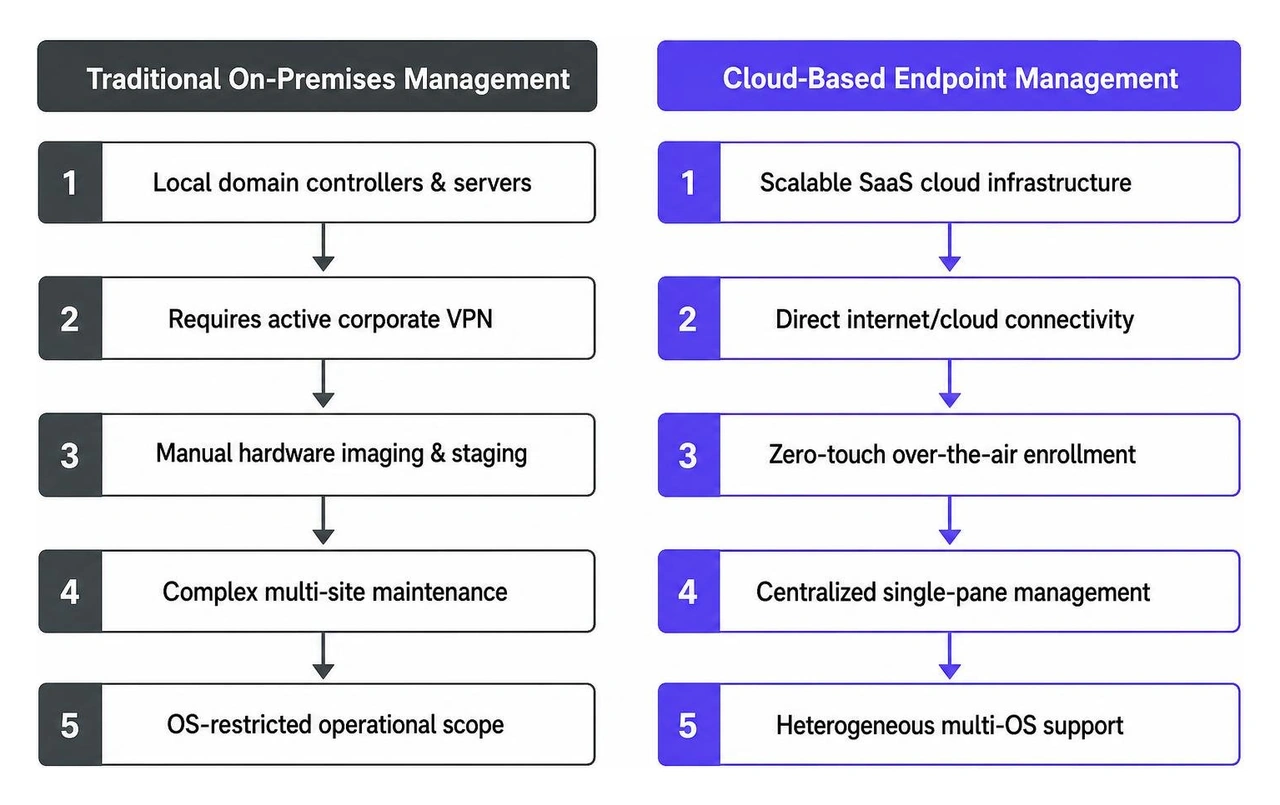
Compare cloud based endpoint management options with this checklist covering security, remote workforce support, and operational efficiency.

Compare MSP MDR detection services to reduce dwell time and boost efficiency with a unified 24/7 SOC platform.
Compare MSP MDR platform architecture vs. tool sprawl to reduce risk, improve detection, and scale your security operations.

The Ultimate Guide to Cybersecurity for Small Business - Learn about cyber security for small business

Beginner's Guide to IoT DDoS Risks and Security - Learn about internet of things ddos