Cybersecurity
September 4, 2026
Learn the five pillars of MSP risk reduction to secure operations, manage vendor risk, and build defensible compliance.
MSP email gateway security is the layer of protection that filters, inspects, and blocks malicious email traffic before it reaches your clients' inboxes — and in 2026, getting it wrong is no longer an option.
Here is what you need to know up front:
The core problem is this: most MSPs are still running email gateways built for a world that no longer exists. Static filters, signature-based detection, and "set-and-forget" configurations were never designed to stop AI-generated phishing, deepfake impersonation, or QR code attacks. They create noise, burn out your team, and leave real threats sitting in inboxes.
This guide walks you through what a modern email security stack actually looks like, emphasizing modular integration over "rip and replace" tactics, and how to evaluate whether your current solution is protecting clients — or just creating the illusion of protection.
I'm Shahin Pirooz, technology executive at WhiteDog Cyber, and I've spent over two decades building managed security and cloud services — including designing the MSP email gateway security architectures that underpin the subscription computing and CSP models many providers rely on today. What follows is a no-nonsense breakdown of where most MSP email security stacks fall short and how to fix it.

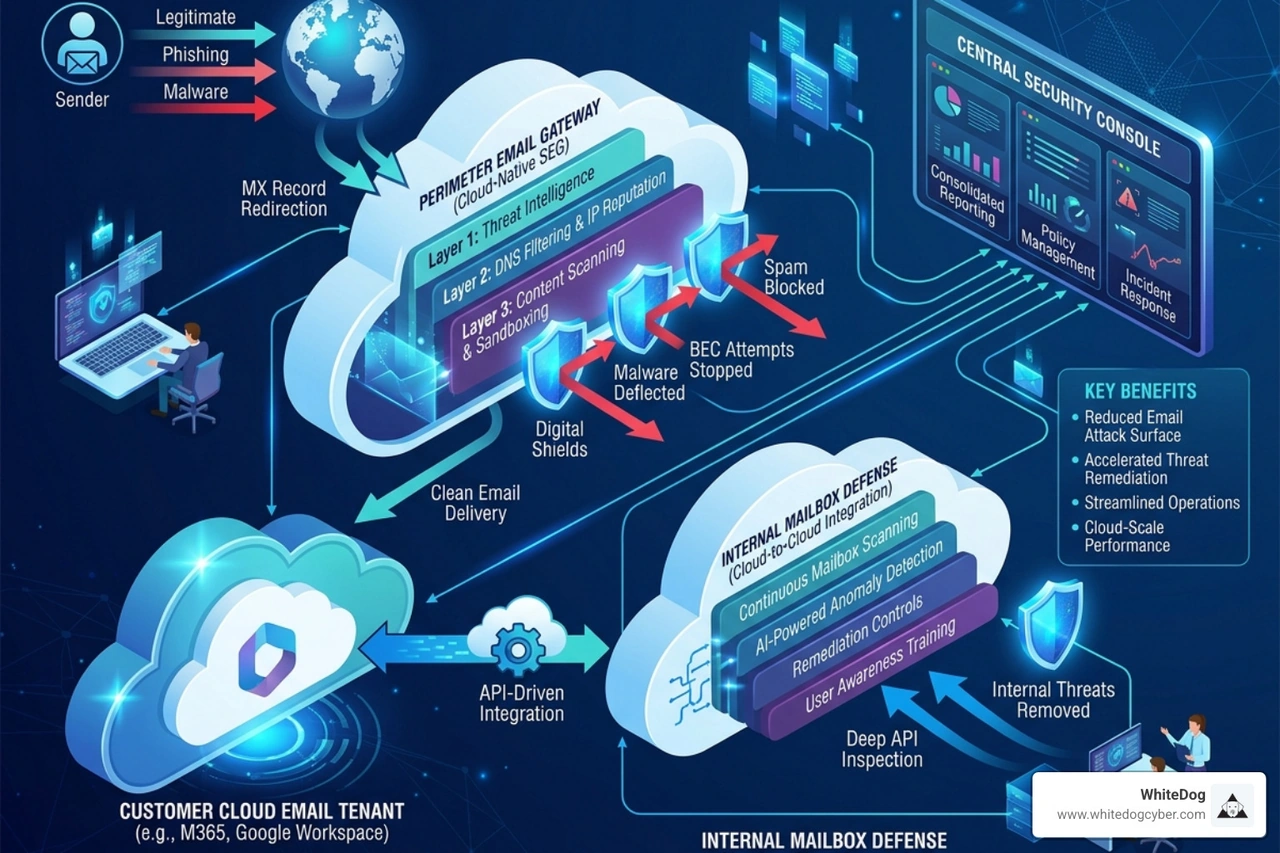
The landscape of MSP email gateway security has shifted dramatically. In the early days, a Secure Email Gateway (SEG) was essentially a "black box" sitting at the edge of the network. You pointed your MX records to it, and it scrubbed the junk. While that worked for the spam-filled days of 2010, the cloud-native world of 2026 demands a more integrated approach.
Today, we see a convergence of traditional proxy-based gateways and API-driven ingestion. While MX record redirection remains a powerful tool for pre-delivery blocking—stopping the "noise" before it even touches the mail server—it is no longer sufficient on its own. Modern architectures now leverage cloud-to-cloud integrations that allow security platforms to see what is happening inside the mailbox environment, not just what is passing through the front door.
Legacy gateways are failing because they rely on "static" defenses. They look for known bad IP addresses, recognized malware signatures, or specific keywords. But in 2026, attackers don't reuse signatures. They use AI to spin up unique, one-time-use infrastructure for every single attack.
If your current MSP email gateway security solution is "set-and-forget," it’s likely a liability. These tools often provide a false sense of security while zero-day threats—attacks that have never been seen before—slip through the cracks. True protection requires a system that doesn't just look for "known bad" but understands "known good" behavior and flags everything else as an anomaly. This doesn't require a "rip and replace" of your entire infrastructure; rather, it involves a modular integration of intelligent layers that complement your existing environment.
The industry is moving toward Integrated Cloud Email Security (ICES). Unlike traditional SEGs that sit outside the mail flow, ICES solutions connect directly to platforms like Microsoft 365 or Google Workspace via API. This allows for:
The scary truth is that 68% of successful breaches start with phishing, according to the Verizon Data Breach Investigations Report, and the average time for a user to click a malicious link is just six seconds. Legacy filters are simply too slow and too rigid to stop the high-velocity attacks we see today.
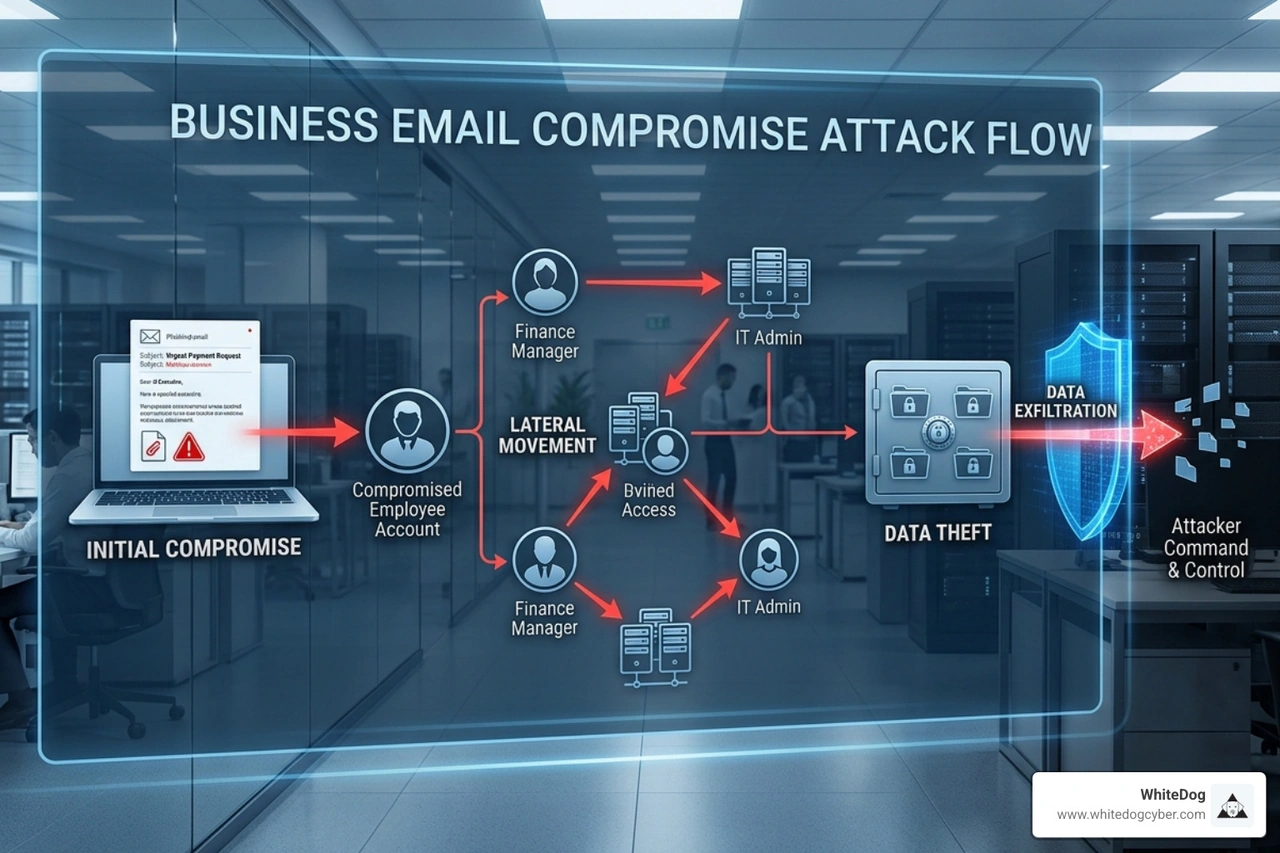
We have entered the era of "Quishing" (QR code phishing) and deepfake impersonation. Attackers now embed malicious links in QR codes to bypass traditional URL scanners. They use generative AI to craft emails that perfectly mimic the writing style of a CEO or a trusted vendor.
Traditional filters look for "odd links" or "grammatical errors," but modern AI doesn't make those mistakes. To catch these, you need Natural Language Processing (NLP) that can detect subtle shifts in intent and context. If a vendor suddenly asks for a wire transfer change in a way they never have before, the system should flag it—even if the email is technically "clean."
Being "Right of Boom"—reacting after the damage is done—is the worst position for an MSP. Many legacy tools flood your technicians with alerts, 90% of which are false positives. This "alert fatigue" leads to human error, which accounts for 68% of data breaches.
When your security is reactive, you're constantly playing catch-up. You’re managing quarantines, responding to user tickets about blocked "good" mail, and missing the sophisticated "low and slow" attacks. This is why Email Security is Falling Behind; the tools aren't keeping pace with the operational reality of the MSP.
To move beyond "hot garbage" security, your stack needs to be built on Zero Trust principles. This means never trusting an email just because it comes from a "safe" domain or an internal user.
A high-performance MSP email gateway security solution must include:
The biggest drain on MSP profitability is "tool sprawl." Managing five different security consoles for one client is a recipe for disaster. You need a single pane of glass where email telemetry is correlated with endpoint and network data.
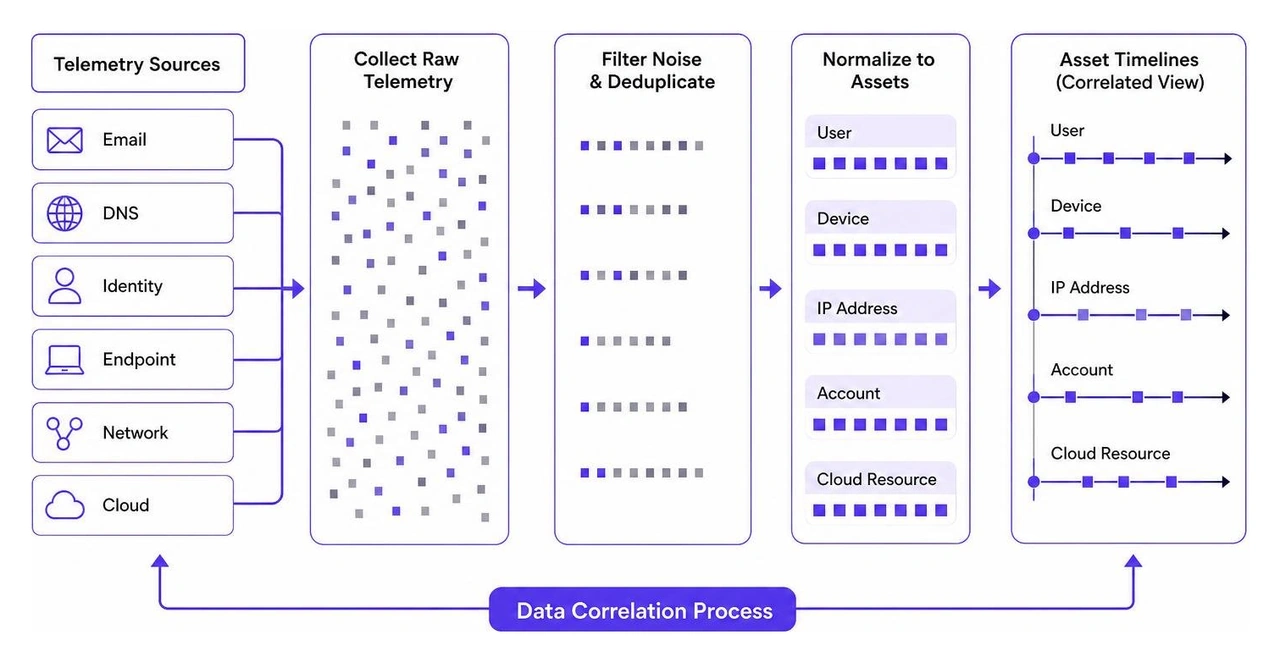
By Moving Beyond Phishing Simulations, you provide real protection. Instead of just testing users, you are actively hunting for threats. When your tools are integrated, a suspicious email can trigger an automated scan of the recipient's laptop, providing a unified security timeline that shows exactly what happened.
For a CIO or CISO, security isn't just about blocking threats; it's about operational efficiency. How much time is your team spending on email-related tickets? If the answer is "too much," your gateway is failing you.
| Feature | Standalone SEG (Legacy) | Integrated Cloud Security (ICES) | WhiteDog Unified Platform |
|---|---|---|---|
| Deployment | MX Record Change | API-based | Correlated MX + API |
| Internal Email | Not Scanned | Scanned | Scanned & Correlated |
| Remediation | Manual | Automated | 24/7 SOC (IR Included) |
| Visibility | Siloed Log | Mailbox Only | Full Security Timeline |
The ROI of a superior email stack is found in the reduction of "dwell time"—how long a threat sits in an environment before it's caught. By automating the "noise cancellation," your team can focus on high-value strategic work rather than digging through quarantine folders. Furthermore, a robust security posture can significantly lower cyber insurance premiums, which have skyrocketed as ransomware costs have surged. Incident response is included in our MDR, XDR, and DDR tiers, providing a comprehensive safety net.
One of the biggest hurdles MSPs face is getting their tools to talk to each other. A modern platform should offer an API-first architecture that synchronizes with your PSA or helpdesk platform. When a threat is detected, the ticket should be created, the malicious email removed, and the audit log updated automatically. This normalization of data across the stack is what separates a "tool" from a "platform."
Compliance is no longer just for healthcare and finance. With GDPR, HIPAA, and various state-level privacy laws, every client has a data sovereignty requirement. Your MSP email gateway security must support these by providing encrypted archiving and tamper-proof audit logs.
Zero Trust in email means three things:
As we look toward 2027 and beyond, email security will merge with Security Service Edge (SSE). We will see "Global Secure Access" patterns where the security of an email is tied directly to the health of the device and the identity of the user in real-time. This "continuous authentication" will make traditional passwords—and the phishing attacks that steal them—obsolete.
An MX-based gateway (SEG) acts as a proxy, receiving and scanning mail before it reaches the server. It’s great at blocking bulk spam at the perimeter. An API-based solution (ICES) connects directly to the mailbox, allowing it to scan internal emails and remove threats after delivery. The most effective strategy is a "Unified" approach that uses both.
By providing integrated tools like automated encryption, Data Loss Prevention (DLP) to prevent the sending of PII, and secure, long-term archiving for legal discovery. A unified platform ensures these policies are applied consistently across all clients.
Traditional filtering looks for "known bad" signatures. AI-driven analysis looks for "unusual" behavior. Since modern attacks (like BEC) often don't contain malware or bad links, they can only be caught by identifying that the communication itself is anomalous.
If your current email security feels like a burden rather than a shield, it’s time to look at a Unified Cybersecurity Platform. At WhiteDog Cyber, we don't just give you another tool to manage; we provide a curated, actively managed security stack designed for modular integration, allowing you to strengthen your defense without a "rip and replace" approach.
We move beyond the "SIEM-centric" approach of just collecting logs. Our platform collects raw telemetry from your email gateway, endpoints, and network, then filters, deduplicates, and correlates that data into a single, prioritized timeline.
This isn't just software—it's backed by our 24/7 SOC that continuously investigates and responds to threats on your behalf. Incident response is included in our MDR, XDR, and top-tier Delta Detection & Response (DDR) offerings, ensuring your clients are protected without adding to your operational "tool sprawl."
Stop settling for "hot garbage" security. Experience the WhiteDog difference and turn your email security from a ticket-driver into a strategic advantage.


Learn the five pillars of MSP risk reduction to secure operations, manage vendor risk, and build defensible compliance.

Learn how AI based malware detection stops polymorphic threats and zero-day attacks using deep learning, behavioral analysis, and multi-modal pipelines.
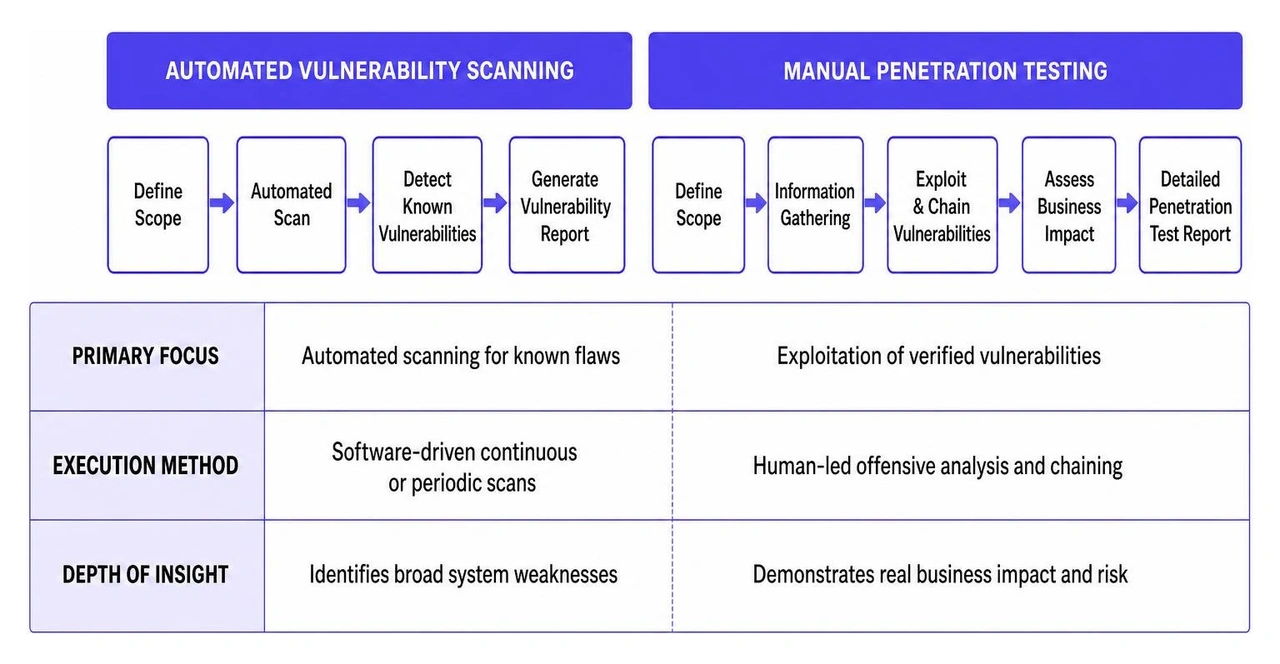
Learn penetration testing basics: ethical hacking methods, black-box scoping, and 7-phase workflows to reduce risk before attackers strike.

Learn how XDR risk reduction eliminates blind spots across endpoints, identity, and cloud to slash detection time and stop attacks faster.

Learn how AI driven threat detection predicts and stops attacks in minutes, with autonomous response across hybrid environments.
Unify your security with an XDR cybersecurity platform that correlates endpoint, network, and cloud threats for faster, managed response.