Cybersecurity
September 26, 2026
Learn how AWS delta detection response stops cloud alert noise by tracking state drift and securing Delta Lake workloads.
An MSP MDR platform is a multi-tenant security solution that combines continuous threat detection, automated response, and 24/7 SOC coverage into a single managed service — built specifically for MSPs to protect multiple client environments at once.
Here is what separates a true MSP MDR platform from generic security tools:
Running an MSP in 2026 means you are managing more client endpoints, more threat vectors, and more compliance requirements than ever before. The old approach — stitching together a SIEM, an EDR tool, and a ticketing system — creates tool sprawl that slows you down and leaves gaps attackers are happy to exploit. The global MDR market is on track to reach $6.5 billion by 2028, and MSPs that have already made the shift to a unified MDR platform report a 30% increase in recurring revenue per client and meaningfully stronger client retention.
The difference between surviving and thriving comes down to one decision: are you running a collection of disconnected security tools, or a correlated, actively managed security stack?
This guide is designed to help you answer that question clearly — and choose the right platform for your business.
I'm Shahin Pirooz, WhiteDog Cyber's technology executive, and I've spent over two decades building managed security and cloud services — including helping to define the MSP model itself. I've written this MSP MDR platform guide to cut through the noise and give MSP owners the practical framework they need to evaluate their options with confidence.
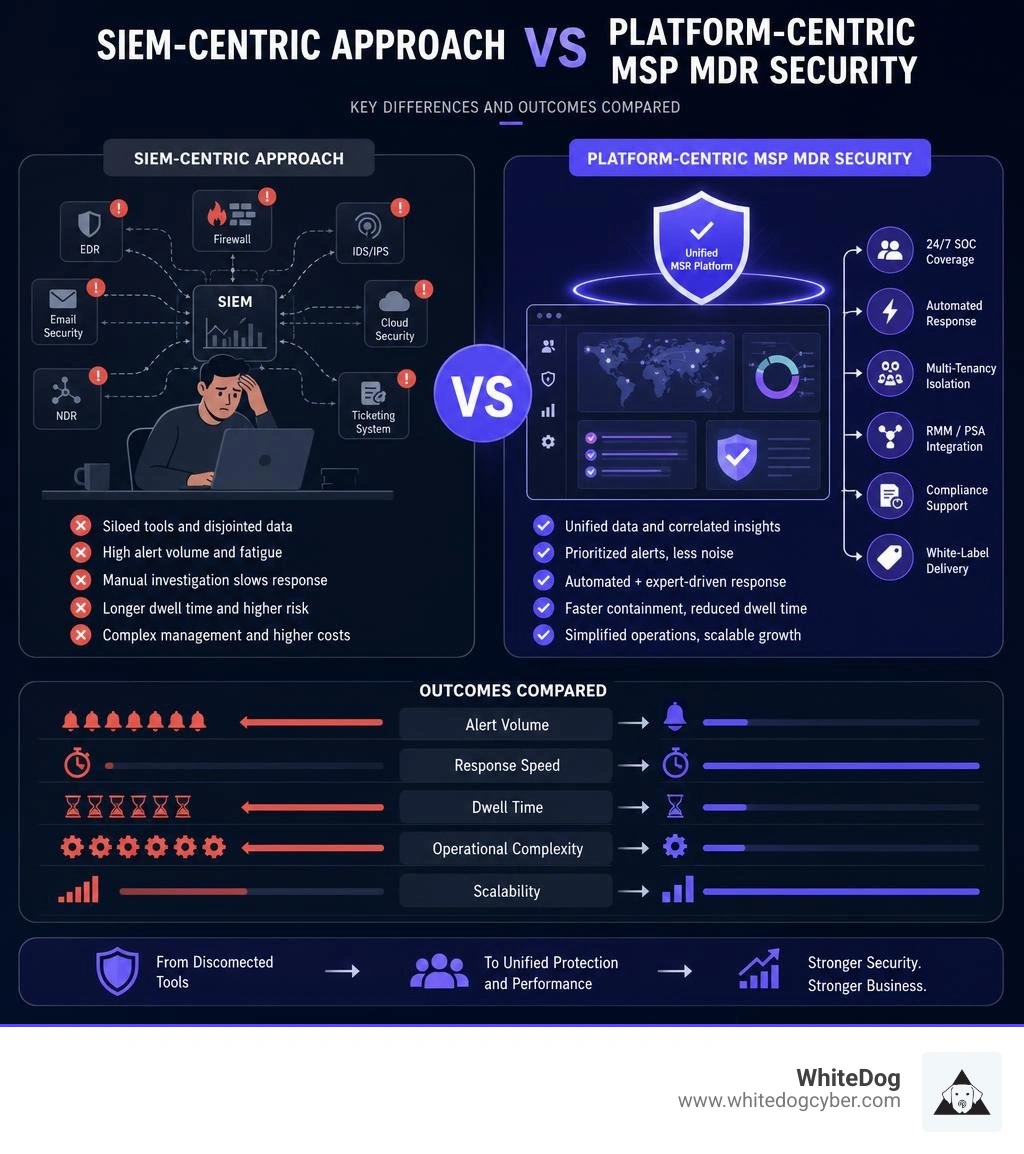
When evaluating an MSP MDR platform, you must look beyond marketing buzzwords and examine the underlying architecture. Rather than forcing a disruptive "rip and replace" of your existing investments, a modern platform-centric approach focuses on modular integration. It connects seamlessly with your current tools to ingest raw telemetry from across your clients' environments (endpoints, networks, cloud apps, and identity providers), filters out the noise, and maps it to a single correlated timeline.
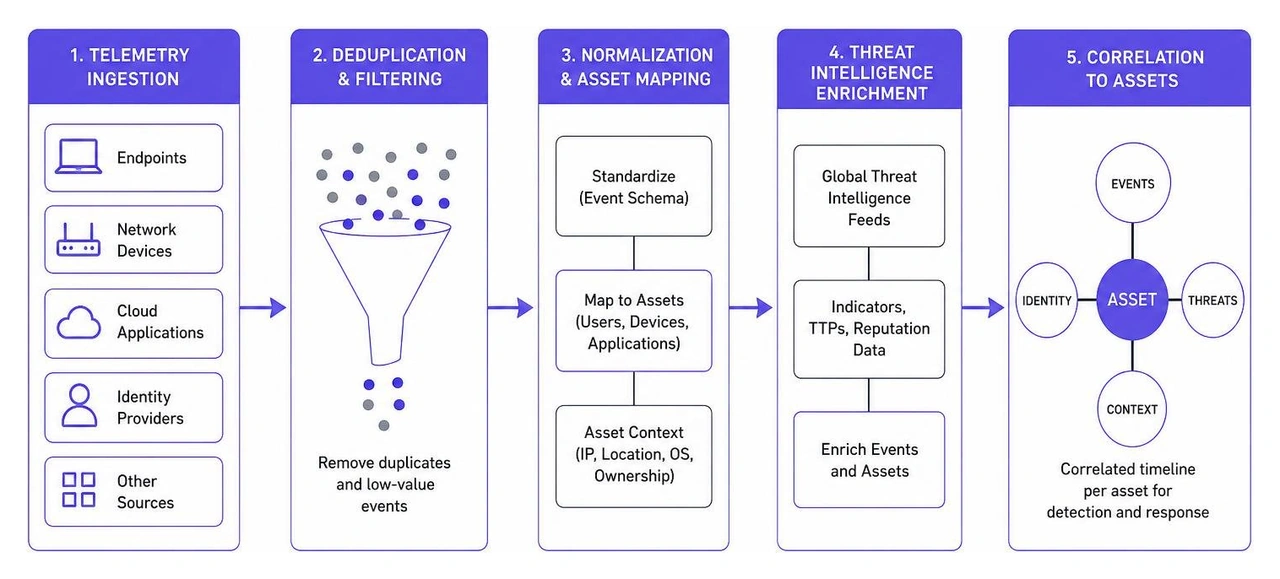
This process is built on a structured pipeline:
By shifting from a SIEM-centric approach—which simply aggregates logs and leaves the hard work of analysis to you—to an integrated platform, you drastically reduce risk and accelerate your time-to-detection. To understand how these foundational concepts translate to broader security operations, you can read more about MDR in Cyber Security and explore the broader definition of Managed Detection and Response.
An enterprise-grade MSP MDR platform is not just software; it is an operational ecosystem. To protect diverse client environments effectively, the platform must deliver three core pillars:
For a deeper dive into how these services scale your business, take a look at our guides on 24x7 SOC for MSPs and MSP SOC as a Service.
As you research the market, you will encounter various acronyms. Understanding the operational differences between them is critical for setting client expectations and managing your risk:
The business impact of making the right choice here is massive. According to the IBM Cost of a Data Breach Report, organizations utilizing comprehensive managed detection and response services reduce the average cost of a data breach by up to $1.2 million. Furthermore, organizations leveraging MDR experience a median breach lifecycle of 204 days, compared to 277 days for those attempting to manage security in-house or via basic alert-only tools.
An MSP MDR platform cannot exist on an island. To be operationally viable, it must integrate deeply with the tools your team already uses every day. If your technicians have to log into a separate portal to view security alerts, those alerts will eventually be missed.
| Feature / Capability | API-Driven Integration | Manual Ticketing / Legacy Email |
|---|---|---|
| Alert Delivery Speed | Near real-time (seconds) | Delayed (minutes to hours) |
| Workflow Efficiency | Bi-directional sync within PSA | Swivel-chair management across portals |
| Telemetry Context | Full asset, user, and network enrichment | Raw log dump with minimal context |
| Response Capability | Automated containment via RMM/Agent | Manual intervention required |
| Human Error Risk | Extremely low | High (tickets can be missed or miscategorized) |
By integrating your MDR platform with your Remote Monitoring and Management (RMM) and Professional Services Automation (PSA) tools, you create a closed-loop security workflow. When the 24/7 SOC detects a threat, the platform automatically generates a ticket in your PSA, enriches it with telemetry, and can even trigger automated response actions via your RMM—such as isolating a compromised workstation from the local network.
This operational efficiency directly translates to business growth. MSPs that offer comprehensive MDR services report an average 30% increase in recurring revenue per client. Additionally, 68% of MSPs state that adding MDR to their portfolio has significantly improved client retention rates.
A unified security platform also simplifies compliance mapping. Whether your clients must adhere to HIPAA, GDPR, or PCI-DSS, an enterprise-grade MDR platform provides the continuous monitoring, log retention, and detailed reporting required to satisfy rigorous audits.
To learn more about how to build a highly profitable security practice, read about Scaling Your MSP Security Offerings with Whitedog and discover how Whitedog Introduces Fully Managed Cybersecurity Solutions to Support Scaling MSPs.
Deploying a new security platform across dozens of clients can feel like trying to change the tires on a car while driving down the highway. Without a structured approach, MSPs frequently stumble into common deployment pitfalls.
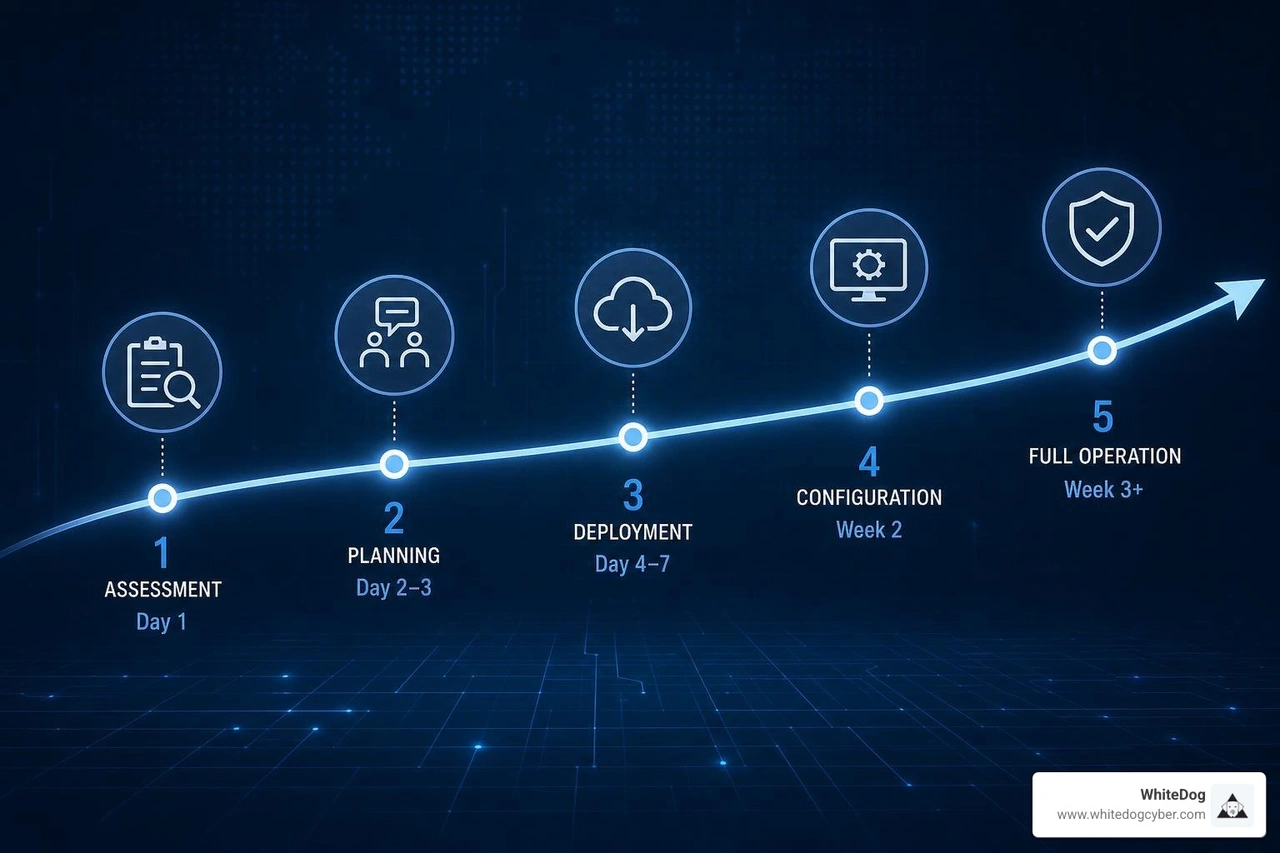
One major challenge is "agent fatigue." Your clients' endpoints are already running RMM agents, backup agents, and productivity tools; adding multiple, heavy security agents can degrade system performance and annoy users. A modern MSP MDR platform mitigates this by utilizing lightweight, non-intrusive agents or leveraging API-based, agentless integrations where possible.
Another pitfall is "alert fatigue." If your platform is poorly calibrated, your team will be inundated with false positives, leading them to ignore critical warnings. Selecting a partner that pairs its technology with a human SOC ensures that only validated, high-priority threats ever reach your desk.
Your choice of pricing model also plays a vital role in your success. Platforms typically offer per-user or per-node (device) pricing. For maximum margin preservation and predictable billing, look for models that align directly with how you package and sell your own services to your clients.
When evaluating potential vendors, use these core criteria to guide your decision:
For a broader industry perspective on what to look for in a security partner, consult the Gartner Market Guide for Managed Detection and Response Services.

A traditional SIEM-centric approach focuses on aggregating raw telemetry and logs from various sources. While SIEMs are excellent for compliance and historical log storage, they require a highly skilled internal team to write correlation rules, analyze alerts, and respond to threats. In contrast, an MSP MDR platform combines a correlation engine with a 24/7 SOC. It filters out the noise, correlates events to specific assets, enriches them with threat intelligence, and delivers prioritized, actionable detections alongside human-led response.
Standard MDR is excellent at detecting known malicious behaviors and immediate threats. However, sophisticated attackers often use slow, subtle techniques that blend in with normal administrative activity. Delta Detection & Response (DDR) is a top-tier security offering that continuously validates the baseline state of your environment. By focusing on tiny, incremental changes ("deltas") over time, DDR catches advanced, persistent threats that standard MDR tools might miss, providing a much higher level of risk reduction.
The best pricing models are those that offer predictability and protect your margins. Many platforms offer per-user or per-device pricing. Per-user pricing is highly popular because it aligns perfectly with modern MSP packaging (where you charge a flat rate per client employee). Whichever model you choose, ensure there are no hidden ingestion fees or surprise surcharges, allowing you to maintain predictable billing for your clients.
As we navigate the complex threat landscape of July 2026, relying on a disconnected patchwork of security tools is no longer a viable strategy. Tool sprawl increases operational complexity, drives up dwell times, and exposes your clients to unnecessary risk.
To scale your business and protect your clients effectively, you need a unified cybersecurity platform. WhiteDog Cyber provides a co-managed, white-label cybersecurity platform featuring a curated, actively managed security stack. By integrating best-in-class tools, correlation engines, and a 24/7 SOC that actively investigates, triages, and responds to threats, we help you drive down risk and eliminate operational headaches.
With our 30-day onboarding guarantee and transparent pricing with no added fees, you can confidently upgrade your security posture without sacrificing your margins. Ready to elevate your security practice and deliver enterprise-grade protection under your own brand? Secure Your Clients with WhiteDog today.


Learn how AWS delta detection response stops cloud alert noise by tracking state drift and securing Delta Lake workloads.

Master modern threat detection with unified visibility across cloud, identity, and AI agents for faster response.

Learn how cloud security protects your data in 2026, covering shared responsibility, zero trust, and posture management to prevent breaches.

Verify AWS KMS FIPS compliance with this step-by-step guide covering FIPS 140-3 HSMs, endpoints, and auditing for regulatory alignment.

Navigate security compliance requirements across ISO 27001, SOC 2, and GDPR with a strategic blueprint for sustainable compliance management.

Learn how AI phishing detection stops next-gen attacks that bypass traditional defenses, with practical capabilities to evaluate.