Cybersecurity
September 22, 2026
Learn how cloud security protects your data in 2026, covering shared responsibility, zero trust, and posture management to prevent breaches.
Traditional security models relied on disconnected tools monitoring isolated silos. Endpoint protection looked strictly at workstations, firewall logs stayed within the network team, and identity providers tracked logins independently. Adversaries easily exploited these gaps, landing on a device through a spear-phishing email, escalating privileges via identity compromise, and moving laterally across network segments undetected.
XDR cybersecurity directly solves this visibility gap by transforming disparate data streams into actionable intelligence. Unlike legacy SIEM-centric approaches that primarily aggregate logs for compliance and rely on heavy manual rule-writing, modern XDR mechanisms collect raw telemetry, filter out noise, deduplicate redundant events, normalize data points to specific assets, and enrich events with threat context to produce prioritized detections.
By integrating data across email, DNS, identity, endpoint, network, and cloud layers, XDR enriches this raw data with threat intelligence to reconstruct full attack chains. Instead of forcing security operations teams to piece together dozens of unrelated alerts from multiple consoles, XDR links these signals into a single unified timeline. To see how a centralized architecture reshapes security management, explore One Comprehensive XDR Platform.
A modern xdr cybersecurity platform relies on deep integration across key operational telemetry sources:
Organizations seeking to maximize existing investments often leverage Open XDR, which unifies disparate security tools into a central visibility layer. For teams pursuing unified visibility and cross-vector detection across their existing tech stack without replacing legacy tools, read more about how Open XDR: Your Tools, Unified provides cohesive insight.
The sheer volume of daily security events makes manual investigation impossible for lean security teams. XDR cybersecurity leverages machine learning algorithms and artificial intelligence to evaluate incoming telemetry in real time across all integrated vectors.
Automated triage engines evaluate incoming behaviors against baseline patterns and mapped threat frameworks such as MITRE ATT&CK to identify anomalies, group connected alerts into single security incidents, and drastically lower false positive rates. When a threat triggers high confidence score thresholds, automated playbooks can immediately isolate compromised endpoints, revoke compromised user credentials, or block malicious IP addresses at the firewall. By automating low-level analysis and initial containment, organizations dramatically reduce mean time to detect (MTTD) and mean time to respond (MTTR), shrinking adversary dwell time from weeks to minutes.
Understanding how different security architectures function helps leaders align their defensive capabilities with internal operational maturity.
| Feature / Capability | Endpoint Detection & Response (EDR) | Extended Detection & Response (XDR) | Managed Detection & Response (MDR) |
|---|---|---|---|
| Detection Scope | Host endpoints, laptops, servers | Cross-vector (Endpoint, Network, Cloud, Identity, Email, DNS) | Cross-vector or endpoint depending on underlying platform |
| Management Model | Internal security or IT team | Internal team or co-managed | Outsourced to vendor SOC |
| Data Correlation | Single-host focus | Multi-vector telemetry correlation | Correlated intelligence with human threat hunting |
| 24/7 Monitoring | Requires dedicated internal shifts | Requires dedicated internal shifts | Fully managed 24/7 SOC included |
| Incident Response | Manual or basic playbook-driven | Incident response included with automated playbooks | Incident response included with full human-led response |
| Resource Overhead | High internal monitoring burden | Medium-to-high (tool management dependent) | Low internal burden |
To evaluate how these architectures compare for your environment, check our deep-dive analysis on XDR vs Open XDR vs Whitedog: What's the Real Difference.
EDR remains an essential security control, but its scope is strictly host-bound. If an attacker gains entry using legitimate, stolen cloud credentials, EDR cannot see the initial entry point until the adversary interacts directly with a monitored endpoint.
By contrast, xdr cybersecurity broadens threat visibility across all vectors. It tracks the credential abuse in the cloud management console, identifies the subsequent suspicious network traffic, and correlates it with the endpoint memory injection. This comprehensive visibility prevents blind spots and elevates overall operational efficiency for complex enterprise networks.
Selecting the right deployment architecture depends on your organizational resources and current software stack:
Industry analysts project steady acceleration in modern threat detection adoption. The threat detection and response market expects a compound annual growth rate (CAGR) of 5.6% between 2021 and 2027. Industry research firm Gartner predicted that the majority of enterprises would replace legacy security software with advanced EDR, XDR, or MDR tools by 2023, and that 50% of organizations would rely on MDR services for threat monitoring and response by 2025.
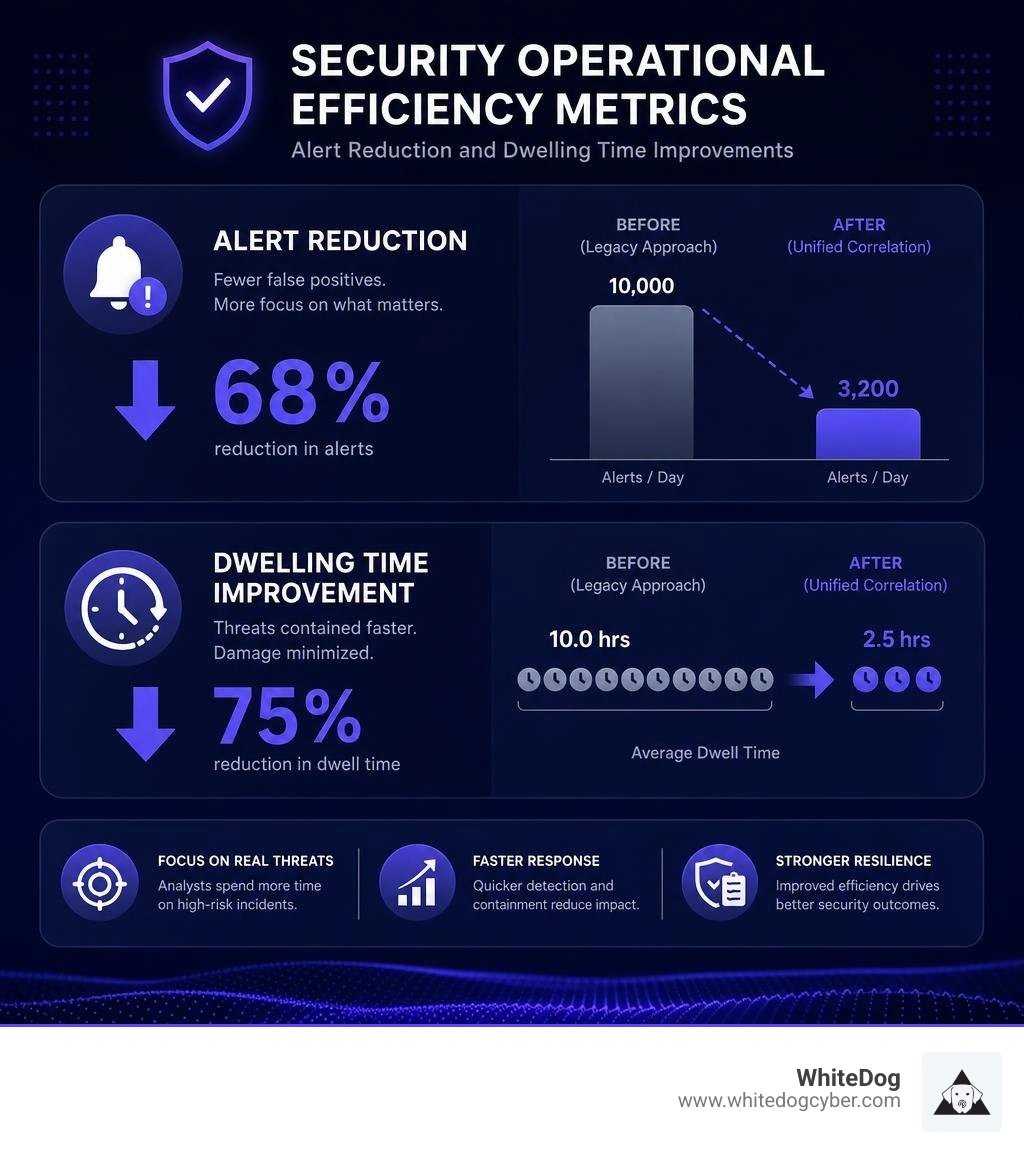
This market transition highlights the tangible strategic benefits xdr cybersecurity delivers for enterprise risk reduction and continuous threat exposure management:
Explore how your business can optimize security operations by visiting our dedicated Cybersecurity Solutions Page.
EDR focuses exclusively on host endpoint activity, such as process executions and file modifications on workstations and servers. XDR extends this capability by ingesting and correlating telemetry from endpoints, network traffic, cloud workloads, identity platforms, email systems, and DNS logs to uncover multi-vector attack chains.
XDR uses machine learning algorithms to ingest, filter, and deduplicate raw events from multiple security layers. Rather than firing individual alerts for every isolated event, XDR groups related telemetry into a single contextualized incident, providing root-cause analysis and eliminating low-priority false positives.
Organizations managing hybrid workforces, multi-cloud infrastructures, or complex networks benefit immensely from XDR. It is particularly valuable for IT leaders and Managed Service Providers (MSPs) who need to streamline operations, eliminate security blind spots across diverse environments, and improve detection speed without exponentially increasing operational overhead.
Navigating modern cybersecurity requirements does not require building an over-complicated "Frankenstein stack" or drowning in isolated security alerts. As threat actors refine cross-vector attack techniques, organizations must match them with unified visibility, advanced analytics, and decisive response capabilities.
WhiteDog delivers a Unified Cybersecurity Platform operating as a curated, actively managed security stack where best-in-class tools are seamlessly integrated through deep data correlation. Operated by a dedicated 24/7 SOC that continuously investigates, triages, and responds to threats, WhiteDog supports existing security tools, its curated stack, or both. By correlating intelligence across email, DNS, identity, endpoint, network, and cloud telemetry, the platform exposes complete attack chains early in the compromise cycle.
Whether leveraging our foundational platform capabilities or taking advantage of our top-tier Delta Detection & Response (DDR) solution—where incident response is included across our MDR, XDR, and DDR offerings—our continuous attack surface management empowers your business to operate safely and respond to emerging threats with complete confidence.
To learn how we close operational gaps left by legacy tools, read A New Cybersecurity Category Built to Close the Gaps XDR Leaves Behind, or visit our team to Transform Your Security Operations today.


Learn how cloud security protects your data in 2026, covering shared responsibility, zero trust, and posture management to prevent breaches.

Verify AWS KMS FIPS compliance with this step-by-step guide covering FIPS 140-3 HSMs, endpoints, and auditing for regulatory alignment.

Navigate security compliance requirements across ISO 27001, SOC 2, and GDPR with a strategic blueprint for sustainable compliance management.

Learn how AI phishing detection stops next-gen attacks that bypass traditional defenses, with practical capabilities to evaluate.

Evaluate your cloud security audit options with this actionable checklist covering multi-cloud frameworks, CSPM, DSPM, and AI-driven automation.

Learn the five pillars of MSP risk reduction to secure operations, manage vendor risk, and build defensible compliance.