Cybersecurity
August 28, 2026
Learn penetration testing basics: ethical hacking methods, black-box scoping, and 7-phase workflows to reduce risk before attackers strike.
24/7 threat response services are always-on security solutions that detect, contain, and eliminate cyber threats in real time — day or night, weekends and holidays included.
Quick answer: What are 24/7 threat response services?
| Feature | What It Means for You |
|---|---|
| Continuous monitoring | Threats are detected around the clock, not just during business hours |
| Active containment | Experts isolate and stop attacks as they happen |
| Incident response | A dedicated team investigates, eradicates, and helps you recover |
| Compliance support | Evidence collection and reporting for GDPR, HIPAA, and ISO 27001 |
| Faster recovery | Rapid containment directly reduces breach costs and downtime |
Cyberattacks don't follow a 9-to-5 schedule. Threat actors operate continuously, and the organizations that suffer the worst outcomes are usually the ones that found out too late. The average cost of a data breach in the UK alone is £3.4 million — but companies that identify a threat within the first 200 days can save up to £1.5 million of that figure. That gap between fast and slow response is where 24/7 threat response services earn their keep.
For MSPs managing security across multiple clients, the stakes are even higher. A single uncontained breach can cascade across your entire client base. Most internal teams simply aren't staffed or equipped to respond with precision at 2 AM on a holiday weekend. That's the gap these services are built to close.
I'm Shahin Pirooz, technology executive at WhiteDog Cyber, with over 20 years of experience building managed security and cloud services — including the development of 24/7 threat response services frameworks for MSPs and enterprise organizations alike. In the sections below, I'll walk you through everything you need to evaluate, compare, and choose the right service for your environment.
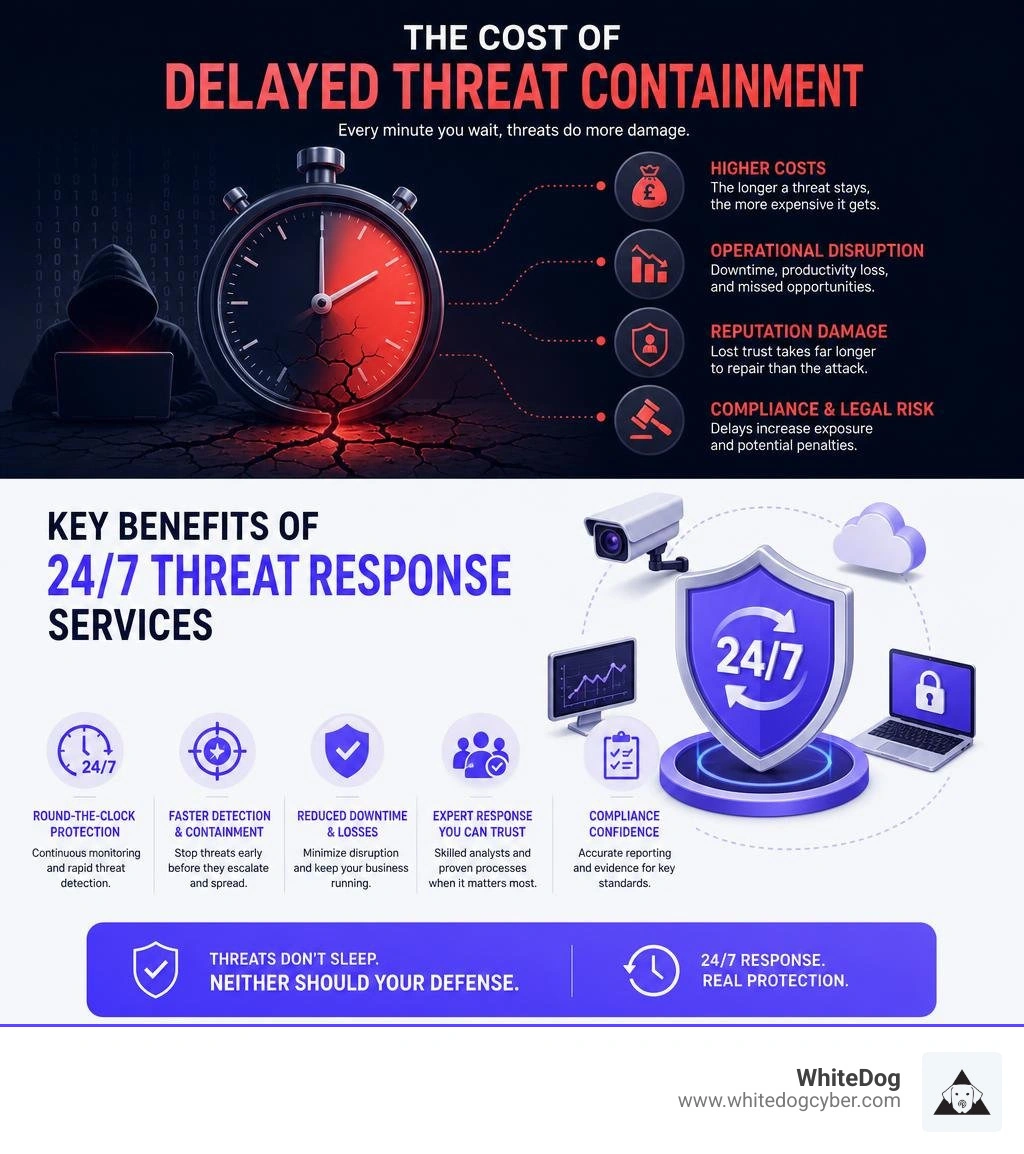
24/7 threat response services terms to know:
Many organizations believe they are protected because they have standard security monitoring or a basic SIEM (Security Information and Event Management) platform in place. However, there is a fundamental difference between watching a fire burn and actively putting it out.
Standard security monitoring is passive. It collects logs, flags anomalies, and generates alerts that are sent to an inbox or a dashboard. If an alert triggers at 2:00 AM on a Sunday, it sits there until your IT team logs in on Monday morning. By that time, ransomware has already encrypted your servers and exfiltrated your sensitive data.
True 24/7 threat response services go beyond passive monitoring by integrating active response. When a threat is detected, the response team doesn't just send you an email; they take immediate action to isolate the affected systems, block malicious IP addresses, terminate compromised user sessions, and stop the attack in its tracks.
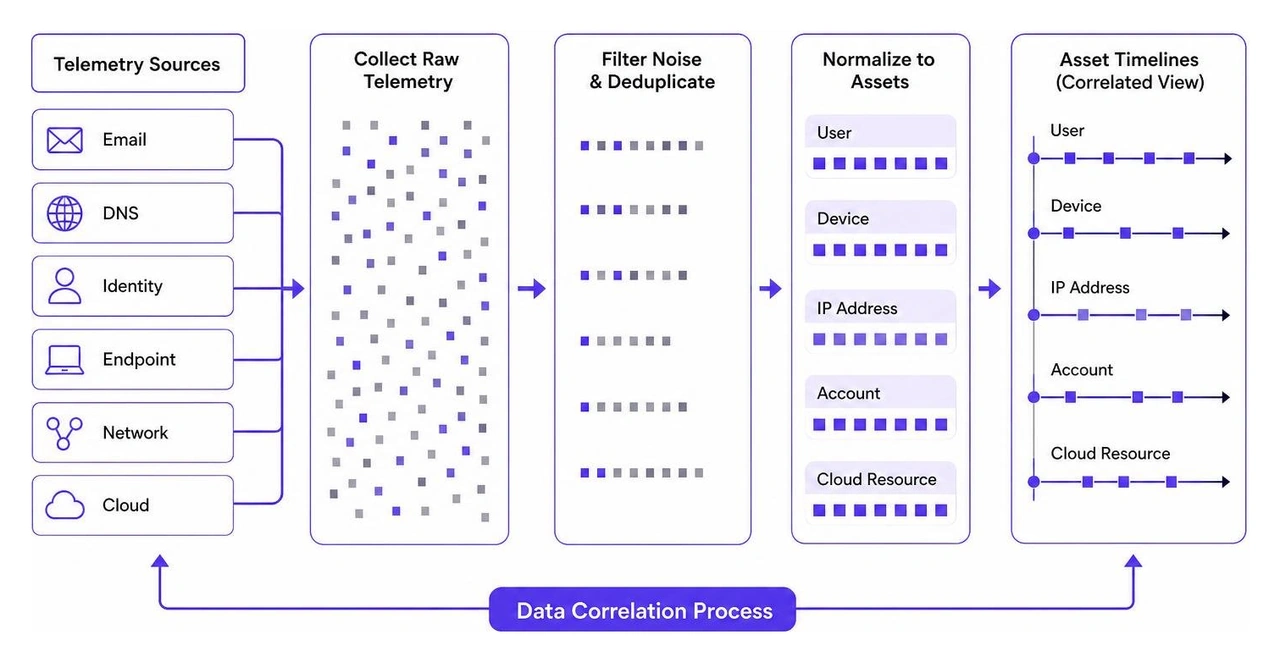
This proactive approach is at the core of MDR in Cyber Security. Instead of relying on a SIEM-centric model that floods your team with alert fatigue, a modern unified cybersecurity platform uses advanced telemetry correlation. Here is how the mechanism works:
| Feature | Standard Security Monitoring | Open XDR | Managed 24/7 Threat Response (MDR/DDR) |
|---|---|---|---|
| Primary Goal | Log collection and alerting | Unified visibility and detection | Active containment and threat eradication |
| Human Analysis | None (or basic triage) | In-house team required | 24/7/365 Security Operations Center (SOC) |
| Response Action | Customer must investigate | Incident response included | SOC takes active containment steps immediately |
| Tool Integration | Siloed tools | Single correlated timeline | Curated, actively managed security stack |
| Dwell Time | Weeks or months | Days | Minutes |
To successfully defend a modern digital estate, a response service must possess three core pillars:
Understanding the distinction between Open XDR (Extended Detection and Response) and fully managed services like MDR or Delta Detection & Response (DDR) is crucial for IT leaders:
To understand how 24/7 threat response services protect your business, we must look at the standardized incident response lifecycle. Most mature providers align their operations with the NIST SP 800-61r2 guidelines, which break down the Cybersecurity Incident Response Workflow into highly structured phases.
Our ultimate goal during this lifecycle is dwell time reduction — shrinking the time an attacker spends inside your network before being discovered and expelled. When an attacker gains access, every second they spend undetected increases your financial and operational risk. As we often say, Attackers Will Get In Speed Is Your Defense.
The first phase, Preparation, is where we establish the playbooks, communication protocols, and integrations needed to handle an attack.
Once active, the Detection phase relies on proactive monitoring. Because modern networks generate millions of logs daily, our platform uses telemetry filtering and deduplication to separate minor background noise from legitimate malicious behavior. This allows us to spot sophisticated techniques early. While many organizations let threats go unnoticed for weeks, our goal is to reverse that trend: Attackers Linger for Months We Find Them in Minutes.
Once a threat is validated, the SOC immediately moves to Containment:
By leveraging Proactive Incident Response Services, organizations can ensure that containment begins within minutes of detection, preserving business continuity and protecting customer trust.
A major challenge for enterprise IT leaders is "tool sprawl" — the accumulation of dozens of disconnected security tools that do not talk to each other. When an incident occurs, analysts must jump between firewalls, endpoint consoles, and cloud directories, wasting precious time trying to piece together what happened.
A modern 24/7 threat response service solves this by integrating your existing security tools into a single correlated security timeline. Through modular integration, Open XDR visibility connects seamlessly to your existing firewalls, EDR agents, and identity providers to pull raw telemetry into a unified dashboard, maximizing the value of your current investments.
This unified approach allows the 24/7 SOC to detect and defend against a wide range of sophisticated threats across different environments:
Furthermore, integrating physical and digital threat intelligence is increasingly important for organizations with global operations. For instance, teams tracking physical security risks through Global Security Assistance | Crisis24 often coordinate with cyber threat analysts to defend against hybrid threats, where physical disruptions or geopolitical instability are used as cover for cyberattacks.
When selecting a 24/7 threat response provider, it is essential to understand the different engagement and pricing models available in the market:
Beyond threat containment, a professional threat response service must handle evidence collection and reporting with strict forensic discipline. If your organization is subject to regulatory frameworks like GDPR, HIPAA, or ISO 27001, how your team handles a breach can dictate your legal liability.
Responders must collect court-admissible forensic evidence, maintain a clear chain of custody, and generate detailed reports that simplify post-breach decision-making for legal, insurance, and regulatory bodies. For organizations leveraging specialized insurance lines, coordinating with platforms like Services · Response24 ensures that claims documentation and incident records are structured correctly from day one.
While 24/7 threat response services are highly effective, organizations should be aware of common limitations and exclusions:
Incident response focuses on identifying, containing, and eradicating cyber threats (such as malware, active hackers, or insider threats). Disaster recovery, on the other hand, is the process of restoring IT systems, data, and operations after a non-security disruption, such as a hardware failure, power outage, or natural disaster.
Industry best practice is to begin containment within the first hour of detection. High-performing security operations teams typically start triage within 15 minutes of engagement, leveraging automated containment playbooks to isolate affected assets immediately.
Yes. Small and mid-sized businesses (SMBs) are frequently targeted by cyberattackers because they often lack the in-house security expertise and budget to maintain 24/7 security operations. In fact, statistics show that up to 60% of SMBs go out of business within six months of a major cyberattack. Utilizing an MSP SOC as Service allows smaller organizations to access enterprise-grade security operations without the overhead of building an in-house team.
In today's fast-moving threat landscape, relying on passive security monitoring is no longer enough. Threat actors operate around the clock, and your organization needs a defense strategy that does the same.
By partnering with WhiteDog, you gain access to a co-managed, white-label cybersecurity platform designed specifically for modern IT leaders and MSPs. We replace tool sprawl with a curated, actively managed security stack where best-in-class tools are integrated through advanced correlation. Our 24/7 SOC continuously investigates, triages, and responds to threats, delivering significant risk reduction and operational efficiency.
Whether you choose our Open XDR tier for unified visibility or our top-tier Delta Detection & Response (DDR) for fully managed 24/7 threat response, we stand behind our platform with an industry-leading SOC Onboarding Guarantee — getting your operations fully protected in 30 days with no hidden fees.
Ready to close the gap between detection and containment? Explore our unified cybersecurity solutions today and secure your business around the clock.

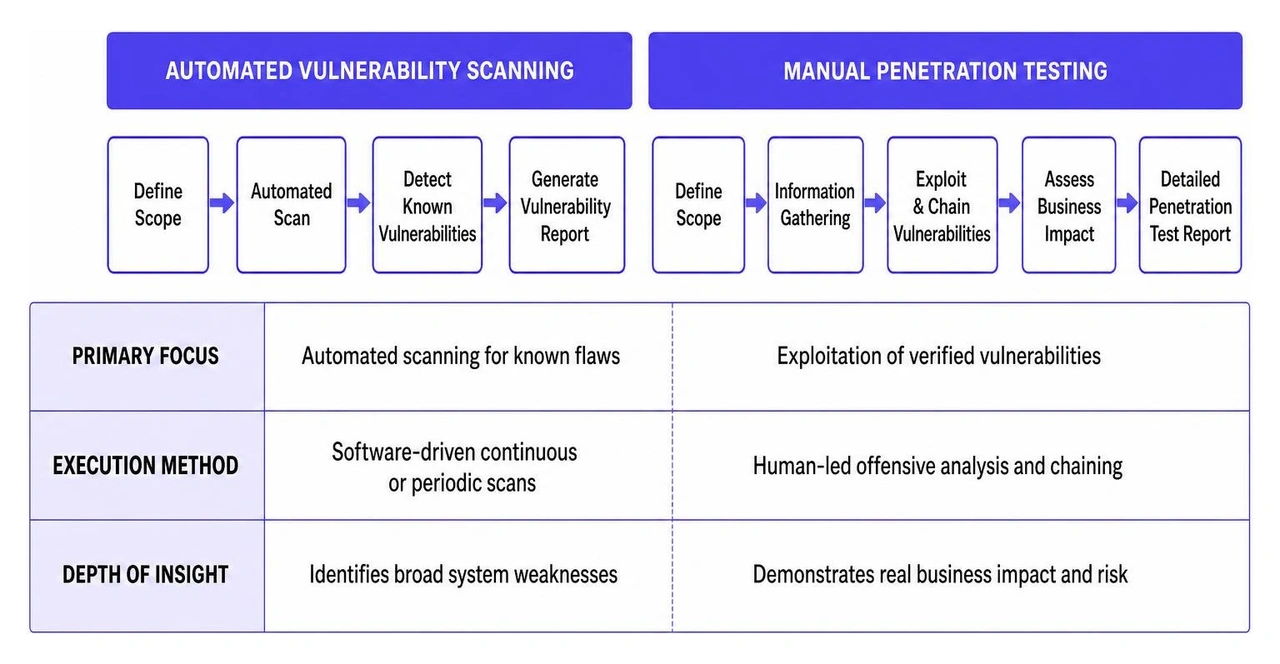
Learn penetration testing basics: ethical hacking methods, black-box scoping, and 7-phase workflows to reduce risk before attackers strike.

Learn how XDR risk reduction eliminates blind spots across endpoints, identity, and cloud to slash detection time and stop attacks faster.

Learn how AI driven threat detection predicts and stops attacks in minutes, with autonomous response across hybrid environments.
Unify your security with an XDR cybersecurity platform that correlates endpoint, network, and cloud threats for faster, managed response.
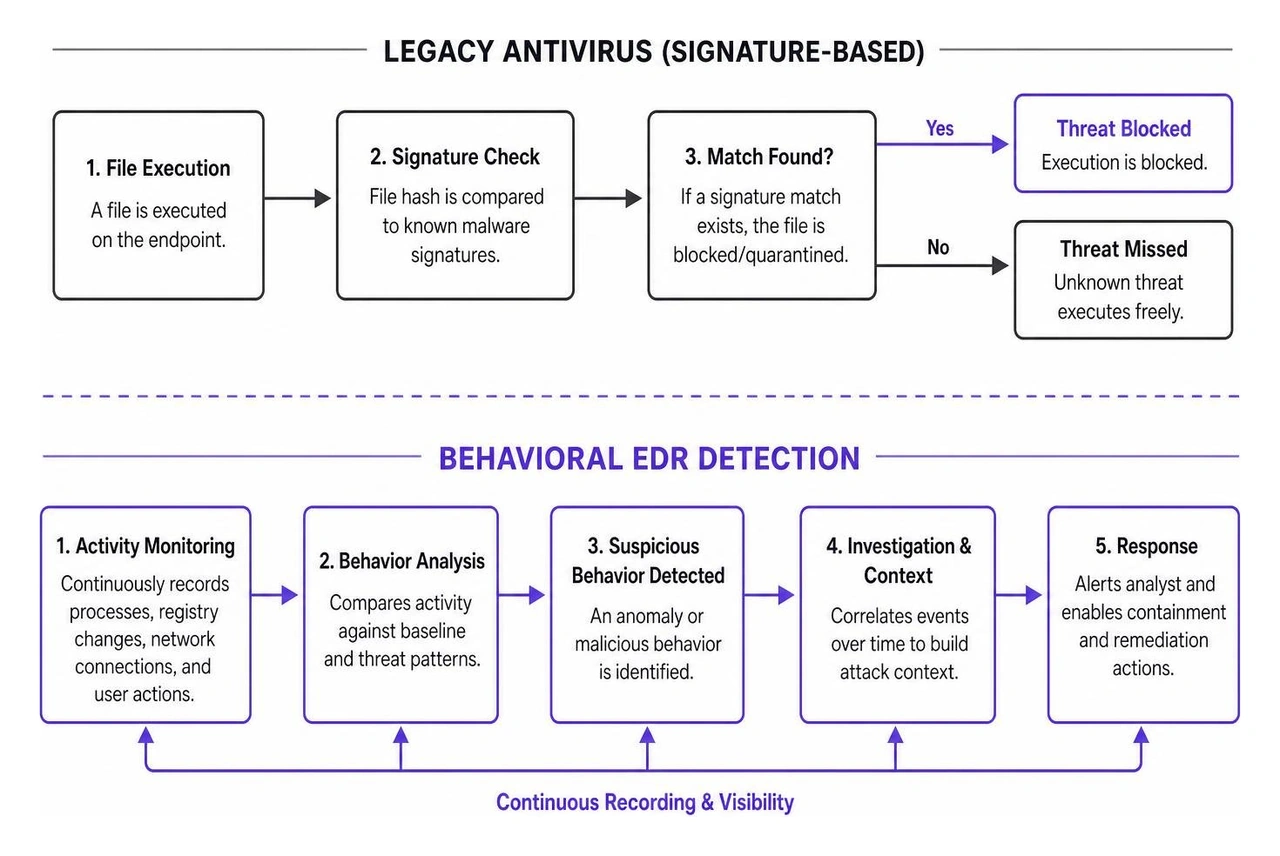
Compare EDR, XDR, and MDR solutions in this guide to endpoint detection & response, featuring WhiteDog's unified platform with 24/7 SOC and incident response.
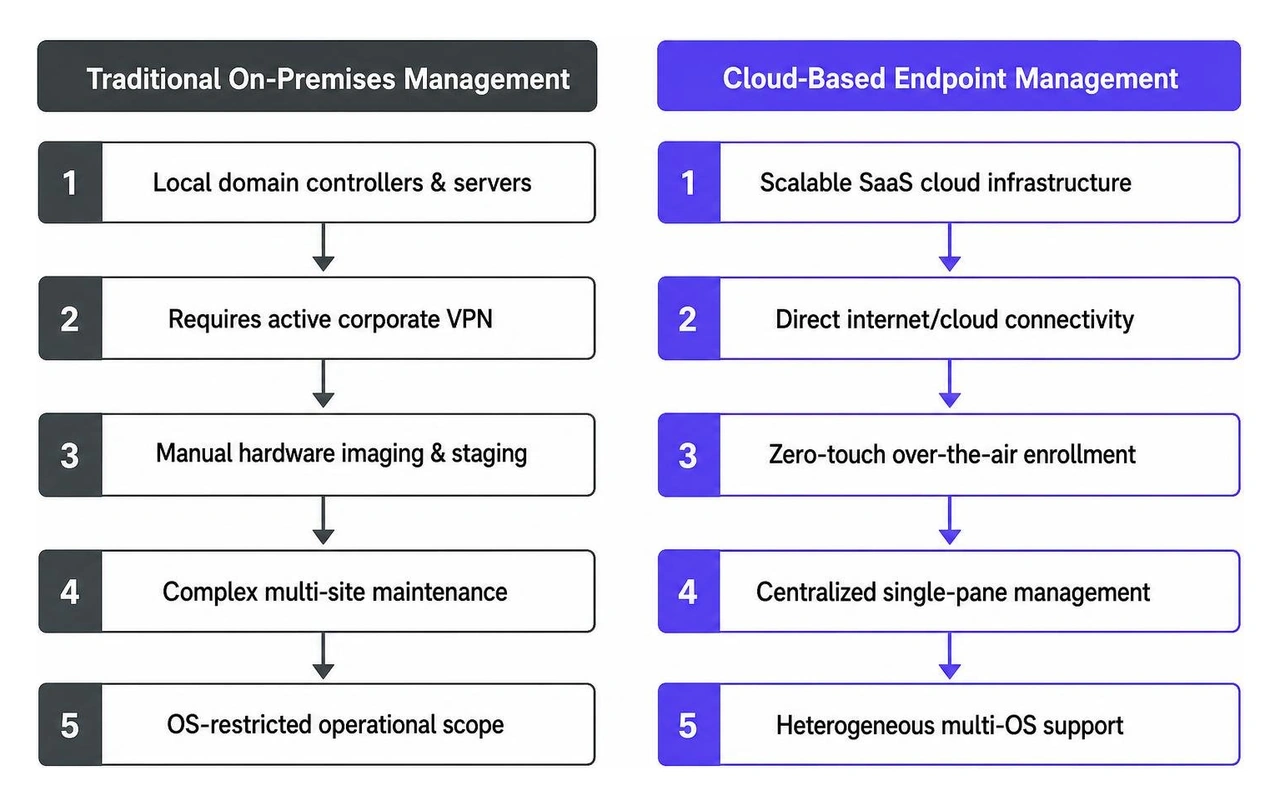
Compare cloud based endpoint management options with this checklist covering security, remote workforce support, and operational efficiency.