Cybersecurity
August 17, 2026
Compare cloud based endpoint management options with this checklist covering security, remote workforce support, and operational efficiency.
Choosing the right AWS incident response solutions for rapid remediation starts with a clear operational picture: Amazon GuardDuty and AWS Security Hub provide threat detection and centralized finding triage, Amazon EventBridge and AWS Systems Manager Incident Manager automate containment and escalation, and the AWS Customer Incident Response Team (CIRT) offers specialized human support for critical breaches. These services work together to reduce dwell time and limit blast radius when an adversary targets your cloud environment.
A successful response strategy also starts with clarity about where Amazon Web Services responsibilities end and customer duties begin. Under the AWS Shared Responsibility Model, AWS manages security of the cloud—protecting the physical data centers, networking hardware, hypervisors, and core compute infrastructure. As cloud customers, we are responsible for security in the cloud: configuring guest operating systems, identity and access management (IAM), firewall rules, network traffic filters, application logic, and customer data.
When an adversary targets your cloud architecture, AWS will not step in to rotate compromised IAM access keys, isolate an infected EC2 instance, or revert an overly permissive S3 bucket policy. That operational duty rests entirely with your security operations team.
To govern this effectively, enterprise cloud environments must align response strategies with proven industry frameworks such as NIST SP 800-61. Aligning with these standards satisfies stringent regulatory compliance frameworks, such as FedRAMP baselines and regional data residency controls, while creating predictable operational outcomes. Establishing a structured cybersecurity incident response guide ensures your engineering and security personnel understand exact escalation thresholds.
A central part of this preparation is defining a clear RACI (Responsible, Accountable, Consulted, Informed) accountability framework across legal, compliance, human resources, and DevOps teams. Regular assessments, including a comprehensive cloud security audit, validate that these roles reflect current cloud infrastructure, ensuring no ambiguity slows down containment during a real breach.
A cloud-native incident response plan must bridge high-level policy and technical runbooks. Without structured documentation, responders can lose critical minutes trying to figure out who has authorization to terminate compromised workloads or notify executive leadership.
An effective AWS response plan contains several core elements:
Building an effective cloud incident response architecture requires assembling native monitoring, detection, event routing, and workflow automation into a cohesive ecosystem.
The table below highlights how native AWS services function across common operational criteria:
| Solution / Service | Primary Role in Incident Response | Automation Capability | Operational Complexity | Typical Response Speed |
|---|---|---|---|---|
| AWS Security Hub | Centralized CSPM finding aggregator and posture monitoring | Medium (via EventBridge actions) | Low to Medium | Minutes (near real-time) |
| Amazon GuardDuty | Threat detection using ML and threat intelligence feeds | Medium (triggers downstream automation) | Low (managed service) | Minutes |
| AWS Systems Manager Incident Manager | Response planning, paging, escalation, and runbook execution | High (automated runbooks & paging) | Medium | Under 5 minutes |
| Amazon EventBridge | Real-time event routing and serverless workflow invocation | High (event-driven custom triggers) | Medium | Sub-second to seconds |
| AWS Security Incident Response | Managed finding triage, investigation, and guided remediation | High (built-in human-in-the-loop workflows) | Low (managed console) | Rapid triage |
| AWS CIRT | 24/7 specialized human escalation for active customer breaches | Manual expert investigation | Low for customer, High AWS expertise | Hours to active engagement |
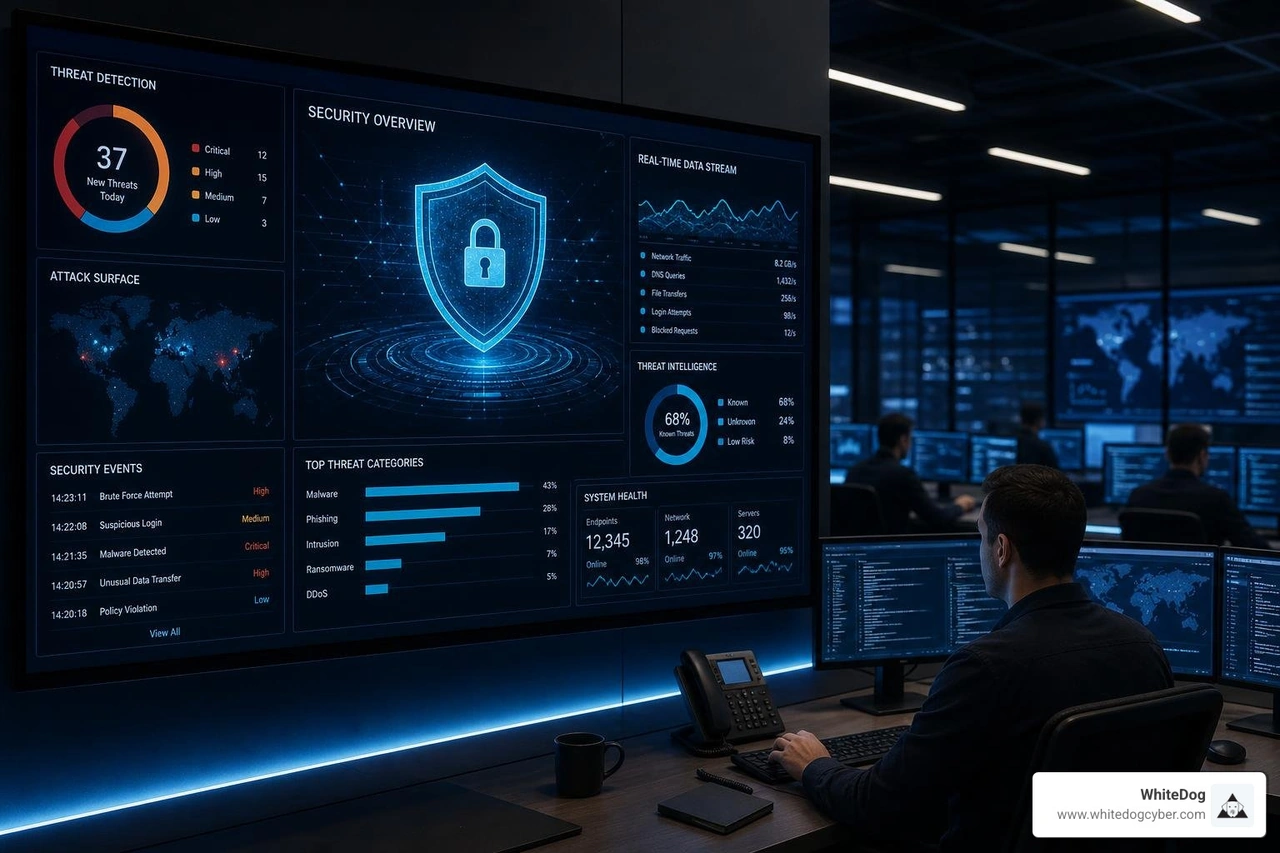
Alert volume is one of the biggest challenges for cloud security operations teams. With an estimated cyber attack occurring every 39 seconds, operations centers are easily overwhelmed by alerts if every minor anomaly triggers a high-severity page.
AWS centralizes finding aggregation through AWS Security Hub, which ingests findings from native security tools, Cloud Security Posture Management (CSPM) checks, and third-party integrations into a single pane of glass. Combined with threat feeds from Amazon GuardDuty—which analyzes VPC flow logs, CloudTrail management and data events, EKS audit logs, and DNS query logs—the environment continuously identifies suspicious activities.
To prevent fatigue, these findings undergo automated alert enrichment and human-in-the-loop triage. Rather than forcing analysts to manually gather context, event-driven rules cross-reference affected resource tags, identify workload ownership, and evaluate severity before alerting an on-call engineer. This automated filtering ensures responders focus on high-fidelity alerts that represent genuine business risk.
Organizations must decide between building a self-managed response practice, relying on AWS managed capabilities, or partnering with a managed detection and response provider.
AWS Security Incident Response simplifies the initial operational burden by triaging findings from GuardDuty and third-party tools directly within the console. It allows organizations to configure an incident response team of up to 10 key stakeholders—including technical engineers, legal counsel, and leadership—ensuring all necessary parties are notified during a major event.
While self-managed approaches using Systems Manager and EventBridge offer granular customization, they demand ongoing maintenance and internal engineering expertise. Rather than requiring separate incident response retainers, incident response is included directly within MDR, XDR, and Delta Detection & Response (DDR) solutions. For organizations seeking comprehensive 24/7 protection through modular integration rather than a rip-and-replace approach, engaging proactive incident response services and partnering with an MDR provider delivers round-the-clock SOC monitoring, rapid investigation, and guided containment.
Manual response in the cloud is often too slow to prevent lateral movement. When an attacker gains access to credentials, automated scripts can compromise multiple resources within seconds. Event-driven automation limits this blast radius by enforcing least-privilege IAM roles and executing containment actions instantly.
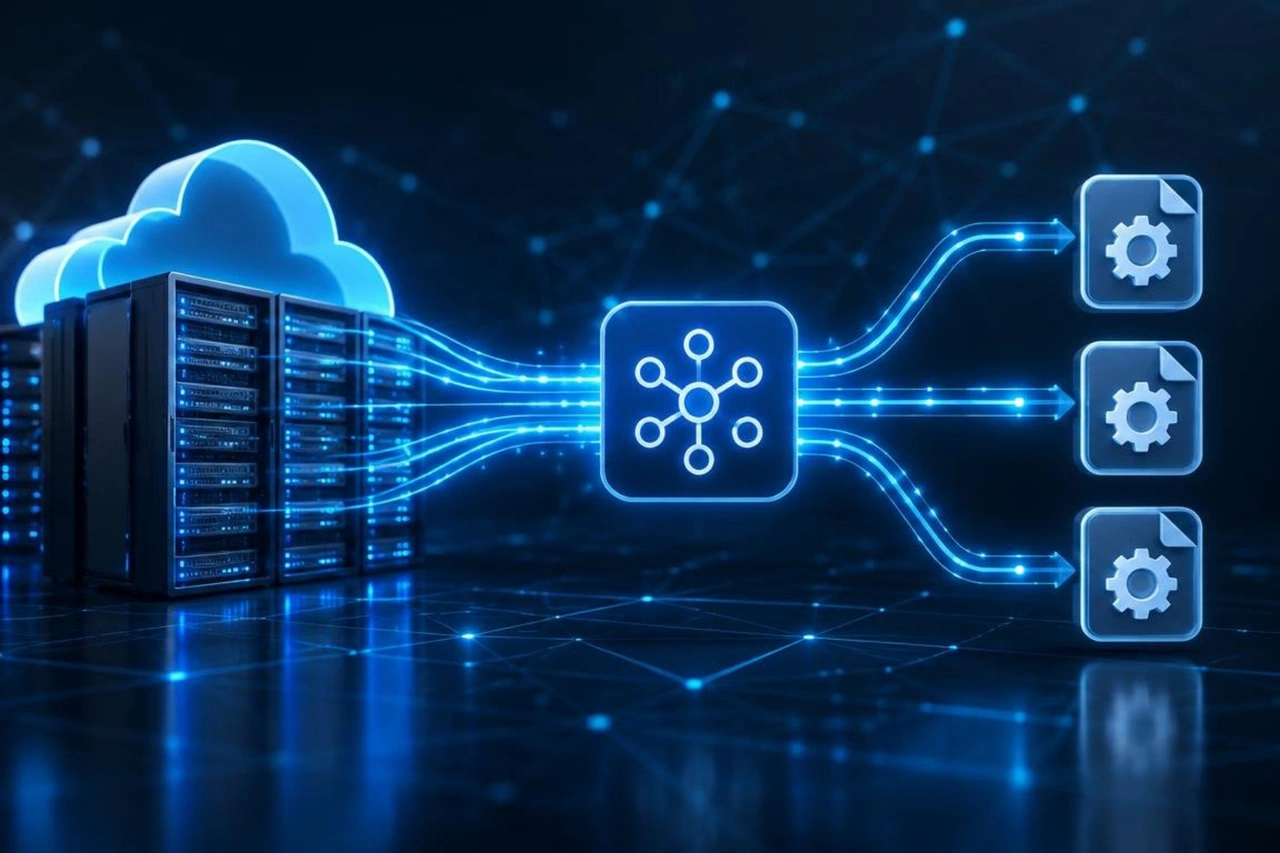
AWS Systems Manager Incident Manager automates incident response by turning alerts into structured response plans. When a critical finding occurs, Incident Manager initiates an incident record, engages on-call responders through multi-channel paging (SMS, Voice calls, and Email), and runs pre-configured AWS Systems Manager Automation runbooks.
To configure an effective Incident Manager workflow:
For deeper architectural examples, see the detailed AWS guide on automating incident response with AWS Systems Manager Incident Manager.
Amazon EventBridge acts as the central nervous system for cloud remediation. By defining custom event patterns, EventBridge captures specific operational anomalies and routes them to automation targets.
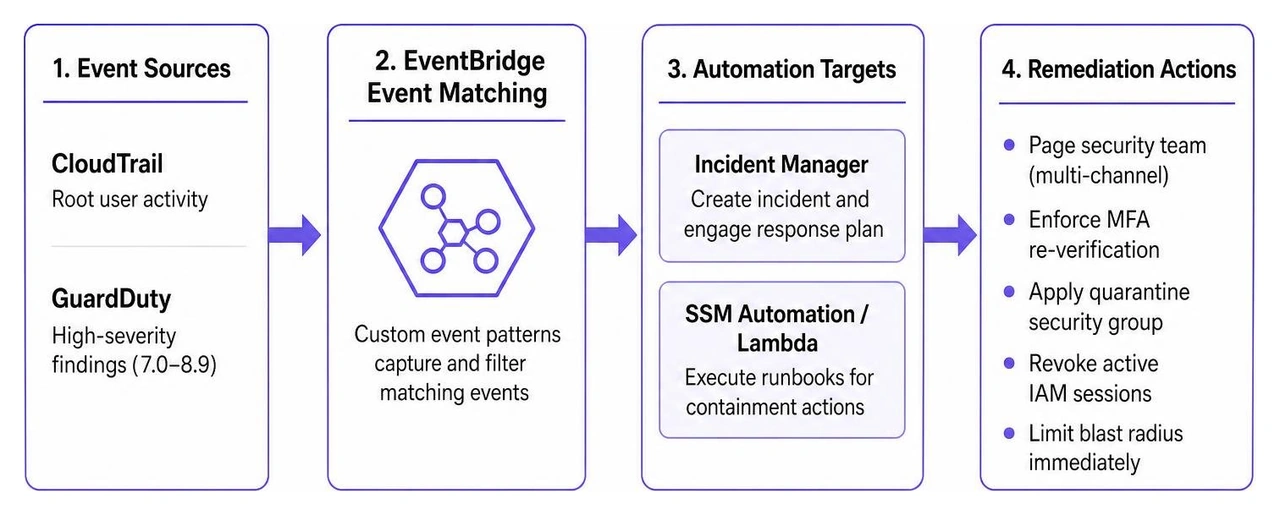
Two high-priority automation patterns include:
Misconfigurations often introduce the vulnerabilities that attackers exploit. AWS Config continuously records configuration changes and evaluates resource states against compliance rules.
For instance, the managed rule s3-bucket-public-read-prohibited monitors storage repositories. If a bucket's access control list (ACL) or policy changes to permit public reading, AWS Config detects a NON_COMPLIANT state change. This change emits an EventBridge event that immediately triggers a remediation runbook to apply S3 Block Public Access settings, closing the security gap before data exfiltration occurs. Tracking these drift patterns is explored in our AWS delta detection guide.
Even well-prepared organizations can face sophisticated incidents that require external escalation. Knowing when and how to mobilize specialized AWS support can make a significant difference during a major breach.
For edge attacks, AWS Shield provides always-on DDoS detection and automatic inline mitigations, protecting network availability alongside Amazon Linux firewall configurations on individual host instances.
The AWS Customer Incident Response Team (CIRT) is a 24/7 global team dedicated to helping customers navigate active security events. CIRT works directly with customer teams to investigate unauthorized activity, contain ongoing attacks, and recover normal operations.
CIRT should be mobilized during high-impact security incidents, such as:
Customers with Enterprise Support can open a critical support case via the AWS Support Center, requesting immediate CIRT engagement. CIRT analysts collaborate with your internal engineers or AWS Managed Services (AMS) teams, using CloudTrail, VPC flow logs, and internal telemetry to isolate attackers and identify root causes.
Preserving digital evidence during a cloud incident requires deliberate preparation before an event occurs. When isolating a compromised virtual machine, simply rebooting or terminating the instance destroys volatile memory where attack artifacts often reside.
Best practices for AWS forensic readiness include:
An incident response plan is only as reliable as its last successful test. Developing, testing, and iterating on response plans ensures that when a real breach occurs, your team responds with practiced precision.
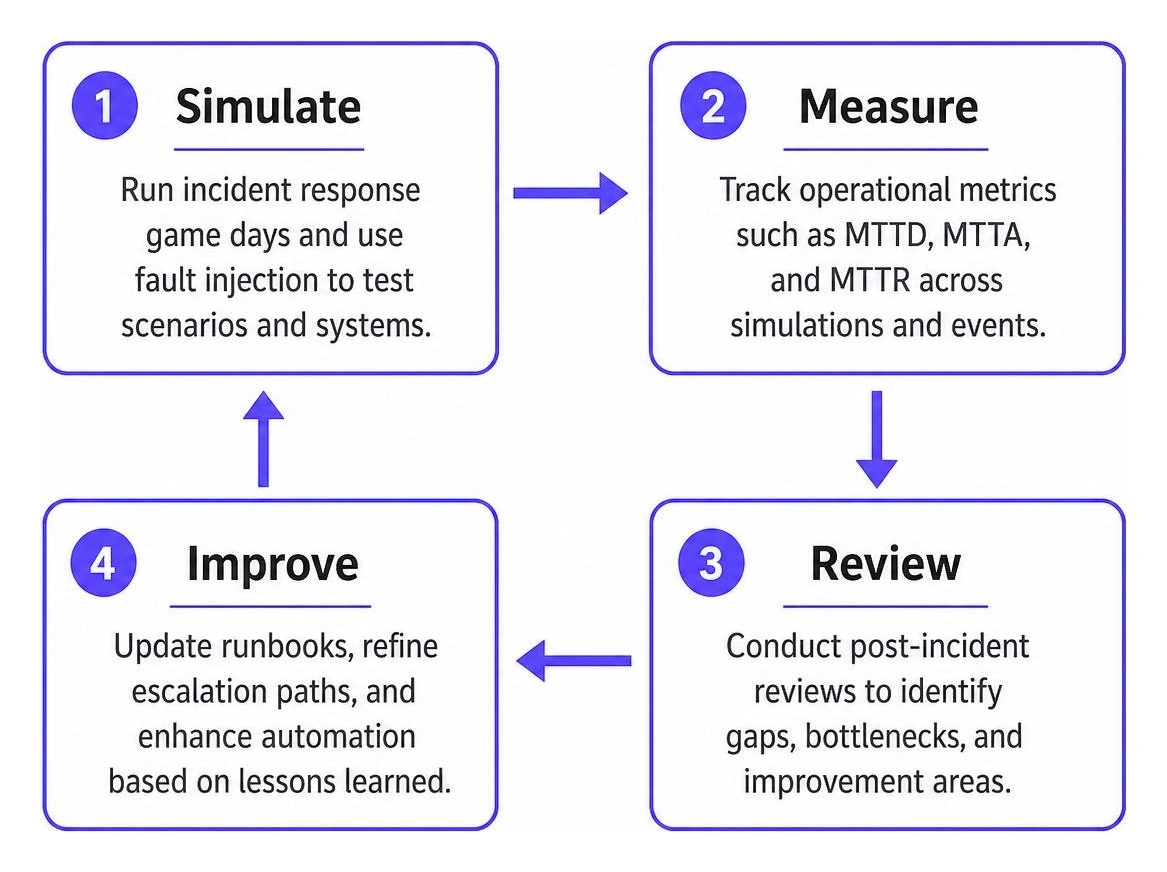
To build maturity in your cloud incident response practice:
AWS Security Incident Response focuses on the security operations domain. It ingests and triages findings from services like Amazon GuardDuty and AWS Security Hub, providing structured investigation workflows and team notifications for potential compromises. Systems Manager Incident Manager is an operational incident management tool designed to automate paging, runbook execution, and cross-functional coordination for both IT service outages and security-related disruptions.
If unauthorized root user activity occurs:
Escalate to AWS CIRT during active, critical security breaches that exceed internal containment capabilities. This includes widespread cloud account takeovers, active data exfiltration campaigns, unauthorized multi-region resource deployment, or incidents where assistance is needed to perform forensic log analysis using AWS internal telemetry.
Building resilient cloud operations requires moving beyond passive monitoring toward automated, coordinated response. By pairing native AWS detection tools like Amazon GuardDuty and AWS Security Hub with the automated routing of EventBridge and Systems Manager Incident Manager, organizations can contain threats rapidly and limit potential business disruption.
However, tools alone cannot guarantee resilience. Effective defense combines automation with skilled human expertise to interpret complex attack chains, eliminate operational noise, and make critical decisions under pressure. Incident response capabilities are included directly across MDR, XDR, and Delta Detection & Response (DDR) offerings rather than requiring separate retainers.
WhiteDog helps simplify cloud cybersecurity operations through a unified platform that connects visibility, detection, response, and risk management. As a Unified Cybersecurity Platform bringing together MDR, XDR, Delta Detection & Response (DDR), exposure management, and 24/7 SOC expertise, WhiteDog delivers correlated visibility across email, DNS, identity, endpoint, network, cloud, and data. Rather than requiring a rip-and-replace approach, WhiteDog emphasizes modular integration to complement and extend existing environments, helping organizations maximize their existing Microsoft security investments. Specifically, Delta 360 (Δ360), built on WhiteDog’s Open XDR framework, adds a unified operational and security layer across Microsoft and third-party tools to improve correlation, visibility, security hardening, threat detection, exposure management, and response, turning disconnected telemetry into actionable intelligence.
To evaluate how to mature your cloud detection and incident readiness, explore our detailed AWS Managed Security Services Guide.

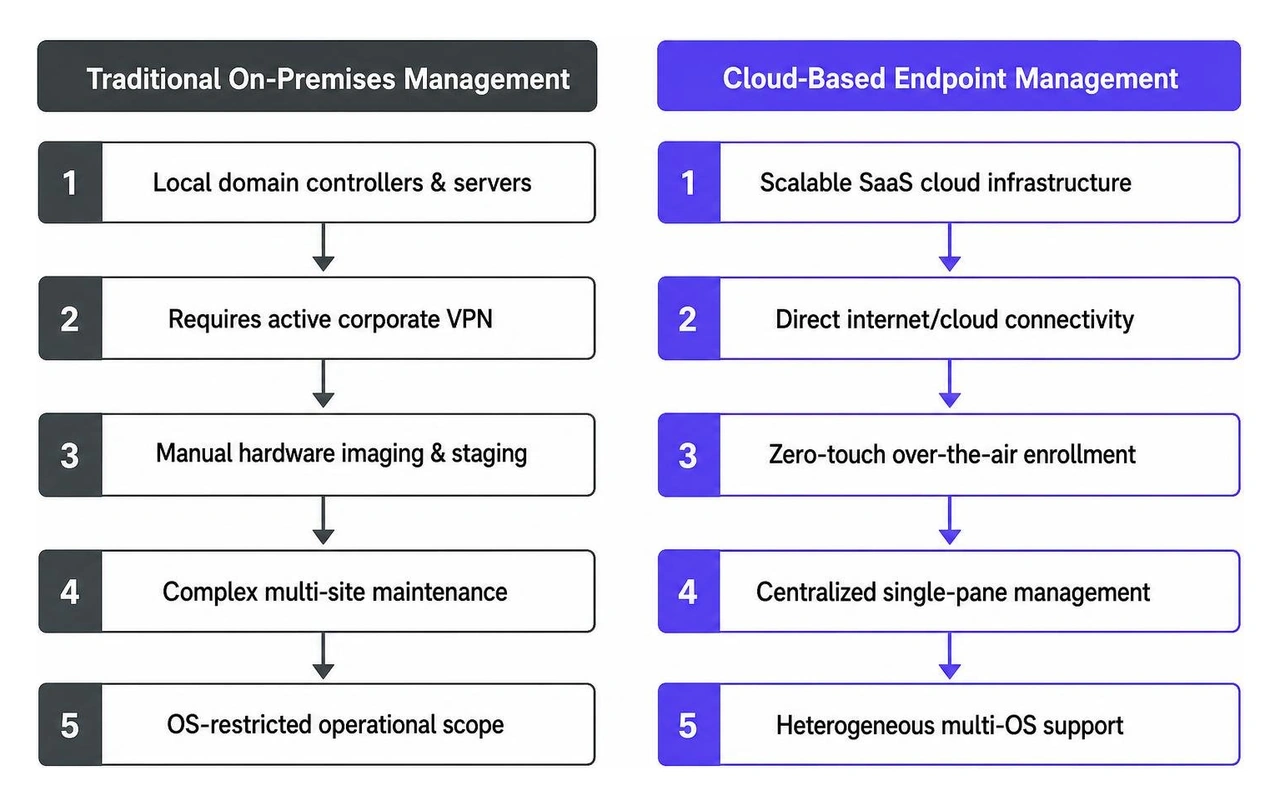
Compare cloud based endpoint management options with this checklist covering security, remote workforce support, and operational efficiency.

Compare MSP MDR detection services to reduce dwell time and boost efficiency with a unified 24/7 SOC platform.
Compare MSP MDR platform architecture vs. tool sprawl to reduce risk, improve detection, and scale your security operations.
The Ultimate Guide to Cybersecurity for Small Business - Learn about cyber security for small business

Beginner's Guide to IoT DDoS Risks and Security - Learn about internet of things ddos
An Essential Guide to Understanding n-Soc Meaning and Its Applications - Learn about n-soc