Cybersecurity
August 22, 2026
Unify your security with an XDR cybersecurity platform that correlates endpoint, network, and cloud threats for faster, managed response.
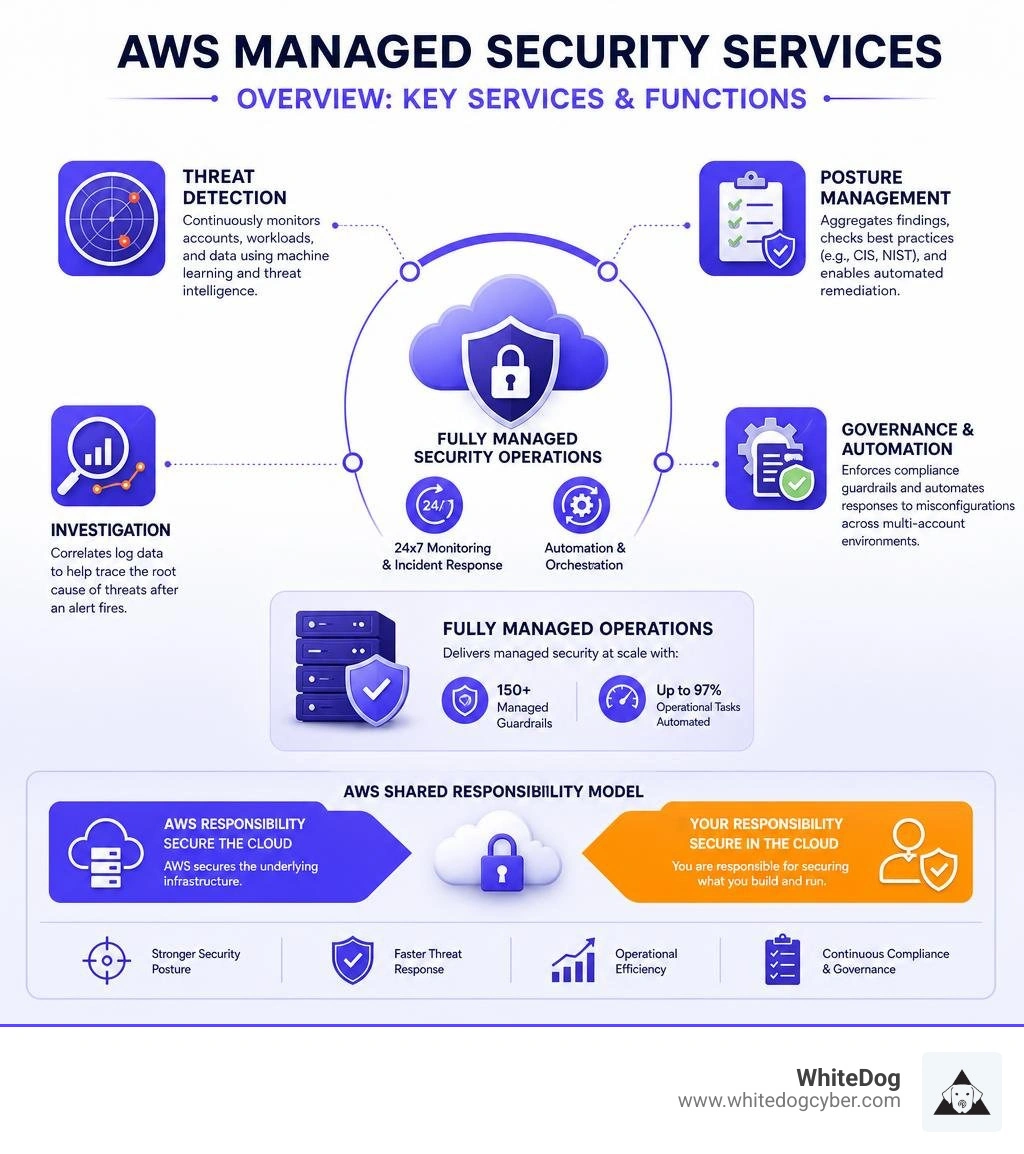
AWS managed security services give organizations a way to secure their cloud environments using AWS-native tools — without having to build and operate every control from scratch.
Here is a quick breakdown of what they include:
These services sit within the AWS shared responsibility model. AWS secures the underlying infrastructure. You are responsible for securing what you build and run on top of it. Managed security services help you meet that responsibility at scale.
That said, native AWS tools are only part of the picture. For MSPs and enterprise security teams managing complex, multi-client environments, knowing how to deploy, integrate, and operate these services effectively is where real security outcomes are won or lost.
I'm Shahin Pirooz, a cybersecurity and technology executive with over 20 years of experience building managed security and cloud services — including architecting and operating aws managed security services at scale across diverse industries. In this guide, I'll walk you through how these services work, how they fit together, and where you may need to go beyond native AWS tools to close the gaps.
When organizations scale their cloud footprint, they face a critical fork in the road: do they manage their security tools in-house, or do they adopt fully managed solutions?
Self-managed security tools are highly granular, but they come with significant operational overhead. Security teams must configure, maintain, and continuously update rules for every tool they deploy. This often leads to severe tool sprawl—where multiple disconnected security products generate a flood of uncoordinated alerts. Without a unified security operations center (SOC) to filter through the noise, key indicators of compromise are easily missed.
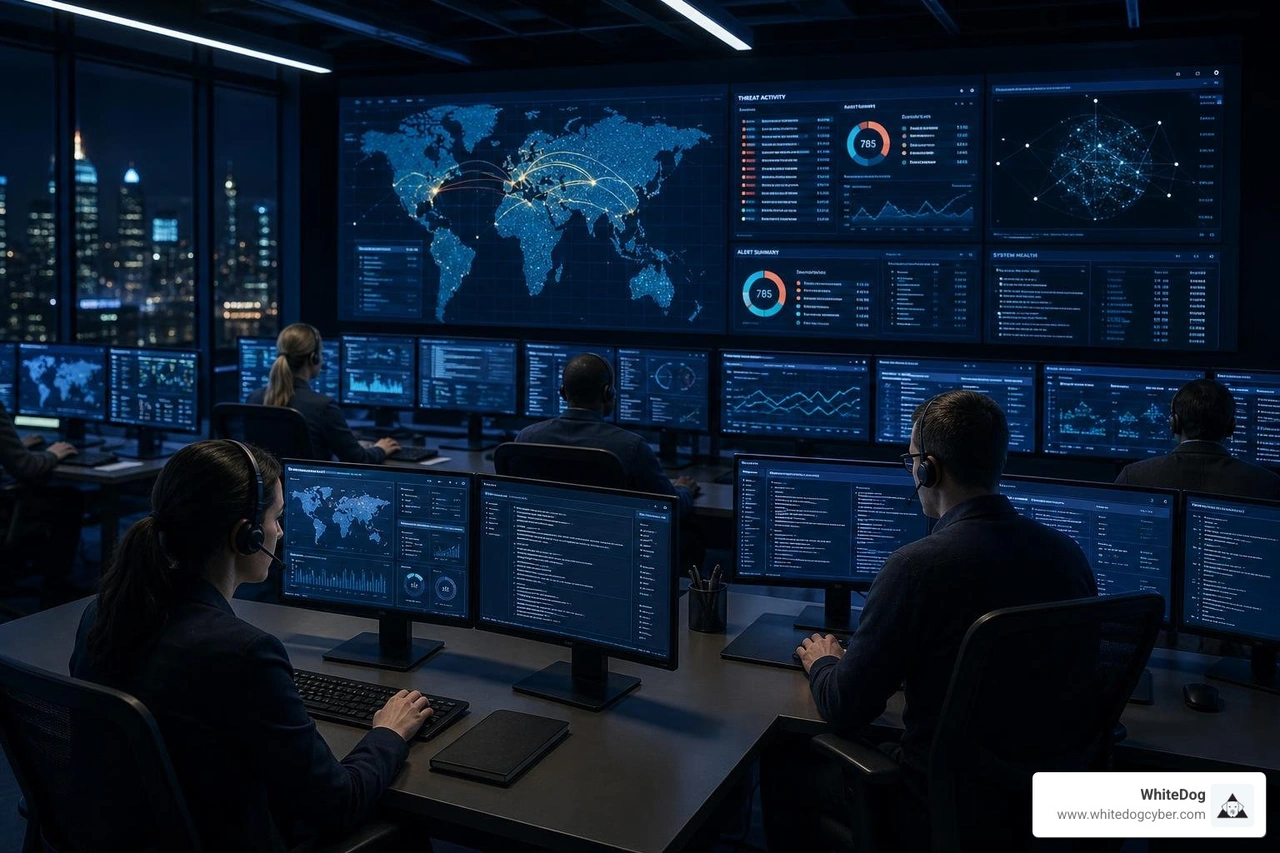
This operational burden is why many enterprises turn to Cyber Security Services for Companies. By shifting to aws managed security services, organizations offload tool maintenance and configuration to specialized software and experts, allowing their internal IT teams to focus on core business objectives.
| Feature / Capability | Self-Managed Security Tools | AWS Managed Security Services (AMS) |
|---|---|---|
| Operational Overhead | High (Internal teams must patch, update, and configure tools) | Low (AWS and automation handle infrastructure upkeep) |
| Response & Remediation | Manual or custom-scripted; prone to human error | Heavily automated; 97% of execution tasks automated via SSM |
| Incident Monitoring | Disconnected alerts; requires complex in-house SIEM/XDR | Integrated telemetry; 80% of incidents proactively detected |
| Compliance Management | Manual mapping of controls to frameworks | Continuous monitoring via 150+ managed guardrails |
| Talent Requirements | Requires dedicated, highly specialized cloud security engineers | Augmented by cloud experts and automated reasoning |
Building a resilient cloud architecture requires a layered defense. AWS categorizes its native security capabilities into specialized services that address threat detection, posture management, and incident response.
Rather than operating as isolated silos, these services are designed to share telemetry. When properly integrated, they form a continuous protection loop that identifies vulnerabilities before they can be exploited. For organizations seeking to extend these capabilities into a broader defense strategy, incorporating Managed Detection Response ensures that cloud-native alerts are immediately triaged and acted upon by security professionals.
At the heart of AWS threat detection is Amazon GuardDuty. This service functions as an intelligent, continuous monitoring engine that analyzes tens of billions of events daily across several primary AWS data sources, including AWS CloudTrail management and data events, Amazon VPC Flow Logs, and DNS query logs.
GuardDuty uses machine learning, anomaly detection, and integrated threat intelligence to spot malicious activity, such as unauthorized coin mining, credential exfiltration, or communication with known command-and-control servers.
Because GuardDuty operates at the cloud infrastructure level, it does not require you to deploy software agents or manage complex log pipelines. It feeds its detections directly into AWS Security Hub.
Security Hub acts as the Cloud Security Posture Management (CSPM) center, aggregating and prioritizing findings from GuardDuty alongside other AWS security services. By aligning these findings with open standards—such as the CIS Benchmarks and NIST frameworks—Security Hub gives security leaders a single pane of glass to measure their overall security posture.
To bridge the gap between cloud infrastructure alerts and endpoint telemetry, many organizations combine these native feeds with MDR in Cyber Security to achieve complete, cross-environment visibility.
While AWS Security Hub is excellent at identifying what is misconfigured or under attack, it is not designed to help you conduct deep forensic investigations. That is where Amazon Detective comes in.
When GuardDuty flags a critical threat—such as an EC2 instance communicating with an anomalous IP address—your security analysts need to understand the scope of the compromise.
Amazon Detective automatically collects and aggregates log data from CloudTrail, VPC Flow Logs, and GuardDuty findings. It uses graph visualization and machine learning to build an interactive map of relationships between resources, IP addresses, and user accounts.
Using Detective, an analyst can instantly see:
In short, Security Hub CSPM is your daily posture monitor and compliance dashboard, while Amazon Detective is your specialized forensic tool for root-cause analysis. When used alongside modern Managed Detection and Response Tools, these services significantly reduce the dwell time of attackers in your cloud environment.
Securing a single AWS account is relatively straightforward. Securing hundreds of accounts across multiple business units is an entirely different challenge. To maintain consistency, organizations must automate their operational security tasks.
Through AWS Managed Services , organizations can leverage pre-built operational frameworks that execute standard security tasks automatically. This structured approach is highly beneficial for Cyber Security Managed Service Providers who need to scale security operations across multiple client environments without adding administrative friction.
For enterprises that want to offload the day-to-day administration of their cloud infrastructure, the AWS Managed Services Accelerate Plan – AWS provides a path to operational excellence. AMS Accelerate operates directly within your existing AWS accounts, taking over the heavy lifting of patch management, backup configuration, access management, and continuous monitoring.
One of the biggest advantages of AMS is its pre-authorization against major compliance frameworks. AMS environments are continuously audited and certified against:
AMS achieves this compliance at scale by enforcing more than 150 managed guardrails and security checks across your accounts. If an EC2 instance is launched without encryption, or if a security group is opened to the public internet, AMS automatically detects and remediates the issue.
This level of structured compliance is particularly valuable for businesses operating in highly regulated sectors, such as those relying on Cincinnati Managed Security Services to align local operations with global cloud security standards.
True operational security relies on automation. AWS Systems Manager (SSM) allows organizations to execute automated playbooks—known as SSM Documents—to remediate security misconfigurations instantly.
For example, if Security Hub detects an unencrypted Amazon S3 bucket, it can trigger an automated response via AWS Systems Manager to apply encryption or restrict public access without requiring human intervention. In fact, AMS executes over 1.35 million SSM documents per month, achieving up to 97% automation across standard operational tasks.
To ensure these automated controls are deployed consistently, organizations use AWS Control Tower. Control Tower sets up a secure, multi-account landing zone and delegates security administration. Best practice dictates delegating the administration of Security Hub and GuardDuty to a dedicated "Security Audit" account provisioned by Control Tower, maintaining a strict separation of duties.
Additionally, AWS utilizes provable security—the application of mathematical logic and automated reasoning to validate infrastructure configurations.
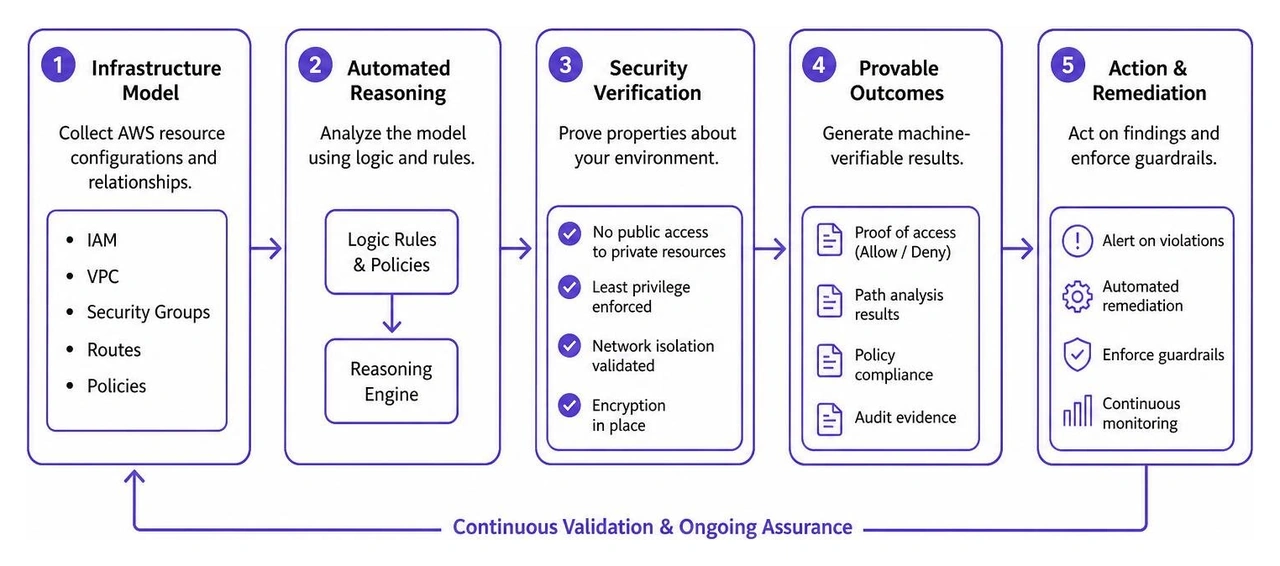
Through tools like IAM Access Analyzer and VPC Reachability Analyzer, automated reasoning allows you to prove mathematically that your resources are secure. For instance, VPC Reachability Analyzer can prove whether a network path exists between an internet gateway and a private database instance, eliminating guesswork and giving compliance auditors ironclad proof of security.
For MSPs managing these complex architectures, utilizing a Co-Managed Security for MSP model ensures that these automated AWS policies are continuously aligned with broader enterprise security goals.
AWS Security Hub CSPM is a continuous posture management service. Its primary job is to scan your AWS resources against security standards (like CIS Benchmarks) and aggregate alerts from other AWS services. It tells you where your vulnerabilities are and what security rules have been violated.
Amazon Detective, on the other hand, is an investigation platform. It does not generate security alerts; instead, it digests raw log data to help you investigate a security incident after an alert is triggered.
While Security Hub shows you the active alarms, Amazon Detective provides the detailed timeline, visual graphs, and historical context needed to find the root cause of the threat. Combining these tools allows teams to move Beyond Traditional SIEM Actionable Security Intelligence by focusing on verified, context-rich alerts rather than raw log volume.
AWS Managed Services (AMS) uses an automation-first approach to handle security incidents across massive cloud environments.
Through continuous monitoring, AMS proactively detects and notifies customers of 80% of security incidents. When a high-severity alert is triggered, AMS utilizes automated playbooks to isolate affected workloads (such as isolating an EC2 instance in a restricted security group) to prevent lateral movement.
This automated tier 1 response is backed by 24x7 global coverage from cloud security experts, ensuring that critical incidents receive a response within 15 minutes and remediation begins within 4 hours. For service providers, integrating this capability with a 24x7 SOC for MSPs ensures that both cloud and on-premises alerts are handled under a single, unified response SLA.
Building an in-house security operations center to monitor cloud infrastructure 24x7 is incredibly expensive. It requires hiring specialized cloud security engineers, licensing SIEM and SOAR platforms, and continuously developing custom integration scripts.
Adopting aws managed security services reduces these overheads significantly:
For MSPs looking to deliver these outcomes to their clients without the capital expense of building their own security infrastructure, leveraging an MSP SOC as Service model offers a highly scalable, predictable alternative.
AWS provides an exceptional suite of native security tools. However, for modern enterprises and MSPs, relying solely on native tools often leads to a new kind of challenge: managing a specialized, separate security silo that is disconnected from the rest of your IT ecosystem.
Your endpoints, identity providers, on-premises networks, and SaaS applications all generate critical security telemetry. If your security team has to jump between the AWS console and multiple other security dashboards, critical context is lost, and threat response times suffer.
We believe that true security shouldn't be siloed. That is why WhiteDog provides a Unified Cybersecurity Platform—a curated, actively managed security stack where best-in-class tools are integrated through advanced correlation and operated by our 24x7 SOC. Rather than suggesting a 'rip and replace' approach, we emphasize modular integration, allowing you to seamlessly connect and enhance your existing security investments.
Instead of forcing your team to manage tool sprawl, our platform collects raw telemetry from your entire environment (including your AWS native security feeds), filters and deduplicates the noise, normalizes the data to your specific assets, enriches it with global threat intelligence, and produces prioritized detections.
We deliver this unified visibility through our One Comprehensive XDR Platform, helping you move past the realization that Endpoint Security Isn't Enough to secure modern, hybrid environments.
Depending on your operational needs, we offer two clear paths, with incident response (IR) fully included across our MDR, XDR, and DDR offerings:
For managed service providers, WhiteDog is An MSPs Best Friend. We are Built for Service Providers Ready to Scale, which is why WhiteDog Introduces Fully Managed Cybersecurity Solutions to Support Scaling MSPs with a 30-day onboarding guarantee. Discover How MSPs Are Expanding with WhiteDog and learn about Scaling Your MSP Security Offerings with WhiteDog to protect your clients across both cloud and local infrastructure.
Ready to simplify your security operations, reduce your digital risk, and eliminate cloud security blind spots? Explore our comprehensive security offerings at WhiteDog Cyber Solutions and let us help you secure your cloud journey.

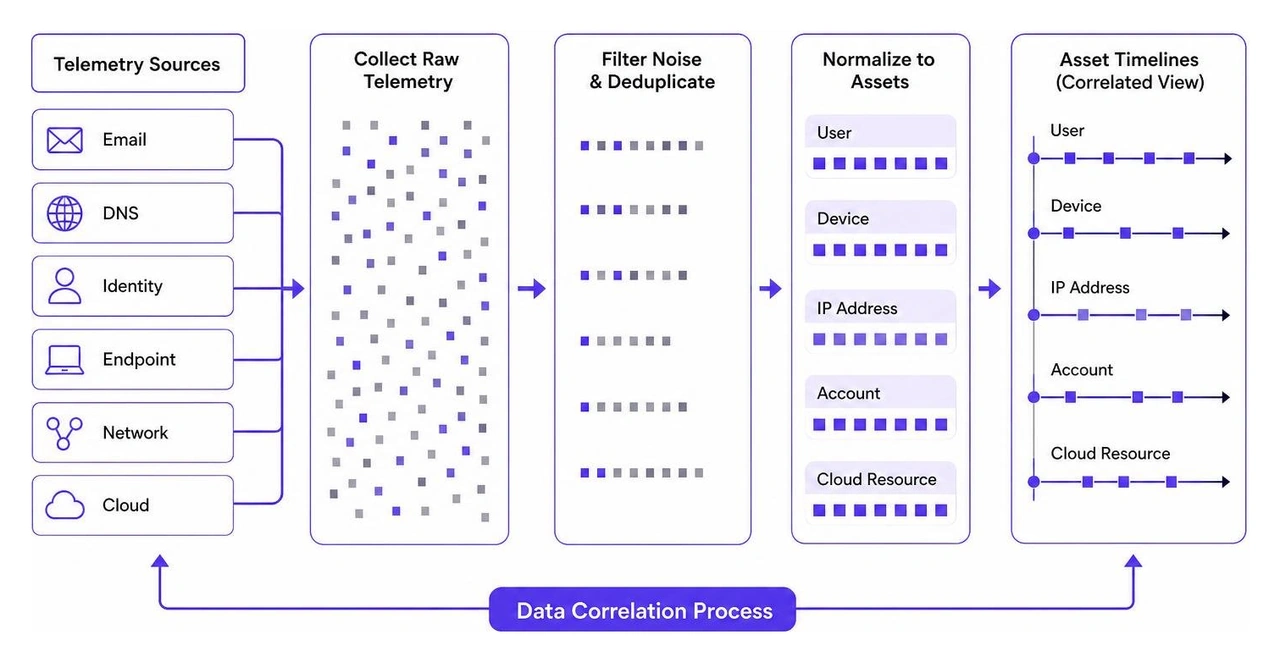
Unify your security with an XDR cybersecurity platform that correlates endpoint, network, and cloud threats for faster, managed response.
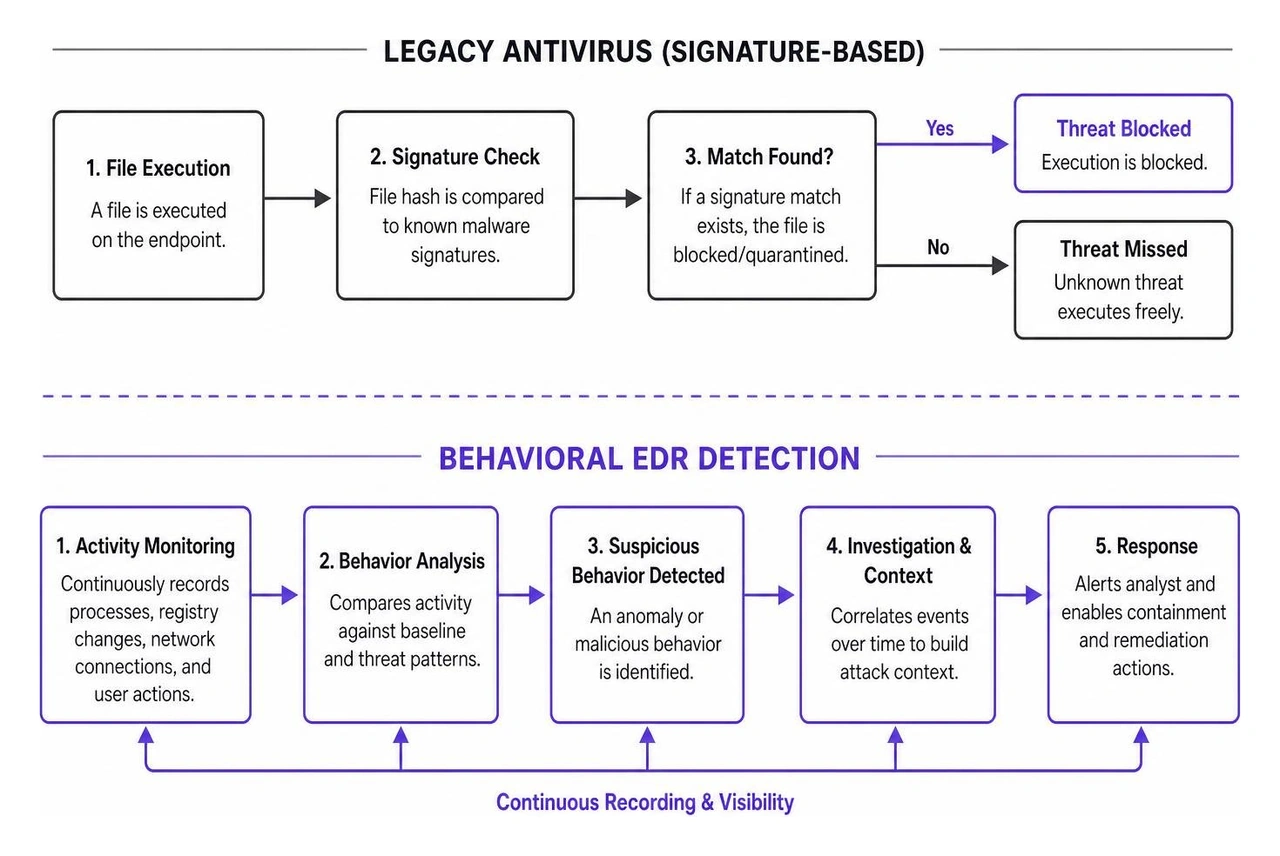
Compare EDR, XDR, and MDR solutions in this guide to endpoint detection & response, featuring WhiteDog's unified platform with 24/7 SOC and incident response.
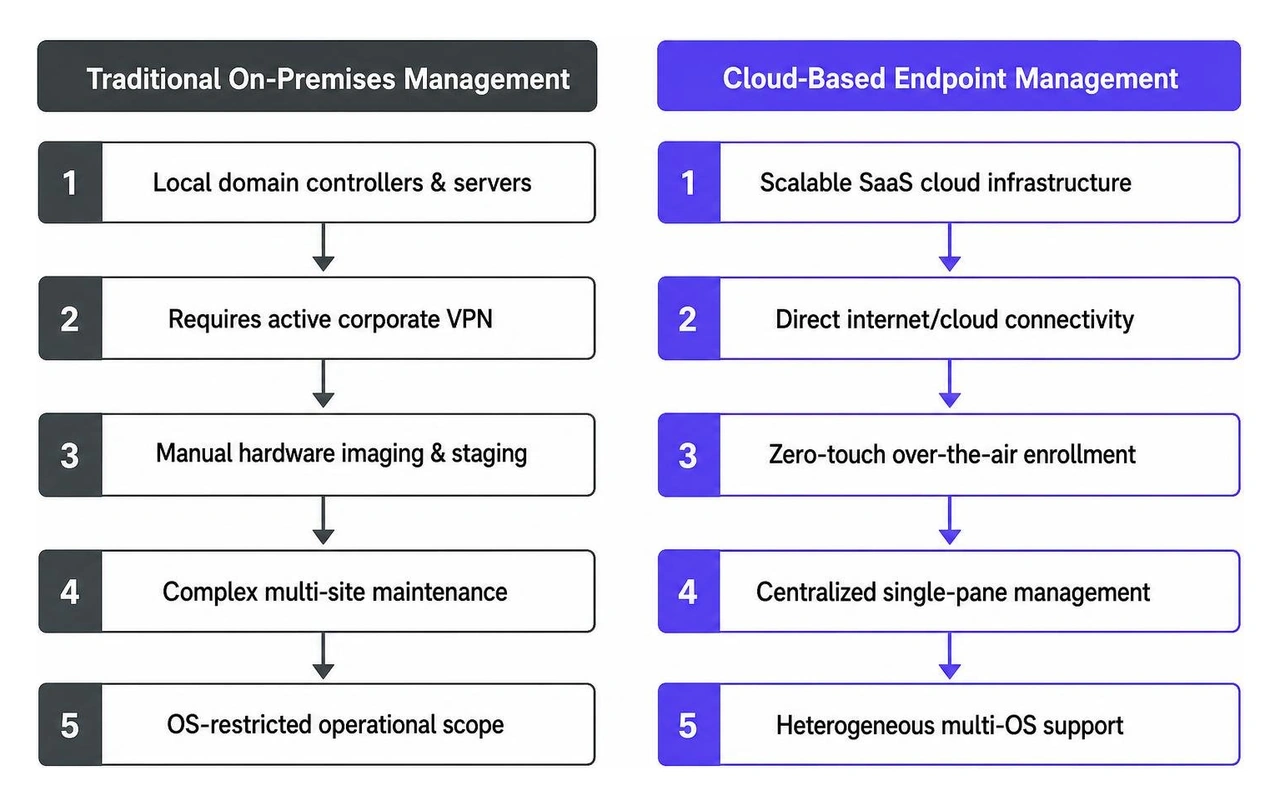
Compare cloud based endpoint management options with this checklist covering security, remote workforce support, and operational efficiency.

Compare MSP MDR detection services to reduce dwell time and boost efficiency with a unified 24/7 SOC platform.
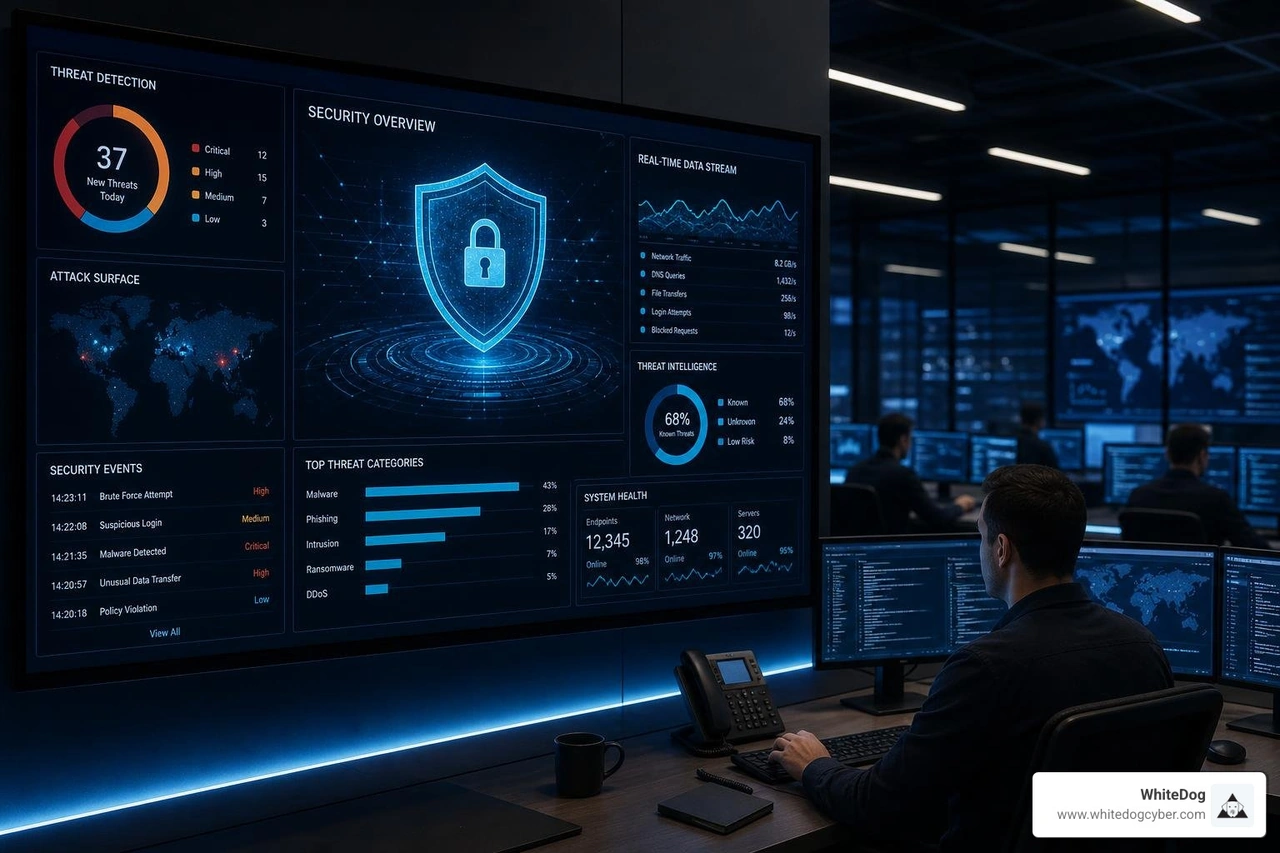
Compare MSP MDR platform architecture vs. tool sprawl to reduce risk, improve detection, and scale your security operations.
The Ultimate Guide to Cybersecurity for Small Business - Learn about cyber security for small business