Cybersecurity
August 17, 2026
Compare cloud based endpoint management options with this checklist covering security, remote workforce support, and operational efficiency.
The benefits of ztna are clear: it replaces outdated, network-wide VPN access with precise, identity-driven controls that dramatically reduce your attack surface. Here is a quick look at what ZTNA delivers:
VPNs were built for a different era. They assume that once you are inside the network, you can be trusted. That assumption is now a liability. With hybrid workforces, cloud apps everywhere, and attackers actively targeting remote access pathways, the old "castle and moat" model simply does not hold up. More than half of organizations say security gaps and poor user experiences are their top frustrations with VPNs — and 65% of enterprises are already planning to replace them.
ZTNA flips the model entirely. Instead of granting access to a network, it grants access to specific applications — only after verifying identity, device health, and context. No broad tunnels. No implicit trust. No unnecessary exposure.
I'm Shahin Pirooz, a cybersecurity executive with over two decades of experience building managed security and cloud services, and I've watched as the benefits of ztna have moved from theoretical to mission-critical for organizations of every size. In the sections below, I'll walk you through exactly why ZTNA is the right move — and how to get there without disrupting your operations.
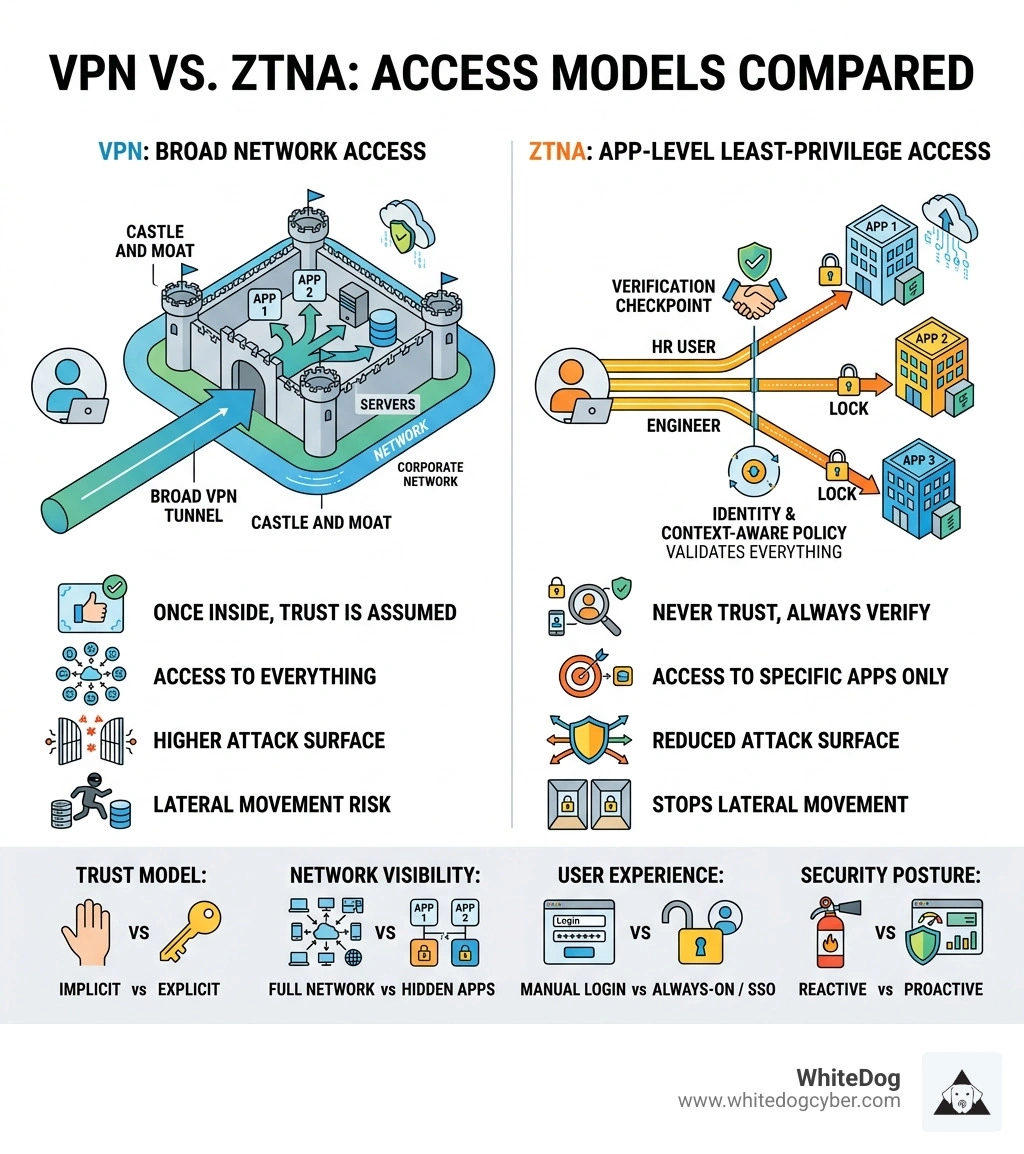
To understand why so many of our partners are moving away from legacy hardware, we first have to define what Zero Trust Network Access (ZTNA) actually is. At its core, ZTNA is a security architecture that provides users with seamless and secure remote access to internal applications without ever placing those users on the corporate network.
Unlike a VPN, which acts like a "secure gatehouse" that lets you wander the entire castle once you're inside, ZTNA is more like a personal escort that takes you to one specific room and locks the door behind you. It is built on the philosophy of Zero Trust Explained: Always Assume Compromise. This means we never assume a user is safe just because they have the right password or are connecting from a known location.
ZTNA often utilizes a Software-Defined Perimeter (SDP) to create what we call a "dark cloud." In a traditional setup, your VPN gateway sits on the internet with an open port, practically begging hackers to try and brute-force it. ZTNA changes the game by using outbound-only connections.
Because the application infrastructure remains hidden from the public internet, it becomes invisible to unauthorized users. If an attacker can't see an IP address, they can't attack it. This "infrastructure invisibility" is one of the most underrated benefits of ztna, as it effectively removes your most vulnerable assets from the global "hit list" of automated bot scanners.
As we move through 2026, the industry has evolved from ZTNA 1.0 to ZTNA 2.0. While the first generation was a great start, it had a "connect and forget" flaw. Once a user was verified, the system stopped checking on them.
ZTNA 2.0 introduces continuous verification. It operates at Layer 7 (the application layer) rather than Layer 3 (the network layer). This allows for "App-ID" based access, meaning the system identifies the specific application being used, not just the IP or port. This provides true Zero Trust Network Access (ZTNA) capabilities where security inspection is constant. If a user’s device suddenly starts behaving like it has been infected with malware mid-session, ZTNA 2.0 can terminate that specific connection instantly.
The shift from VPN to ZTNA isn't just a minor upgrade; it’s a fundamental change in how we protect data. When the "edge" has disappeared, we have to rethink how we define trust. Our research into Redefining Security in a World With No Edge shows that the old perimeter is dead.
| Feature | Traditional VPN | ZTNA |
|---|---|---|
| Trust Model | Implicit (Once in, trusted) | Zero Trust (Never trust, always verify) |
| Access Level | Full Network Segment (Layer 3) | Specific Application (Layer 7) |
| Visibility | Hidden within the tunnel | Granular per-app logging |
| Attack Surface | Exposed IP/Open Ports | Invisible/Dark Cloud |
| Security Check | At login only | Continuous verification |
VPNs rely on implicit trust. If you have the keys to the front door, the VPN assumes you belong in the kitchen, the bedroom, and the basement. ZTNA removes this assumption. By requiring identity verification, device posture checks (is the antivirus running? is the OS patched?), and contextual analysis (is this user logging in from a new country at 3 AM?), ZTNA ensures that access is only granted when the risk is low.
One of the most dangerous aspects of a VPN is the "blast radius." If a single remote worker's laptop is compromised by ransomware, that malware can use the VPN tunnel to spread across your entire server farm. This is called lateral movement.
ZTNA stops this through micro-segmentation. Instead of one big tunnel to the network, ZTNA creates individual "microtunnels" between the user and the specific application they need.
For organizations managing sensitive environments, like industrial control systems, these 6 Advantages of ZTNA are vital. Features like session-level controls and credential injection mean that even third-party vendors can perform maintenance without ever knowing the actual passwords to your critical systems.

Beyond security, the benefits of ztna extend deep into how your IT team actually functions. We often see IT leaders struggling with "appliance fatigue"—the constant need to patch, update, and scale physical VPN concentrators. ZTNA, being cloud-native, eliminates this overhead.
If you’ve ever been through a Merger or Acquisition, you know the nightmare of joining two networks. Often, both companies use the same internal IP ranges (like 192.168.1.x), leading to massive routing conflicts. In our guide From VPNs to ZTNA: Are You Solving the Problem or Just Moving It?, we discuss how ZTNA bypasses this entirely. Since ZTNA connects users to applications and not networks, IP overlaps don't matter. You can give the new employees access to your apps on day one without touching their network settings.
Today’s enterprise relies on more than just full-time staff. You have contractors, consultants, and partners who all need access to something, but definitely not everything.
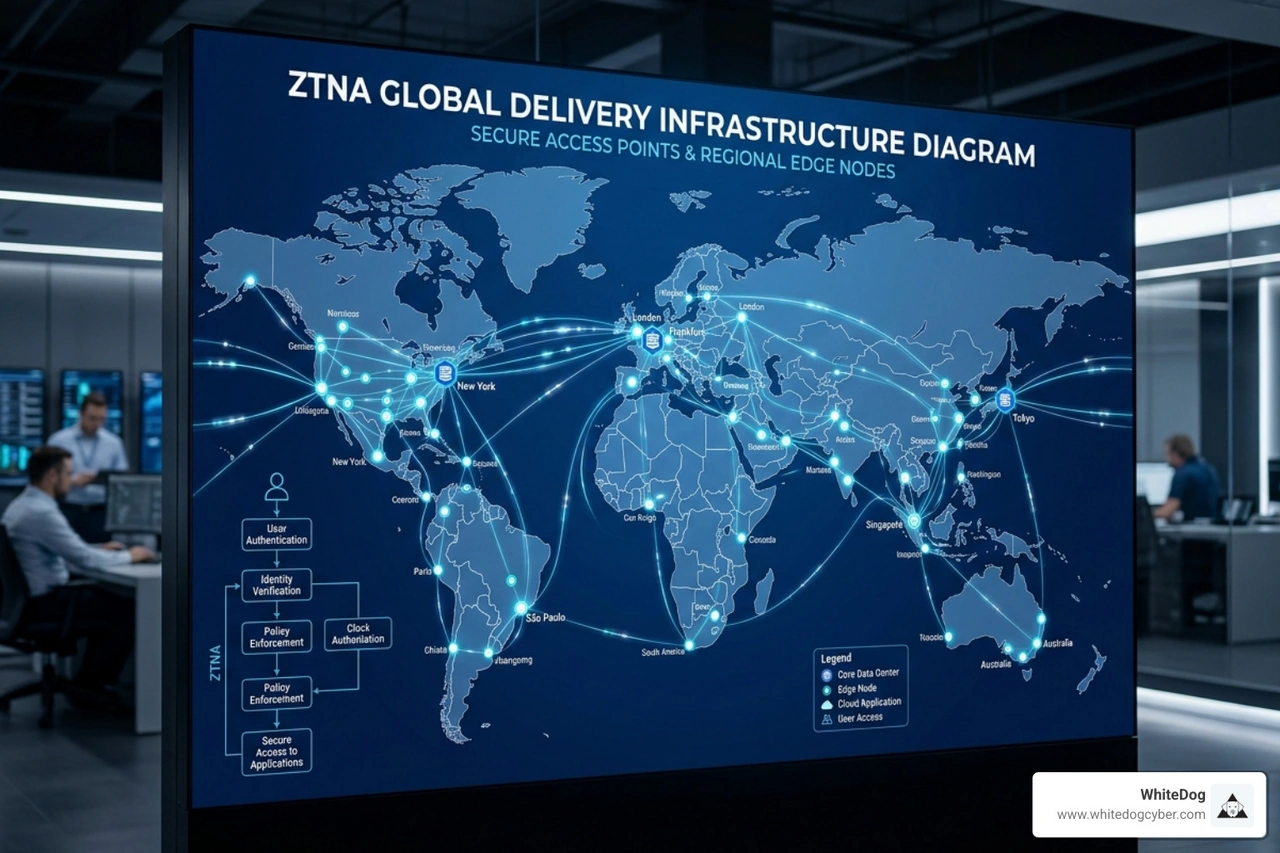
Let’s be honest: users hate VPNs. They are slow, they drop connections, and they require a separate login that always seems to break at the worst time. ZTNA is designed to be "transparent." When properly implemented with Single Sign-On (SSO), a user simply opens their browser or app, and the ZTNA client handles the authentication in the background.
As we move into a world where bots and AI drive much of the internet's traffic, as explored in Zero Trust in a Bot-Driven World: Securing the Internet's Next Era, having a high-performance, identity-aware gateway is no longer optional.
ZTNA allows for modular integration into your existing environment, avoiding the need for a total infrastructure overhaul. In fact, we recommend a phased approach to ensure that productivity remains high while your security posture hardens.
You cannot protect what you don't know exists. Start by inventorying your applications and identifying who actually needs access to them. This is also the time to clean up your Active Directory or identity provider. If your identity hygiene is poor, your Zero Trust house is built on sand.
Choose a few low-risk, high-volume applications—like an internal HR portal or a ticketing system—and move them to ZTNA first. This allows your team to get a feel for policy creation without risking mission-critical operations.
ZTNA is a core component of SASE (Secure Access Service Edge). By integrating ZTNA with your broader security stack, you gain a "single pane of glass" for management. For more information on how this fits into a total security strategy, you can explore WhiteDog solutions.
Absolutely. In many ways, it is more practical. Because ZTNA automates much of the "trust verification" process, it reduces the burden on small IT teams. Users don't need to be technical experts to use it; if they can log into their email, they can use ZTNA. It removes the "connect/disconnect" friction that often leads non-technical users to find insecure workarounds (shadow IT).
With a VPN, your logs usually show that "User A connected at 9 AM and disconnected at 5 PM." You have no idea what they did in between. ZTNA provides granular, session-level logging. We can see that "User A accessed the Finance Database, downloaded three files, and then attempted to access the Engineering Server (which was denied)." This level of detail is a goldmine for compliance audits and incident response.
The three most common use cases we see today are:
The benefits of ztna represent a paradigm shift in cybersecurity. By moving from a model of "trust but verify" to "never trust, always verify," organizations can finally get ahead of modern threats like ransomware and credential theft.
At WhiteDog Cyber, we believe that security should be a core differentiator, not a bolt-on service. Our Unified Cybersecurity Platform is designed specifically to help MSPs and their clients navigate this transition. We don't just hand you a tool; we provide a curated, actively managed security stack.
Our 24/7 SOC doesn't just watch alerts; they investigate, triage, and respond. By collecting raw telemetry from across your environment and using advanced correlation and deduplication, we normalize data to your specific assets. We then enrich that data with global threat intelligence to produce prioritized detections.
This approach eliminates "tool sprawl" and replaces it with a single, correlated security timeline. The result? Significant risk reduction, improved operational efficiency, and a dramatic reduction in dwell time for any potential threats. Whether you are looking for Open XDR for unified visibility or a fully managed MDR, XDR, or Delta Detection & Response (DDR) solution—with incident response included in MDR, XDR, and DDR—we have the stack to protect your future.
Ready to leave the limitations of your VPN behind? Learn more about how WhiteDog solutions can secure your journey to Zero Trust.

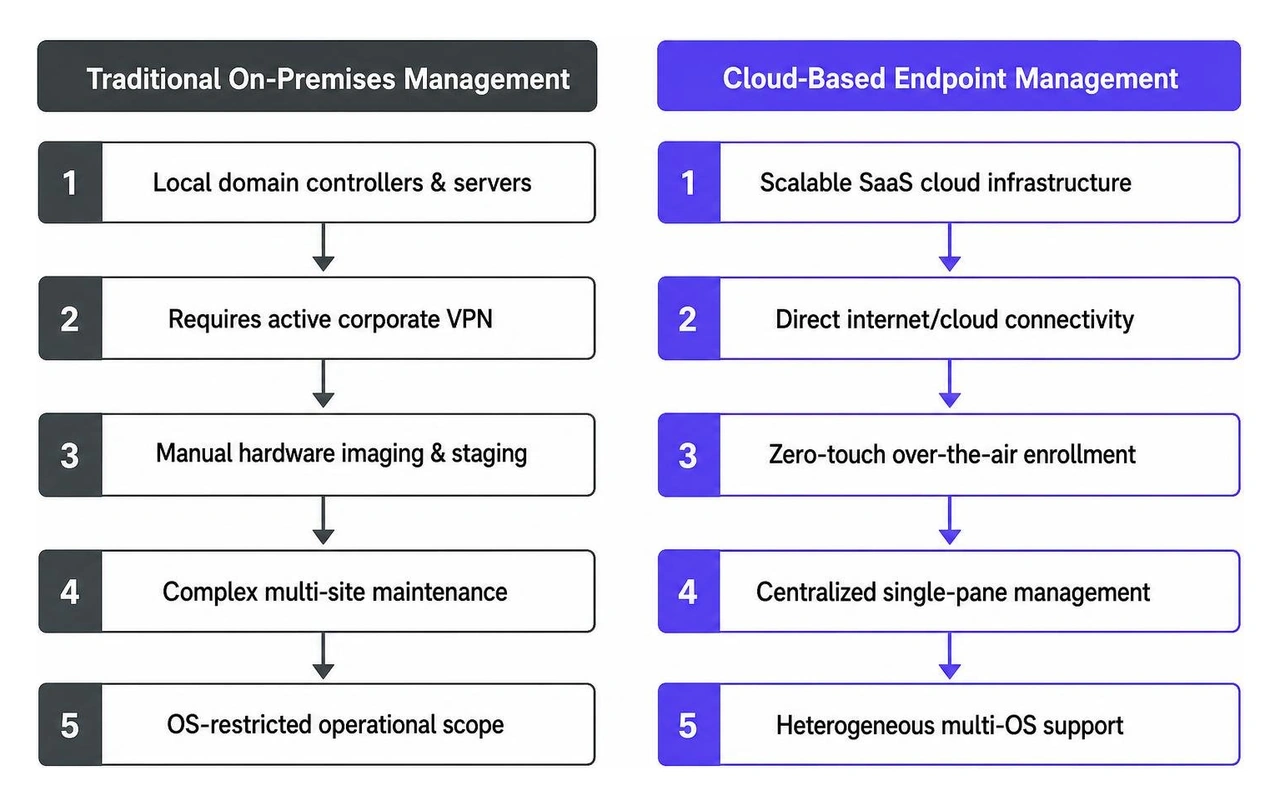
Compare cloud based endpoint management options with this checklist covering security, remote workforce support, and operational efficiency.

Compare MSP MDR detection services to reduce dwell time and boost efficiency with a unified 24/7 SOC platform.
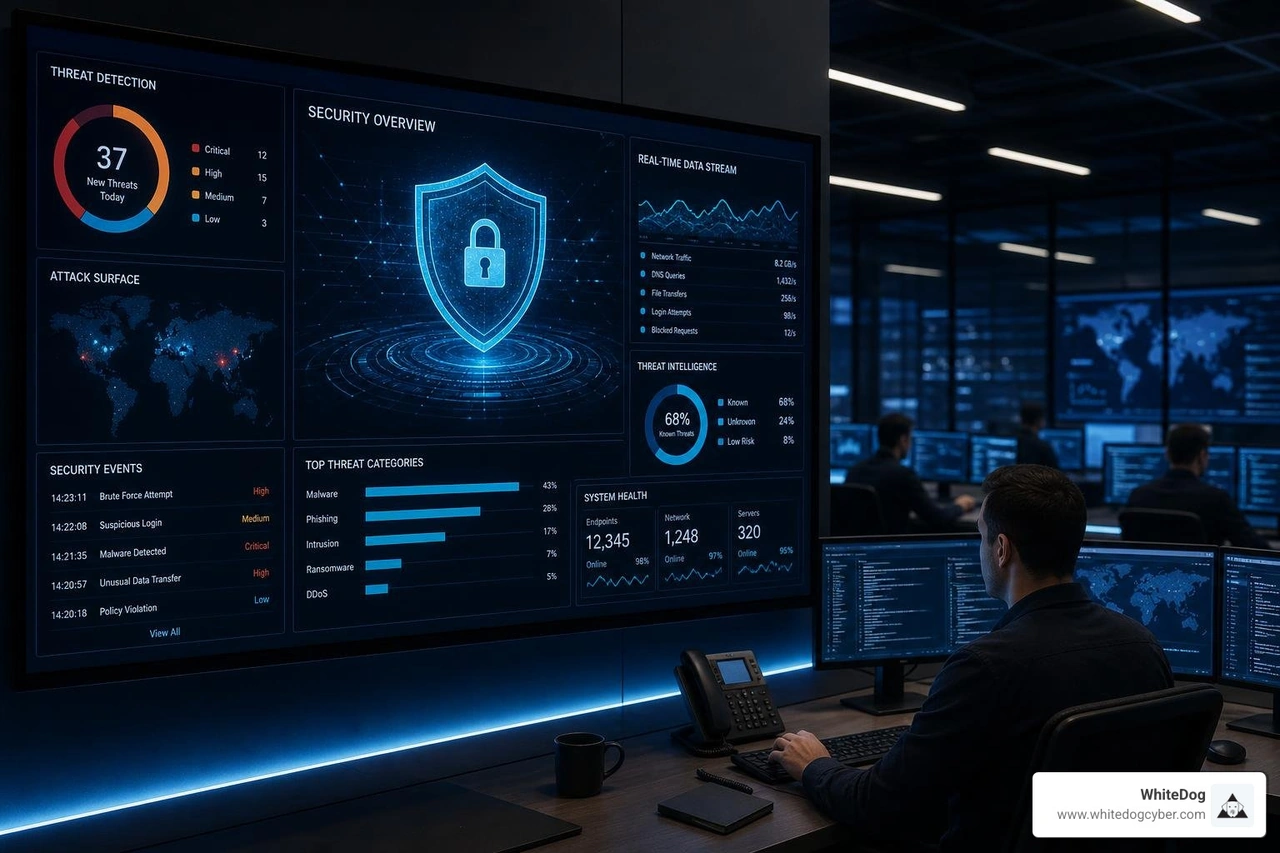
Compare MSP MDR platform architecture vs. tool sprawl to reduce risk, improve detection, and scale your security operations.
The Ultimate Guide to Cybersecurity for Small Business - Learn about cyber security for small business
Beginner's Guide to IoT DDoS Risks and Security - Learn about internet of things ddos

An Essential Guide to Understanding n-Soc Meaning and Its Applications - Learn about n-soc