Cybersecurity
September 4, 2026
Learn the five pillars of MSP risk reduction to secure operations, manage vendor risk, and build defensible compliance.
Cyber security managed service providers are third-party organizations that take over — or share — the responsibility of protecting your clients' digital environments. Here's a quick snapshot of what they do and what to look for:
What MSSPs typically offer:
What separates a strong MSSP from a weak one:
There's an old business saying: master your strengths, outsource your weaknesses. For most MSPs and IT teams, cybersecurity has become exactly that — a critical weakness, not because of lack of effort, but because the threat landscape moves faster than any internal team can track alone. Managing a complex, evolving security stack across dozens of client environments is overwhelming. Tool fatigue is real. And the cost of getting it wrong is significant.
That's where a well-chosen MSSP changes everything.
I'm Shahin Pirooz, WhiteDog Cyber's technology executive, with over 20 years building Managed Security and Cloud Services and helping define the very models that cyber security managed service providers operate on today. This guide is built to cut through the noise and give you a practical, decision-ready checklist for evaluating your options.
To understand why choosing the right security partner is so critical, we first need to clear up a common point of confusion: the difference between a standard Managed Service Provider (MSP) and a Managed Security Service Provider (MSSP).
A standard MSP is your go-to partner for day-to-day IT operations, systems availability, and digital productivity. They make sure your servers are running, your cloud backups are functional, your software is patched, and your users can log in without throwing their laptops out the window. Their primary operational metric is uptime.
An MSSP, on the other hand, is built entirely around risk reduction and threat mitigation. While an MSP keeps the lights on, an MSSP keeps the bad guys out—and hunts down those who manage to slip through the cracks.
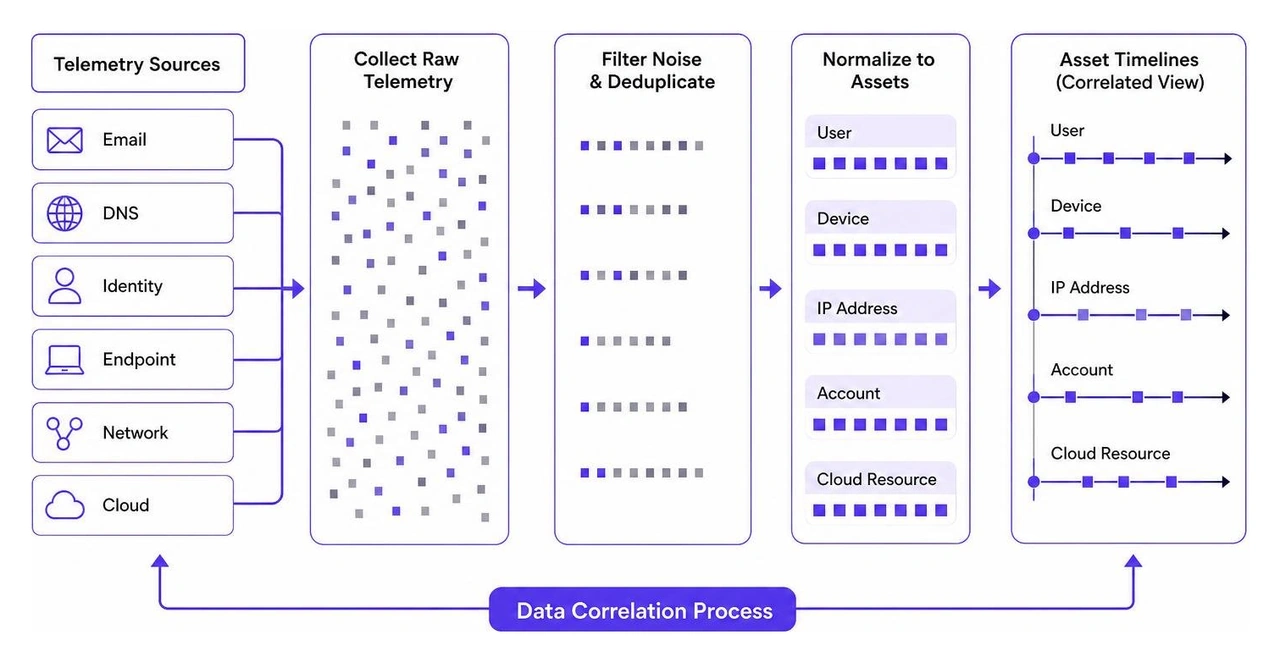
Historically, many organizations tried to bridge this gap by simply buying more security tools. But this approach quickly leads to "tool sprawl"—a chaotic environment where an IT team might be managing a dozen different security dashboards, none of which talk to each other. When security tools operate in silos, they generate an overwhelming amount of raw, uncorrelated alerts. This "alert fatigue" actually makes organizations less secure, as critical indicators of a breach get lost in the noise.
Instead of a disruptive "rip and replace" of your existing security investments, modern enterprise decision-makers are looking for a platform-centric model that offers modular integration. A modern, unified platform doesn't require you to throw away your current tools; it seamlessly integrates with them, correlating telemetry across your entire infrastructure—endpoints, network, cloud, and identity—to build a single, cohesive security timeline.
For many growing MSPs, trying to build this level of security infrastructure in-house is financially and operationally impossible. That is why many choose a Co-Managed Security for MSP model. Rather than replacing your existing team, a co-managed approach allows your internal IT staff to focus on their core strengths—like infrastructure management and user support—while a specialized partner handles the complex, 24/7 security operations.
According to the Deloitte Global Outsourcing Survey, organizations outsource not just for cost reduction, but to gain improved operational flexibility, faster speed to market, and immediate access to specialized tools and expertise. In the realm of cybersecurity, this flexibility can mean the difference between a minor, contained incident and a business-ending data breach.
When you begin evaluating cyber security managed service providers, you will quickly realize that not all security services are created equal. Different providers offer different tiers of protection, and understanding these distinctions is critical to aligning your security posture with your organization's risk tolerance.
At a high level, any reputable security provider must offer foundational capabilities like threat monitoring, incident response, disaster recovery, and compliance mapping. However, the mechanism of how these services are delivered matters immensely.
To help make sense of the landscape, we can break down modern managed security offerings into three distinct tiers, all of which include Incident Response (IR) as a core capability:
To help you visualize how these offerings differ, here is a direct comparison:
| Security Capability | Open XDR | Managed Detection & Response (MDR) | Delta Detection & Response (DDR) |
|---|---|---|---|
| Telemetry Integration | Yes (Unified Visibility) | Yes (Unified Visibility) | Yes (Deepest Integration) |
| 24/7 SOC Monitoring | No (Software-only visibility) | Yes (Fully Managed) | Yes (Fully Managed, Proactive) |
| Active Threat Hunting | No | Yes | Yes (Continuous & Advanced) |
| Incident Response (IR) | Yes (Included) | Yes (Included) | Yes (Instant Containment & Recovery) |
| Dwell Time Minimization | Moderate | High | Maximum (Near-Zero Dwell Time) |
| Target Audience | Teams with internal SOCs needing tool integration | MSPs & Enterprises needing 24/7 managed security | Organizations requiring the highest level of risk reduction |
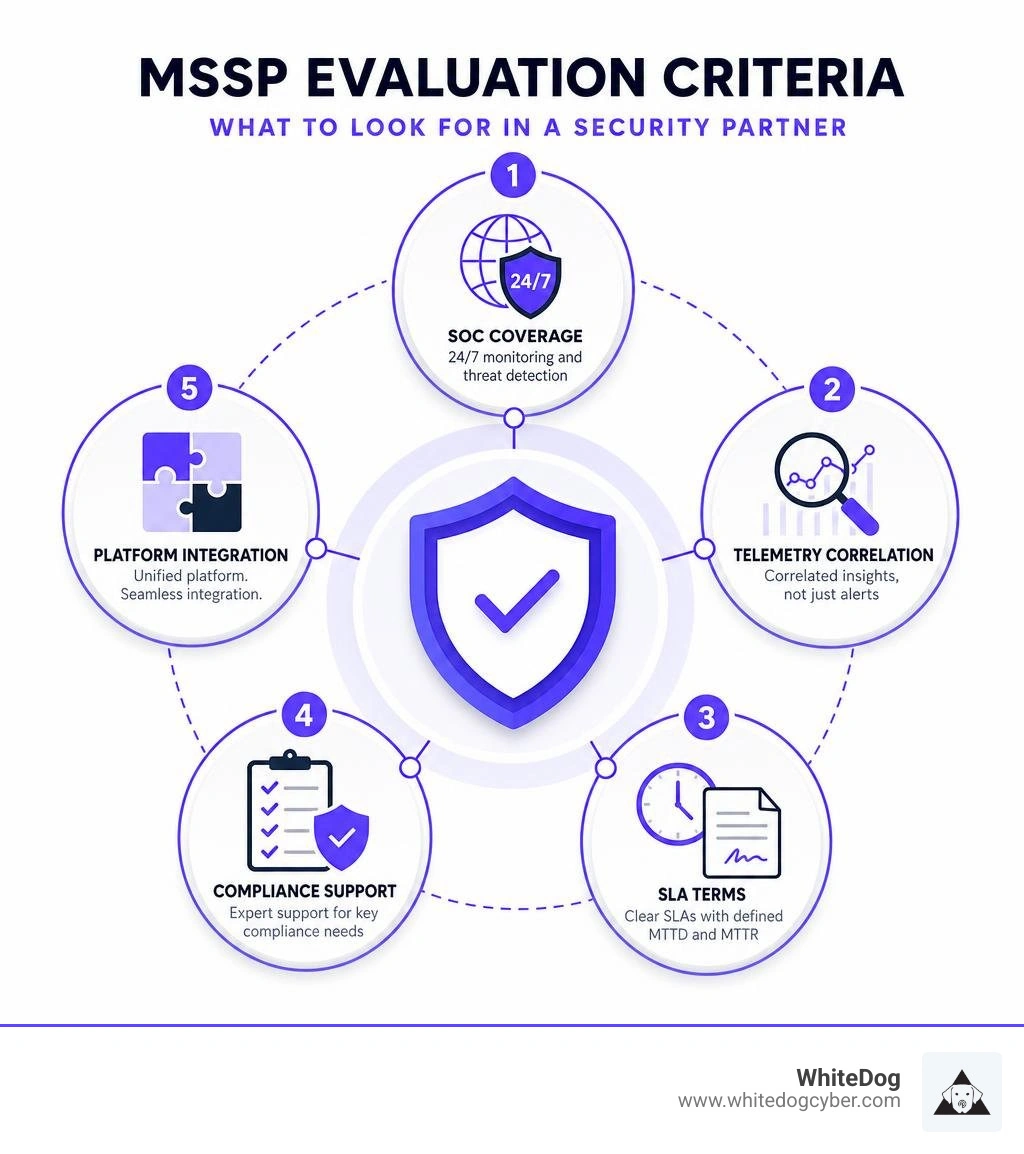
Choosing a security partner isn't a decision you should make based on a slick sales presentation or a generic brochure. You need a rigorous, operational framework to evaluate whether a provider can actually protect your enterprise and your clients when the worst-case scenario occurs.
When running through your checklist, you must look beyond standard IT metrics. For example, a standard IT SLA measures things like "server uptime" or "ticket response time." A cybersecurity SLA, however, must focus on metrics that directly impact your security posture—specifically, Mean Time to Detect (MTTD) and Mean Time to Respond (MTTR). If a provider takes 24 hours to respond to a ransomware alert, your business could already be encrypted and offline.
To ensure your partner can deliver the operational efficiency and risk reduction you need, your evaluation should focus on two primary pillars: Operational Alignment and Technology Integration.
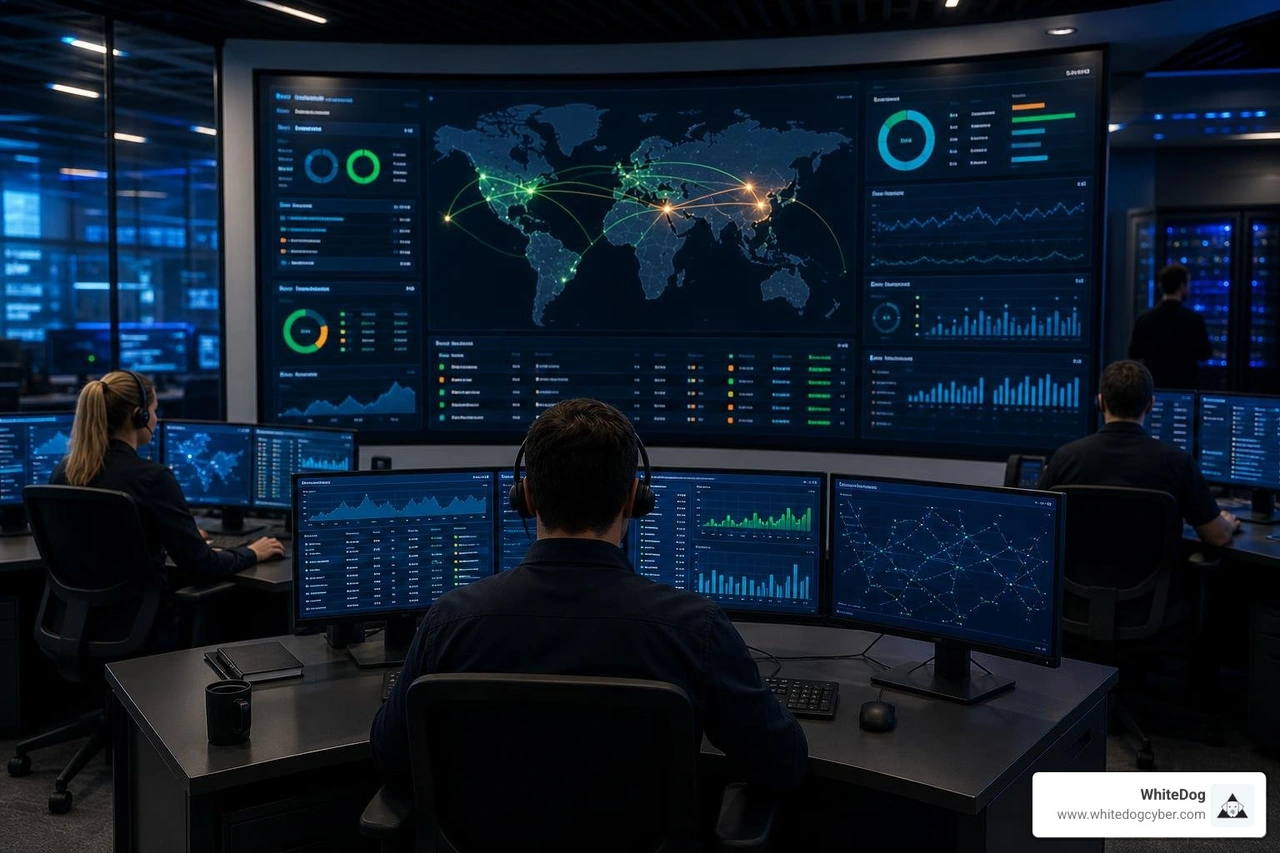
A true security partner doesn't just send you automated alerts; they act as an extension of your team. This requires deep operational alignment, backed by a fully staffed, always-on Security Operations Center.
The technical architecture of your provider's platform will determine how quickly they can spot and stop sophisticated attacks. Avoid providers that suffer from tool sprawl or rely on disconnected point solutions.
The modern threat landscape has made in-house security management highly impractical for all but the largest global enterprises. The sheer volume of sophisticated threats, combined with a severe shortage of qualified cybersecurity professionals, has turned security into a major operational bottleneck.
By partnering with a specialized provider, enterprise organizations and MSPs can achieve several critical business outcomes:
According to the Clutch IT Outsourcing Report, tech outsourcing has grown exponentially over the last few years, with businesses increasingly relying on external partners to manage complex, dynamic digital systems. This trend is highly visible in the MSP space as well; as detailed in our report on MSPs ITSPs Top Security Priorities for H2 2025, scaling security offerings and managing tool complexity remain the absolute top priorities for IT leaders heading into the future.
A standard IT SLA is built around availability—guaranteeing metrics like 99.9% network uptime or responding to helpdesk tickets within a few hours.
A cybersecurity SLA is built around speed of defense. It measures:
In cybersecurity, minutes matter. A standard IT response window of 4 hours is an eternity when ransomware is actively spreading through your network.
The difference comes down to visibility versus active human intervention.
Open XDR is a technology platform that integrates your existing security tools to give you unified visibility and detection across your environment. While it provides the tools and includes Incident Response (IR) support, it is primarily a visibility and detection platform.
MDR (Managed Detection and Response) includes the Open XDR technology stack plus a fully managed, 24/7 Security Operations Center staffed by human analysts. With MDR in Cyber Security, the provider's SOC actively monitors your environment, investigates alerts, and performs containment and incident response on your behalf, with IR fully included as it is across all our tiers (MDR, XDR, and DDR).
While every business with an internet connection needs security, highly regulated sectors and high-value targets benefit the most. This includes:
At the end of the day, protecting your organization and your clients isn't about buying more tools—it's about achieving better security outcomes.
At WhiteDog Cyber, we believe in simplifying the complex. We provide a co-managed, white-label cybersecurity platform designed specifically to help MSPs scale their security offerings without the typical operational headaches. We don't believe in tool sprawl, and we don't believe in burying your team under mountains of disconnected alert noise.
Our curated, actively managed security stack integrates best-in-class tools through advanced telemetry correlation, all backed by our 24/7 SOC that continuously investigates, triages, and responds to threats in real time. We are so confident in our model that we offer a 30-day onboarding guarantee with absolutely no added fees.
Whether you are looking to scale your current offerings, reduce your organization's risk, or simply get some sleep at night knowing your environments are protected around the clock, we are here to help.
To learn more about how we can help you scale your business and protect your clients, explore our WhiteDog Cyber Solutions or read our official announcement, WhiteDog Introduces Fully Managed Cybersecurity Solutions to Support Scaling MSPs.
For more practical strategies on growing your security business, check out our guides on How MSPs Are Expanding with WhiteDog and Scaling Your MSP Security Offerings with WhiteDog.


Learn the five pillars of MSP risk reduction to secure operations, manage vendor risk, and build defensible compliance.

Learn how AI based malware detection stops polymorphic threats and zero-day attacks using deep learning, behavioral analysis, and multi-modal pipelines.
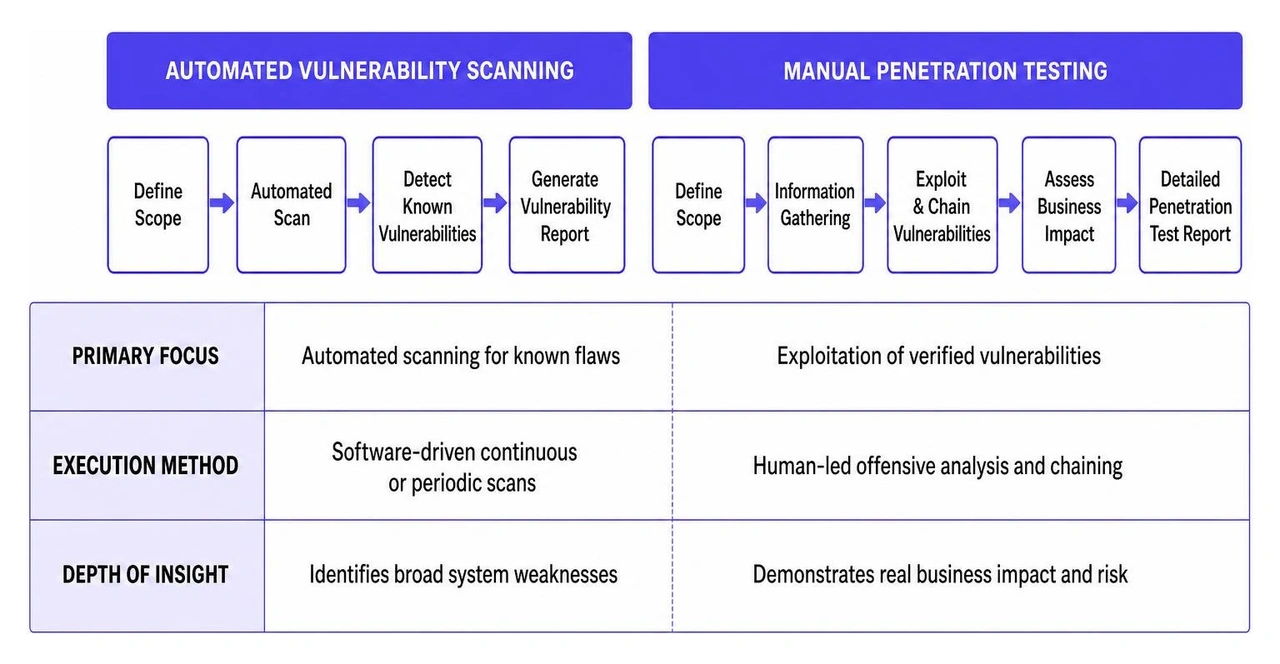
Learn penetration testing basics: ethical hacking methods, black-box scoping, and 7-phase workflows to reduce risk before attackers strike.

Learn how XDR risk reduction eliminates blind spots across endpoints, identity, and cloud to slash detection time and stop attacks faster.

Learn how AI driven threat detection predicts and stops attacks in minutes, with autonomous response across hybrid environments.
Unify your security with an XDR cybersecurity platform that correlates endpoint, network, and cloud threats for faster, managed response.