Cybersecurity
August 26, 2026
Learn how XDR risk reduction eliminates blind spots across endpoints, identity, and cloud to slash detection time and stop attacks faster.
Modern organizations generate and consume massive volumes of structured and unstructured information every day. However, accumulating data without structured oversight creates blind spots, compliance liabilities, and operational friction. Data governance establishes the formal framework that guarantees data quality, enforces end-to-end lifecycle management, and underpins business intelligence with verified truth.
When organizations lack governance, individual departments inevitably build isolated silos. Marketing might track customer identities using one convention, while finance relies on another. This disconnect fractures reporting, confuses analytics pipelines, and exposes sensitive records to unauthorized users. By setting enterprise-wide standards, data governance delivers a single source of truth (SSOT) and safely enables data democratization—empowering business analysts, developers, and autonomous systems to access trustworthy data without bypassing security controls.
A common point of confusion for IT leaders is distinguishing between governance and data management. While closely related, their operational mandates differ fundamentally: governance defines the strategy, policies, and accountabilities, whereas data management executes the hands-on technical operations required to store, process, and secure that data across enterprise architecture.
| Dimension | Data Governance (Oversight & Strategy) | Data Management (Execution & Operations) |
|---|---|---|
| Primary Focus | Establishing policies, accountability, compliance, and data standards | Implementing architecture, database ingestion, maintenance, and storage operations |
| Core Question | "What are our data rules, who owns this data, and how should it be protected?" | "How do we store, move, process, and retrieve this data efficiently?" |
| Key Deliverables | Data catalogs, privacy policies, data lineage maps, access frameworks | ETL/ELT pipelines, database backups, indexing, master data storage |
| Accountable Roles | Chief Data Officer (CDO), Data Governance Council, Data Stewards | Database Administrators (DBAs), Data Engineers, Infrastructure Teams |
| Measurement | Regulatory adherence, data trustworthiness, policy compliance, risk reduction | System uptime, pipeline latency, query performance, storage efficiency |
Effective policy enforcement requires moving beyond periodic check-ins. Relying on static audits often leaves environments always on or always exposed rethinking point in time security paradigms, proving that active stewardship and continuous policy enforcement must be embedded directly into everyday storage operations.
Governance is not merely a bureaucratic cost center; it is a strategic business accelerator. Organizations that establish disciplined governance see measurable gains across several operational vectors:
Choosing the right organizational structure determines whether a governance program thrives or collapses under operational inertia. Enterprises typically adopt one of three primary operating models: centralized, federated, or hybrid.
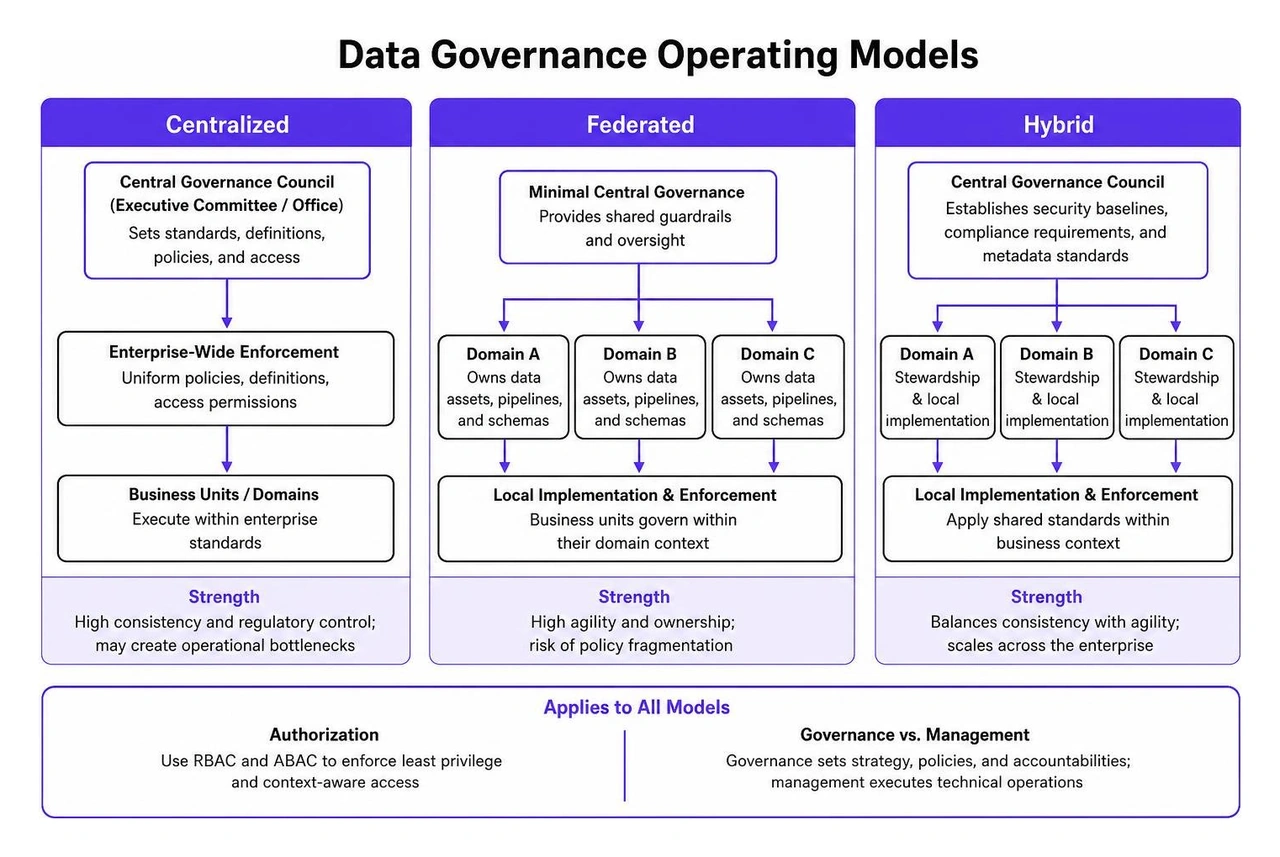
Fine-grained authorization models such as Role-Based Access Control (RBAC) and Attribute-Based Access Control (ABAC) are essential across all architectures. ABAC evaluates user context, data sensitivity, and session attributes dynamically, preventing over-permissioning across distributed datasets.
Successful governance relies on clear accountability across both executive leadership and operational units:
A resilient governance architecture balances four fundamental pillars:
Modern technical stacks must operate on principles of zero trust in a bot driven world securing the internets next era, ensuring that access permissions for users, automated services, and programmatic pipelines are verified continuously at the data layer.
The global regulatory environment has shifted from voluntary guidelines to strict, legally enforceable compliance frameworks carrying severe financial and operational penalties for mishandled records.
Modern enterprises operate under overlapping privacy mandates:
These mandates make audit readiness a non-negotiable operational capability. Furthermore, as regulatory bodies scrutinize third-party vendor relationships, understanding how supply chain compliance lands on msps and enterprise suppliers is critical to preventing cascading contractual and regulatory violations.
Cross-organizational collaboration requires privacy-preserving mechanisms that permit analysis without exposing raw underlying identities. Modern frameworks incorporate:
Unstructured repositories—including email platforms, cloud document shares, productivity suites, and object stores—often hold an enterprise's most sensitive intellectual property and regulated customer data. Governance programs must discover, index, and classify these assets automatically.
Establishing automated retention policies prevents unnecessary data sprawl, ensuring files are archived or securely shredded when their operational utility expires. Furthermore, governance must bridge operational cybersecurity: implementing continuous discovery ensures that backup repositories are regularly inventoried, helping teams ransomware-proof your data transform your microsoft 365 backup strategy against sophisticated extortion attacks that target unstructured collaboration tools.
The rapid adoption of Artificial Intelligence has created a new frontier for data governance. Machine learning systems, retrieval-augmented generation (RAG) architectures, and autonomous agents rely heavily on enterprise data. If that data is inaccurate, unclassified, or overly permissive, AI systems will surface those flaws at enterprise scale.
AI models do not run in a vacuum; they reflect the data fed into their training pipelines and vector embeddings. Governing AI requires specialized controls:
Without comprehensive upstream sanitization, organizations risk major security failures. Understanding why agentic ai needs guardrails is essential before connecting foundational models to production systems. Furthermore, employees frequently connect unapproved AI plugins to enterprise environments, creating shadow ai agents in microsoft 365 an it blind spot that silently bypass traditional boundary security.
Autonomous software agents represent a fundamental shift from static analytics to programmatic action. These agents ingest natural language instructions, plan multi-step workflows, query enterprise databases, and execute actions across disparate applications.
This autonomy introduces severe privilege escalation and data exposure risks:
Implementing a simple checklist for securing ai agents ensures autonomous workflows operate under strict least-privilege permissions and real-time monitoring.
Building a scalable governance program is an ongoing discipline, not a one-time project. Organizations should pursue an iterative, business-aligned roadmap:
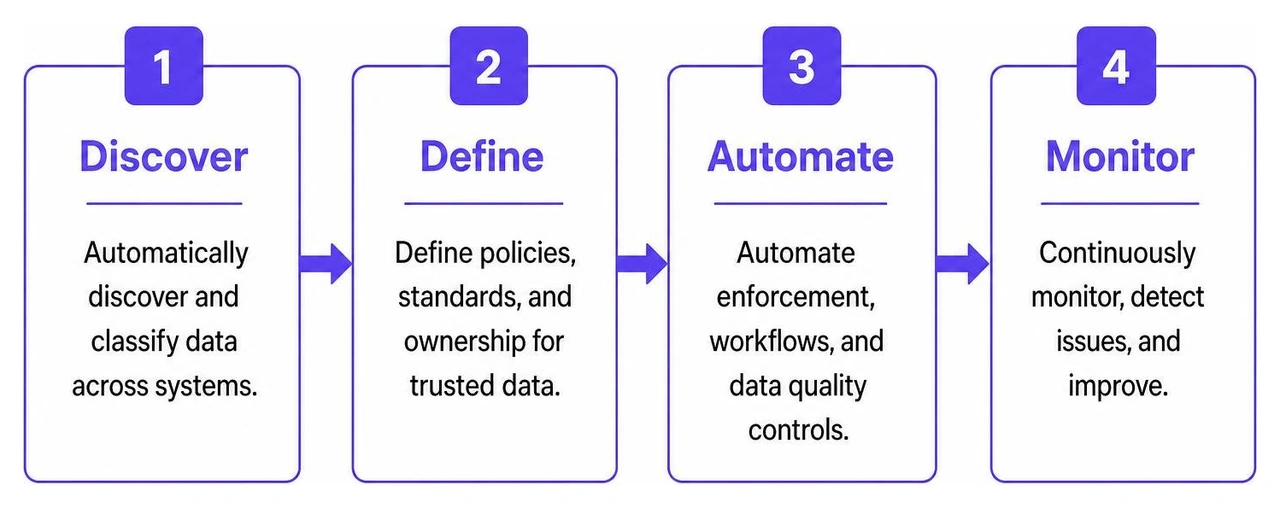
Organizations measure governance maturity using structured capability frameworks such as DAMA-DMBOK or the DCAM (Data Management Capability Assessment Model). These frameworks evaluate maturity across stages—ranging from ad-hoc, unmanaged practices to fully automated, optimized operations. Teams track quantitative key performance indicators (KPIs), including the percentage of data assets cataloged, reductions in data quality error tickets, mean time to fulfill privacy deletion requests, and audit findings remediation velocity.
Centralized oversight concentrates authority, policy creation, and permission management within a single corporate governance team. This ensures uniformity and simplified regulatory reporting but can slow down engineering teams. Federated oversight distributes asset stewardship directly to business domain teams who understand the contextual nuances of their data. Most modern enterprises implement a hybrid approach: enterprise-wide policies and security standards are defined centrally, while local domain teams manage operational cataloging and day-to-day classification.
Automated classification utilizes natural language processing (NLP), regular expressions, and machine learning models to continuously inspect unstructured files—such as emails, PDFs, spreadsheets, and presentation decks—across cloud storage environments. The system identifies sensitive information (such as Personally Identifiable Information, Protected Health Information, payment details, or intellectual property), tags the files with appropriate metadata labels, and triggers downstream protection rules like encryption, granular access restrictions, and retention policies.
Data governance is no longer just a compliance checkpoint; it is a fundamental requirement for operational resilience, trustworthy analytics, and safe AI adoption. As data environments expand across multi-cloud infrastructure and autonomous systems, maintaining visibility over every asset, pipeline, and permission path becomes essential to reducing enterprise risk.
Managing this complexity requires continuous oversight. Building on correlated intelligence, organizations can unite their security operations and continuous attack surface management to identify threats earlier, eliminate blind spots, and respond to incidents with confidence.
To achieve this level of operational clarity, enterprises look to WhiteDog’s unified cybersecurity platform, which combines MDR, XDR, Delta Detection & Response (DDR), exposure management, and 24/7 SOC expertise to deliver unified visibility across email, DNS, identity, endpoint, network, cloud, and data layers.
Our solutions emphasize modular integration designed to complement and extend your existing Microsoft Security and Microsoft 365 investments, maximizing the value of your current tools rather than taking a rip-and-replace approach. Built on our flexible Open XDR framework, Delta 360 (Δ360) adds a unified operational and security layer across Microsoft and third-party tools to improve correlation, visibility, security hardening, threat detection, exposure management, and response.
Organizations seeking foundational visibility can leverage Open XDR for unified visibility and detection only across their environment. For teams requiring fully managed, round-the-clock defense, our MDR, XDR, and top-tier Delta Detection & Response (DDR) offerings provide fully managed 24/7 SOC capabilities with incident response included, delivering dedicated expert analysts to protect your critical data assets at every stage of their lifecycle.


Learn how XDR risk reduction eliminates blind spots across endpoints, identity, and cloud to slash detection time and stop attacks faster.

Learn how AI driven threat detection predicts and stops attacks in minutes, with autonomous response across hybrid environments.
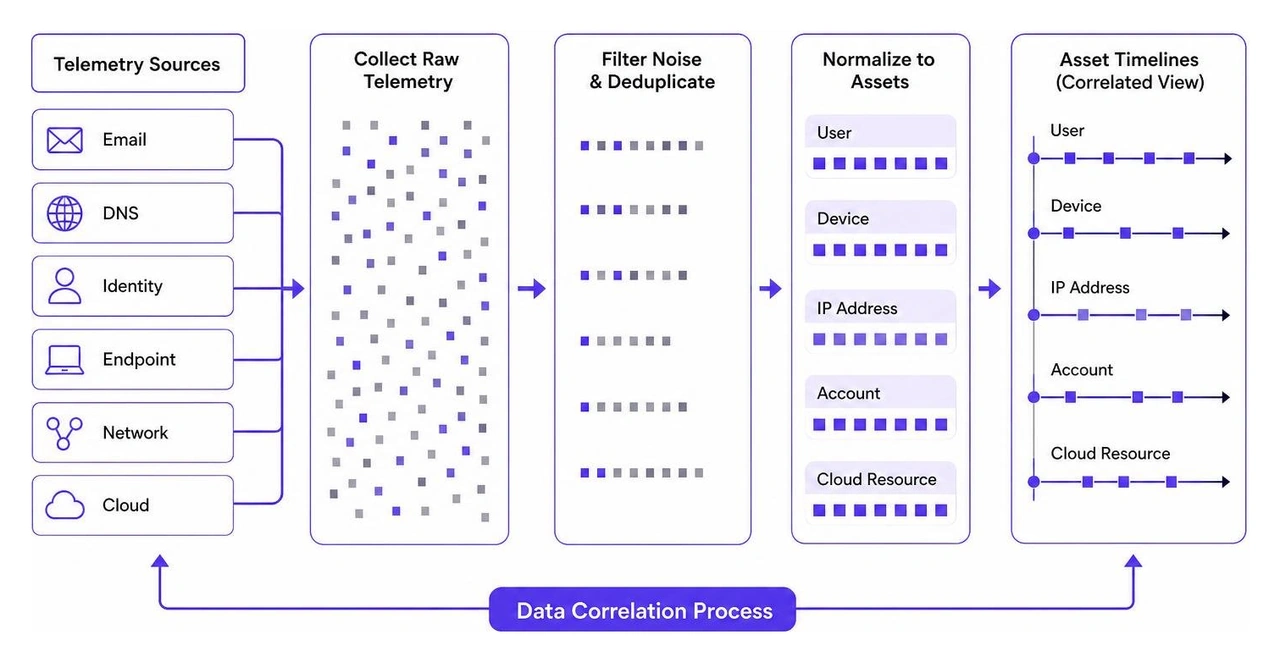
Unify your security with an XDR cybersecurity platform that correlates endpoint, network, and cloud threats for faster, managed response.
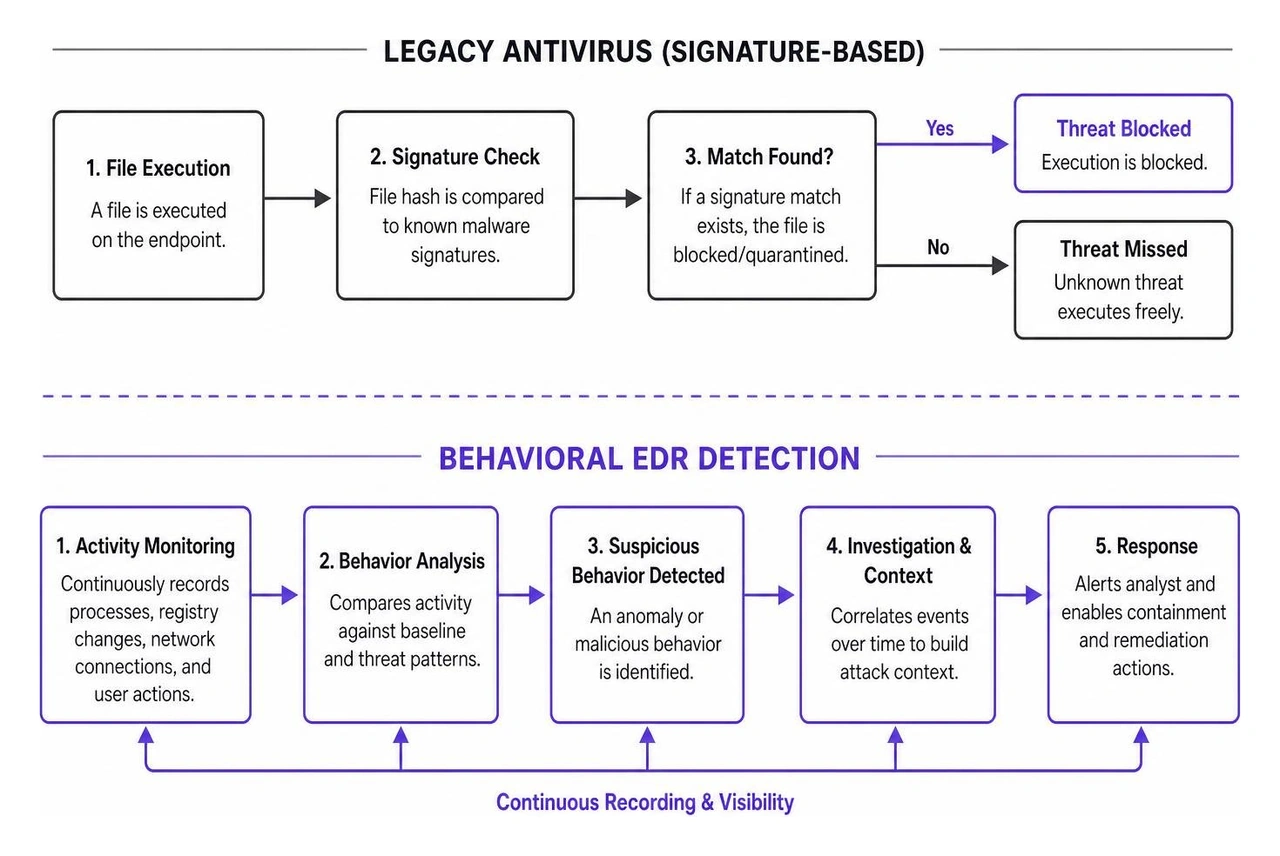
Compare EDR, XDR, and MDR solutions in this guide to endpoint detection & response, featuring WhiteDog's unified platform with 24/7 SOC and incident response.
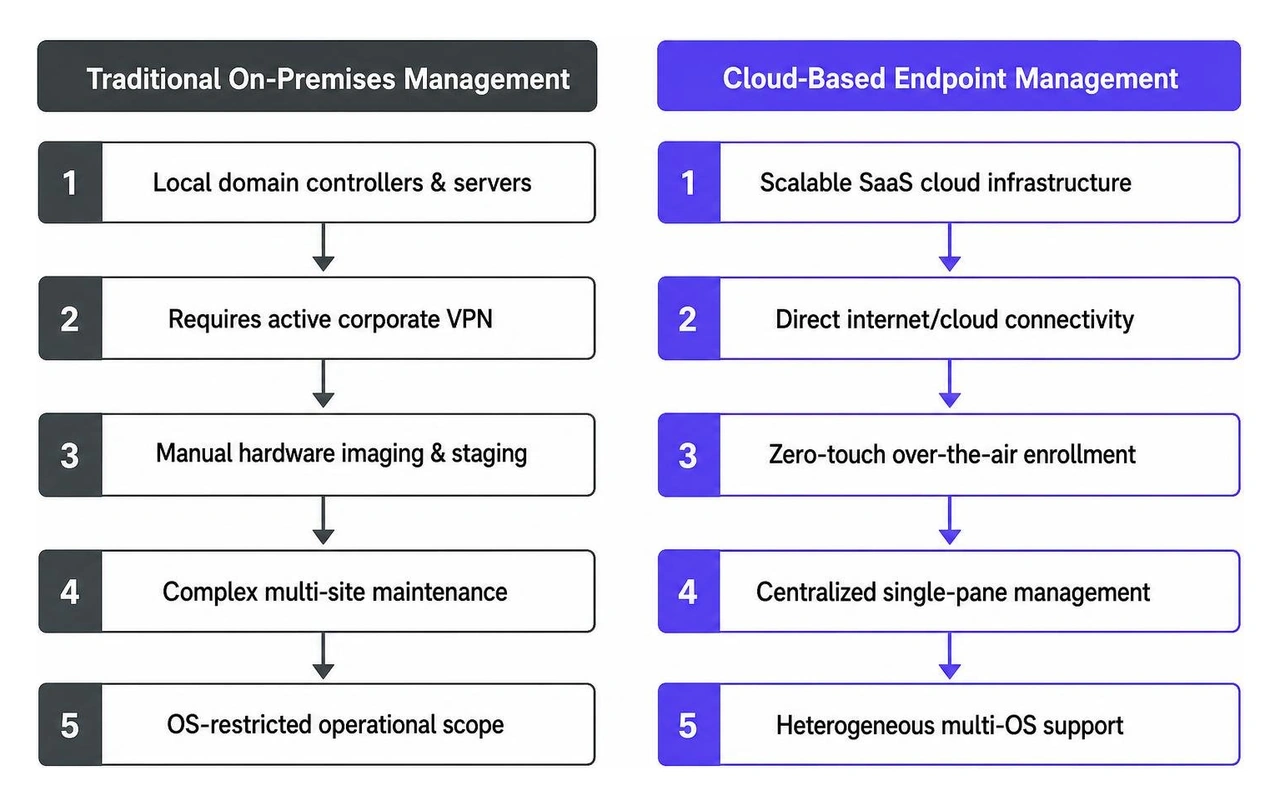
Compare cloud based endpoint management options with this checklist covering security, remote workforce support, and operational efficiency.

Compare MSP MDR detection services to reduce dwell time and boost efficiency with a unified 24/7 SOC platform.