Cybersecurity
May 30, 2026
Discover how a white-label EDR solution helps MSPs deliver branded endpoint protection, 24/7 SOC response, and scalable security services.
Threat detection is the practice of collecting security signals, finding suspicious behavior, and giving teams enough context to investigate and act. Effective programs monitor identity, endpoint, email, DNS, network, cloud, and data activity; correlate related events; rank risk by severity; and connect findings to attacker behaviors such as credential access, privilege escalation, defense evasion, and data exfiltration.
This matters because a single alert rarely tells the full story. A failed login may be harmless. Repeated attempts, a new privileged role, unusual API calls, and large outbound data transfers may point to a real attack path. Modern platforms use log analysis, indicators of compromise, behavioral patterns over time, anomaly detection, and machine learning to make that distinction faster.
Cloud services extend this model with near-real-time event monitoring. For example, Google Cloud Security Command Center's Event Threat Detection analyzes supported logging streams with more than 100 default rules, helping identify activity such as brute-force attempts, malware indicators, privileged group changes, and suspicious access behavior. AI systems add another layer: security teams must also watch AI agents for unsafe commands, container escape attempts, reverse shells, and unauthorized service-account use.
WhiteDog helps organizations reduce tool sprawl through a unified cybersecurity approach. Delta 360 (Δ360), built on WhiteDog's Open XDR framework, adds a unified operational and security layer across Microsoft and third-party tools to improve correlation, visibility, security hardening, threat detection, exposure management, and response. Open XDR provides unified visibility and detection only; MDR, XDR, and DDR add fully managed 24/7 SOC capabilities with incident response included, featuring Delta Detection & Response (DDR) as the top-tier offering. Emphasizing modular integration rather than a rip-and-replace approach, these services complement and extend Microsoft Security and Microsoft 365 investments.
I am Shahin Pirooz, a cybersecurity and technology executive with decades of experience building cloud and managed security services. My work across cloud strategy, service delivery, and security operations informs a practical view of threat detection: correlate the right evidence early, then give skilled teams the confidence to respond.
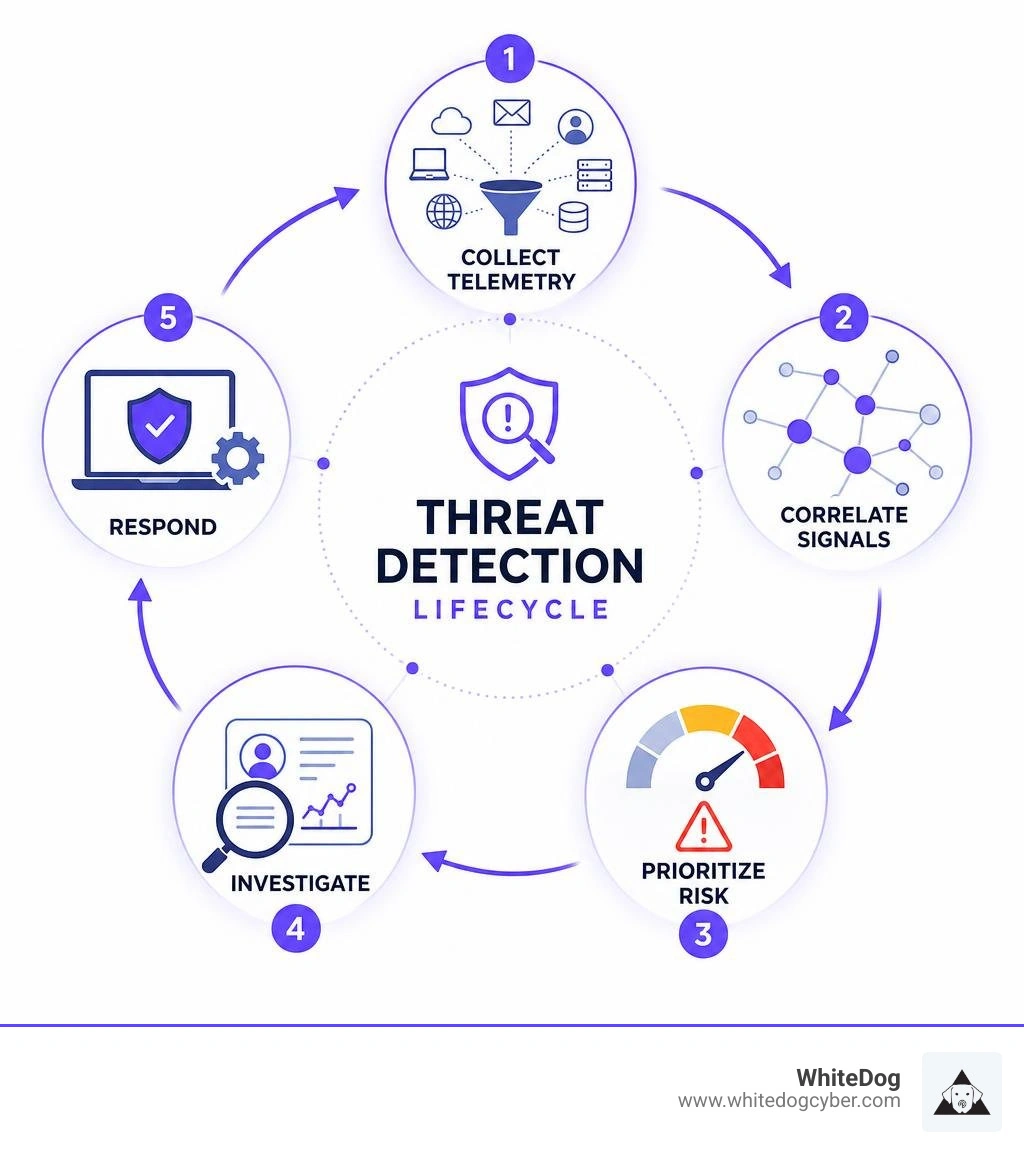
Threat detection vocabulary:
Modern enterprise architectures generate massive volumes of telemetry every second. Sifting through billions of events to uncover sophisticated attacks requires an ingestion pipeline that pairs speed with deep analytical context. Relying on simple, static signature matching is no longer sufficient when adversaries alter file hashes and rotate IP addresses instantaneously.

Effective platforms combine multiple analytical methods to evaluate data streams as they arrive:
To explore how these detection layers unify across the enterprise, review our comprehensive XDR cybersecurity guide.
High-fidelity threat detection begins with comprehensive log visibility. Modern security platforms monitor real-time event streams from cloud audit logs, VPC flow logs, DNS queries, and operating system activity. In Google Cloud environments, for instance, native tools like Event Threat Detection in Security Command Center continuously parse Cloud Logging and Google Workspace streams to surface active scans, unusual service modifications, and persistence mechanisms.
Capturing these events in real time prevents adversaries from establishing long-term footholds. When cloud logs, network streams, and identity events are normalized into a unified open XDR architecture, security teams gain cross-environment visibility without maintaining fragmented, disconnected data silos.
Standardizing findings against the MITRE ATT&CK framework allows organizations to map telemetry directly to known adversary tactics and techniques. Rather than treating an isolated alert as background noise, security systems evaluate where the activity sits in the broader kill chain:
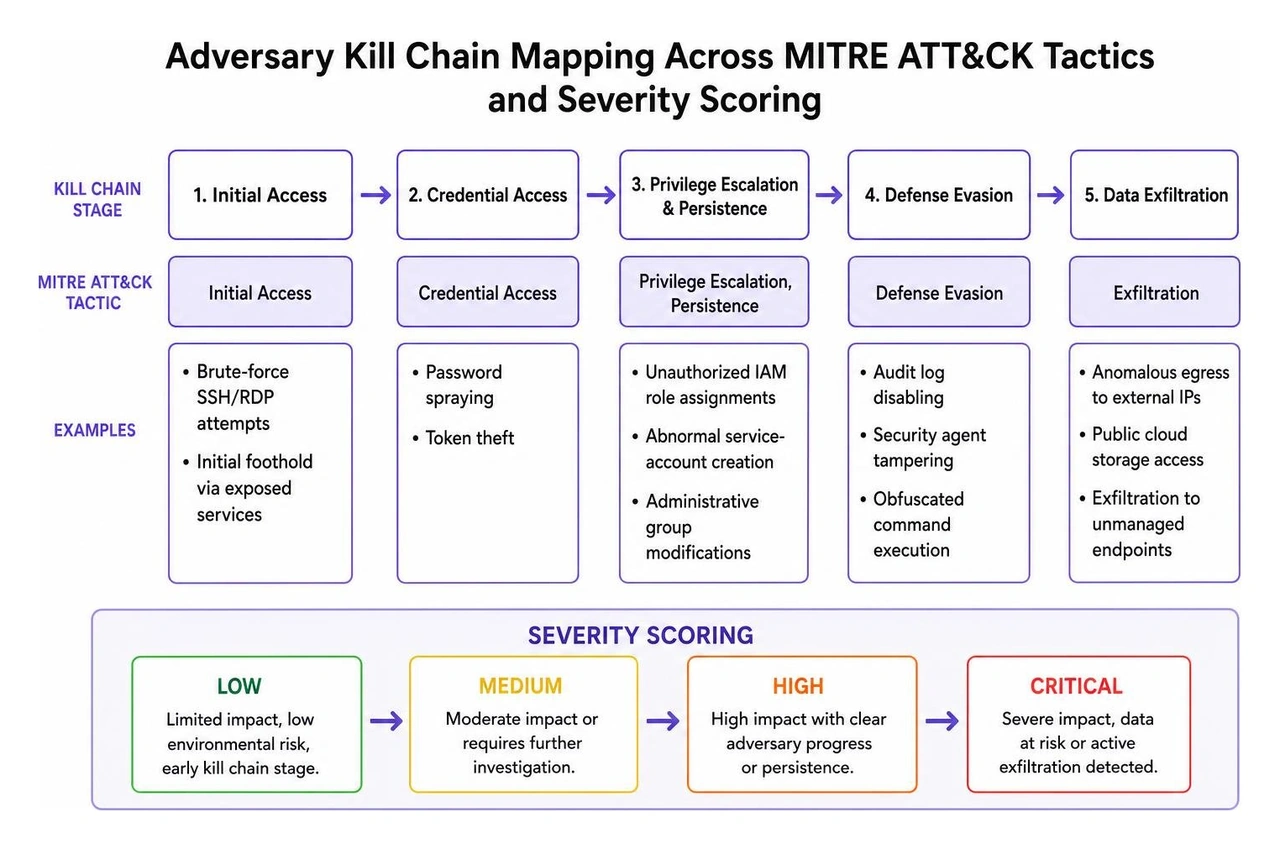
Findings are categorized into severity levels (such as High, Medium, and Low) based on asset criticality, exploitability, and potential business impact. To understand how structured severity scoring translates into rapid operational containment, read about effective MDR in cybersecurity.
Cloud-native environments present dynamic attack surfaces where identity serves as the primary security perimeter. Attackers rarely compromise cloud servers through malware alone; instead, they exploit misconfigurations, abuse over-privileged credentials, and manipulate identity controls to move laterally across resources.

Modern security programs maintain continuous visibility across cloud infrastructure, tracking runtime anomalies and configuration drift alongside AI-driven threat detection models.
Identity and Access Management (IAM) abuse represents one of the most significant risks in cloud architectures. Threat detection systems must watch for:
Owner, Editor, or administrative permissions over security services) to compromised or unvetted accounts.Continuous monitoring identifies these entitlement anomalies instantly, enabling analysts to revoke compromised sessions before lateral movement occurs.
Once adversaries gain access, their primary objectives often include evading detection and extracting proprietary data. Threat detection platforms counter these maneuvers by analyzing underlying data access and transport logs:
Correlating identity telemetry with network and data access patterns dramatically lowers organizational exposure, as detailed in our guide on mitigating threats with XDR risk reduction.
The rapid enterprise adoption of artificial intelligence and autonomous software agents introduces a new dimension to threat management. Modern defenses must defend against machine-speed attacks while securing internal AI workloads against compromise, prompt injection, and operational abuse.
Navigating these challenges requires combining deep behavioral analytics with runtime workload protection, building upon recent advancements in AI-based malware detection.
AI agents operating in runtime environments require specialized security telemetry. Capabilities such as Google Cloud's Agent Platform Threat Detection provide runtime visibility into agent behaviors hosted within managed execution frameworks.
Key detection requirements for AI agent environments include:
These capabilities ensure enterprise AI applications remain resilient against autonomous exploitation, mirroring the preventative logic used in deploying AI phishing detection.
Modern protection paradigms, such as Google AI Threat Defense, link threat intelligence, deep code analysis, and exposure scanning into a unified operational loop:
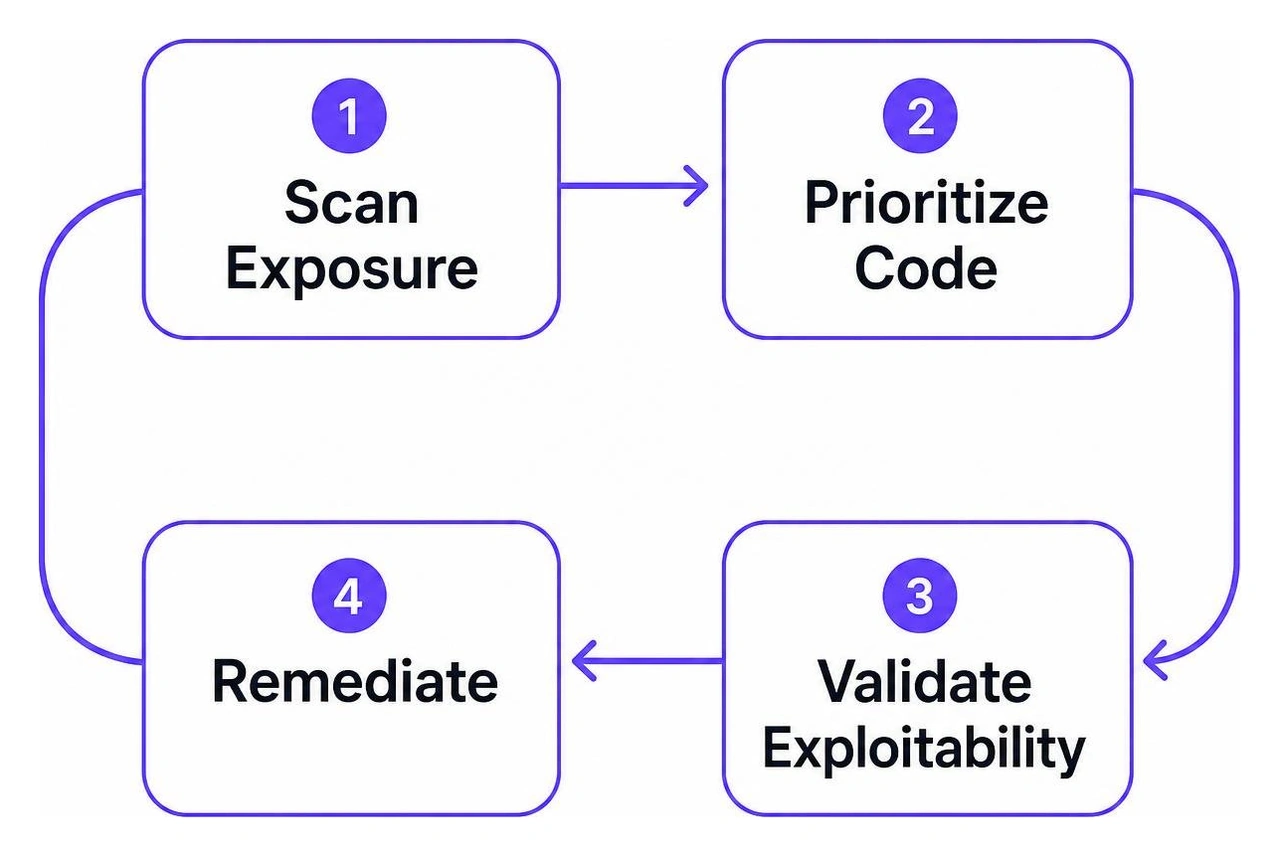
This continuous risk elimination loop focuses on:
Organizations seeking end-to-end operational visibility across their environments can review our approach to Delta Detection & Response (DDR).
High-volume threat detection produces value only when paired with structured investigation workflows and rapid operational containment. Enterprises must evaluate whether to build internal Security Operations Centers (SOCs) or leverage managed partnerships that include incident response without requiring separate retainers.
| Operational Capability | Internal Enterprise SOC | Managed Detection & Response (MDR/DDR) |
|---|---|---|
| Coverage Schedule | Often 8x5 or constrained 24/7 staffing | Continuous 24/7/365 dedicated coverage |
| Telemetry Ingestion | Requires internal engineering and pipeline maintenance | Fully managed, high-speed telemetry pipelines |
| Correlation & Triage | Manual tuning across fragmented security tools | Unified correlation across identity, cloud, and endpoint |
| Response Execution | Relies on internal escalation or costly retainers | Continuous incident response included with rapid containment by dedicated analysts |
| Tool Investment | Often driven by disruptive rip-and-replace cycles | Modular integration that complements and maximizes existing Microsoft and cloud investments |
Leveraging 24/7 threat response services enables organizations to eliminate alert fatigue while maintaining around-the-clock defense readiness.
Isolating security monitoring within a single domain creates blind spots that sophisticated adversaries easily exploit. An attack may originate with a spear-phishing email, execute a script on an endpoint, abuse cloud credentials, and extract proprietary data from a software-as-a-service (SaaS) application.
Correlating these disparate signals into a single incident timeline requires integrating endpoint detection and response best practices with robust email threat detection for MSPs. Cross-layer correlation ensures analysts see the full scope of an attack rather than chasing disconnected alerts.
Managing high-velocity detections requires experienced human analysis alongside automated pipelines. Dedicated security operations teams investigate prioritized alerts, filter out benign anomalies, and execute targeted containment actions—such as isolating compromised hosts or revoking hijacked credentials.
Managed service providers and mid-market enterprises frequently utilize specialized MSP MDR platform capabilities and comprehensive MSP MDR detection services to achieve enterprise-grade resilience without building complex internal infrastructure from scratch.
Modern security platforms detect zero-day attacks by focusing on anomalous behavior, runtime memory manipulation, and sliding-window heuristic profiling rather than static file signatures. By monitoring process execution trees, unexpected system calls, unauthorized outbound network connections, and identity access anomalies, detection systems flag and contain threats even when an exploit has never been observed before.
Comprehensive cloud visibility requires ingesting administrative audit logs (such as Cloud Audit Logs or Azure Activity Logs), VPC network flow logs, DNS query logs, and IAM event streams. Capturing data plane events, such as storage bucket reads and database export queries, is equally critical for identifying unauthorized data exfiltration attempts.
AI defense platforms protect autonomous agents by monitoring runtime execution environments, detecting container escape attempts, preventing unauthorized shell execution, and auditing API interactions. Additionally, these systems analyze input and output streams to identify prompt injection attacks, while sanitizing command-line arguments in security logs to ensure sensitive credentials remain protected.
Building an effective threat detection program requires moving beyond siloed point tools toward a unified operational model. By combining real-time log analysis, sliding-window profiling, identity monitoring, and machine-speed AI defenses, modern enterprises can identify malicious behaviors across cloud and hybrid environments before damage occurs.
WhiteDog Cyber helps organizations simplify cybersecurity operations through a unified platform that connects visibility, detection, response, and risk management. Our Open XDR framework provides unified visibility and detection across email, DNS, identity, endpoint, network, cloud, and data environments. For teams requiring end-to-end operational execution, our MDR, XDR, and premier Delta Detection & Response (DDR) offerings deliver fully managed 24/7 SOC capabilities with incident response included.
Rather than forcing a rip-and-replace approach, WhiteDog emphasizes modular integration to complement and extend your current Microsoft 365 and Microsoft Security investments. Through continuous attack surface management and 24×7 security operations built on correlated intelligence, we empower your team to eliminate noise, detect threats earlier, and respond with complete confidence.
Explore how our modern unified threat detection platform can strengthen your enterprise defenses today.


Discover how a white-label EDR solution helps MSPs deliver branded endpoint protection, 24/7 SOC response, and scalable security services.

Discover how cyber security services for companies deliver 24x7 MDR, vCISO guidance, and unified detection to cut risk and strengthen compliance in 2026.
Discover penetration testing services: manual vs automated, PTaaS, red teaming, methodology & enterprise compliance guide.

Discover the edr solution meaning: master endpoint detection, response, AI analytics, and defense against modern threats for resilient cybersecurity.
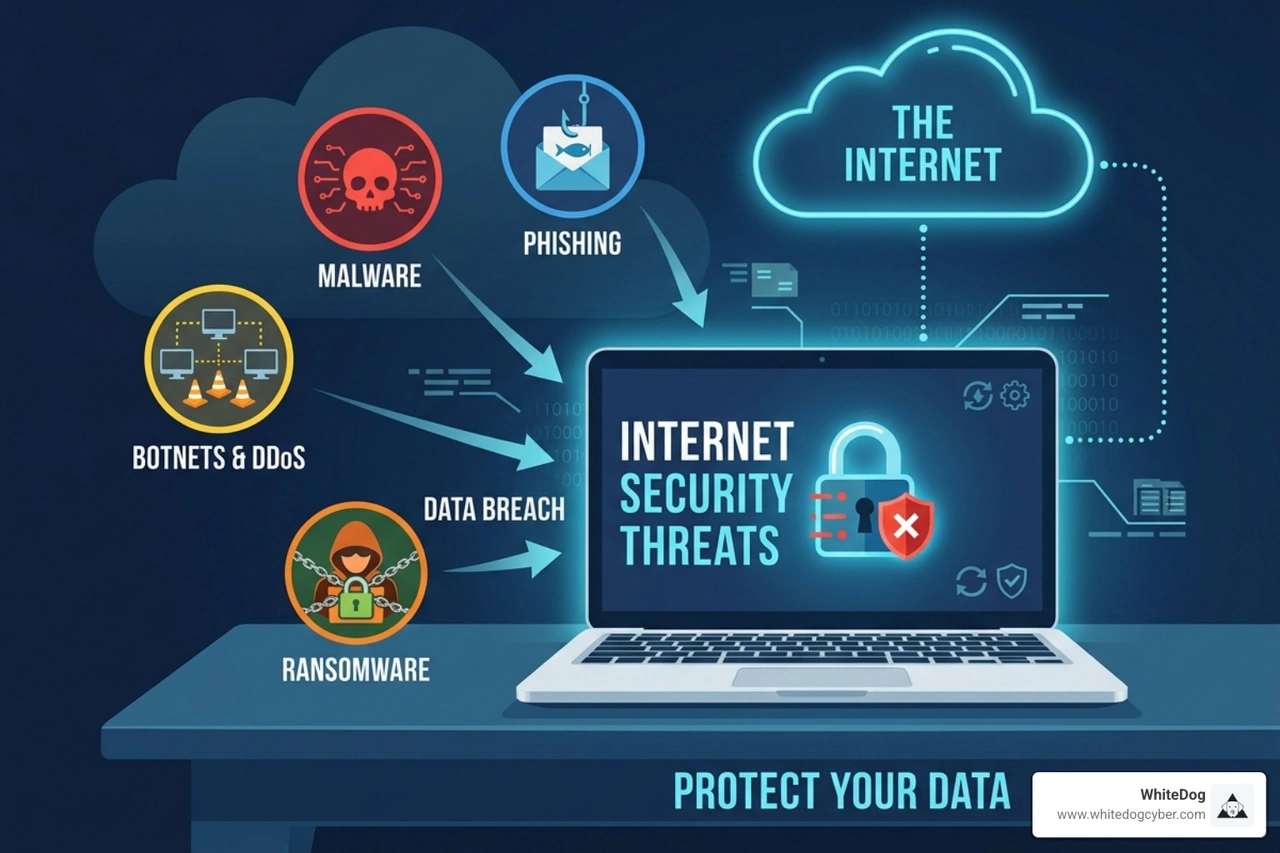
Discover 2026 internet security threats: AI attacks, nation-states, ransomware. Build Zero Trust defenses with WhiteDog's unified platform now.

Demand a SOC onboarding guarantee: Achieve 30-day deployment, 24/7 monitoring, and risk reduction with proven SLAs.