Cybersecurity
September 4, 2026
Learn the five pillars of MSP risk reduction to secure operations, manage vendor risk, and build defensible compliance.
We are building today’s AI data centers the hard way.
The dominant pattern is simple: add more GPUs, add more memory bandwidth, pack more compute into tighter racks, and feed the whole thing with more electricity. That model is already pushing against practical limits in power delivery, cooling, and facility design, with data center electricity demand projected to roughly double from about 415 TWh in 2024 to around 945 TWh by 2030 in the IEA base case. AI inference, in particular, exposes the inefficiency of brute-force classical compute when the industry keeps answering every problem by scaling up the same architecture.
Quantum computing introduces a different premise.
Instead of encoding everything in binary bits and solving problems through sheer classical throughput, quantum systems use qubits and quantum states to explore certain problem spaces more efficiently. That does not mean quantum is a general-purpose replacement for GPUs, but it does mean it could eventually reshape the economics of some compute-intensive workloads, especially optimization, simulation, and search. If those gains extend into parts of the AI stack, then the current model of ever-larger GPU farms starts to look less like progress and more like an expensive workaround.
The current AI data center is a machine for moving heat.
GPU-based infrastructure concentrates enormous power into dense racks, which is why liquid cooling is becoming a necessity rather than an optimization. These environments are being designed around high-wattage accelerators, not just for raw performance, but because the facility itself has to survive the thermal load. In practical terms, classical AI data centers are limited by how much power can be delivered and how much heat can be removed.
Quantum data centers are different in a more radical way.
The compute itself may be far more efficient for certain tasks, but the facility must maintain extreme environmental stability, often at millikelvin temperatures for superconducting systems. Research on quantum data centers notes that as these systems scale, total energy use including cooling becomes a major concern. So quantum doesn’t erase infrastructure cost; it relocates it into cryogenics, isolation, and control.
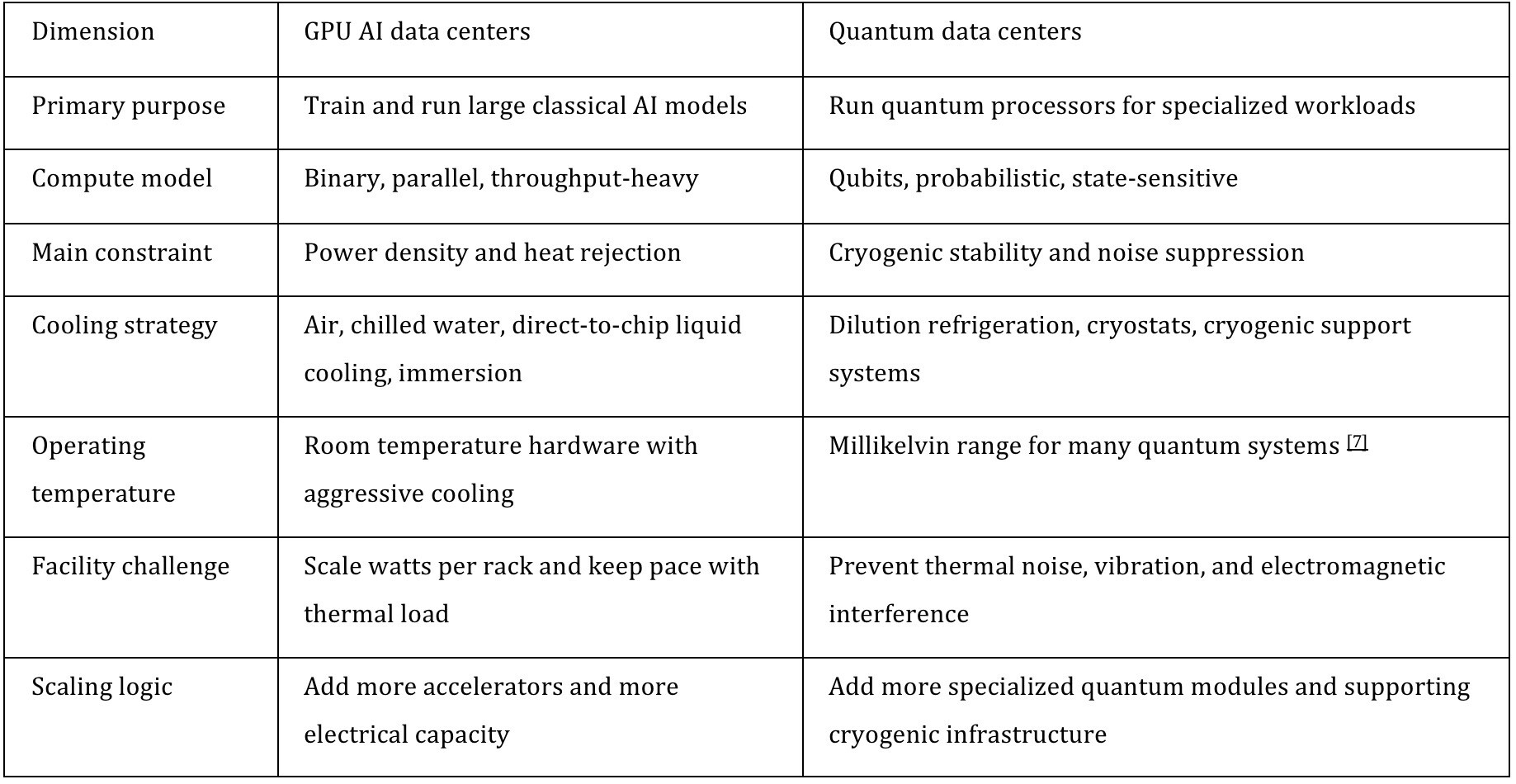
The key distinction is this: GPU data centers are engineered to manage heat, while quantum data centers are engineered to defeat entropy. Classical AI infrastructure can be improved incrementally with better cooling, denser interconnects, and more efficient accelerators. Quantum infrastructure requires a more discontinuous rethinking of the facility stack itself.
Quantum is unlikely to replace mainstream AI inference in one clean sweep.
The most realistic near-to-mid-term outcome is a hybrid model in which classical systems continue to handle storage, orchestration, broad inference, and most enterprise AI workloads, while quantum systems are reserved for narrowly defined problems where they offer a real advantage. That means the first quantum data centers may not be giant campuses in the way hyperscale GPU facilities are; they may instead be specialized compute layers embedded into a broader hybrid cloud and HPC ecosystem.
But even that limited adoption matters.
If quantum systems begin to absorb high-value optimization and search workloads, they could reduce the amount of classical compute needed per meaningful outcome. That would not eliminate GPU data centers, but it would undermine the assumption that AI expansion must always be solved by building bigger and hotter classical infrastructure.
So, will quantum kill the AI data centers of today?
Probably not in a literal sense. But it may expose them as a temporary stage in the evolution of compute: a phase defined by brute force, thermal excess, and infrastructure escalation. Quantum may not replace the entire AI stack, but it could reduce the need for the most inefficient parts of it, especially as the industry moves toward a world where energy, cooling, and grid access become strategic constraints rather than afterthoughts.
The more interesting future is not “quantum versus AI data centers.”
It is a world where quantum changes the economics of computation so profoundly that today’s GPU data centers look like the fossil fuel era of AI infrastructure: powerful, necessary for a time, and eventually replaced by something more precise, more specialized, and far more efficient.
Quantum may not replace today’s AI data centers overnight, but it could force us to rethink the entire economics of compute, power, and cooling; and that is the real disruption. Where do you think the tipping point is: will quantum become a niche accelerator inside hybrid infrastructure, or will it eventually make today’s GPU-first AI data centers look like a transitional phase in the history of computing?


Learn the five pillars of MSP risk reduction to secure operations, manage vendor risk, and build defensible compliance.
Learn how AI based malware detection stops polymorphic threats and zero-day attacks using deep learning, behavioral analysis, and multi-modal pipelines.
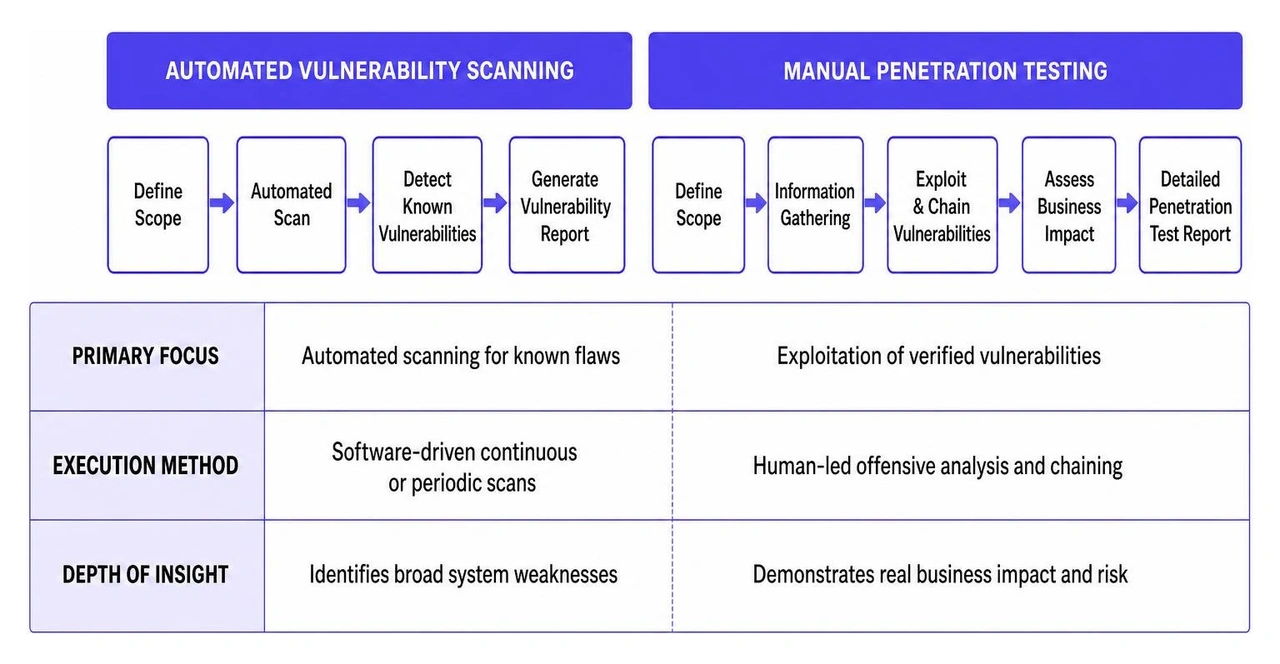
Learn penetration testing basics: ethical hacking methods, black-box scoping, and 7-phase workflows to reduce risk before attackers strike.

Learn how XDR risk reduction eliminates blind spots across endpoints, identity, and cloud to slash detection time and stop attacks faster.
Learn how AI driven threat detection predicts and stops attacks in minutes, with autonomous response across hybrid environments.
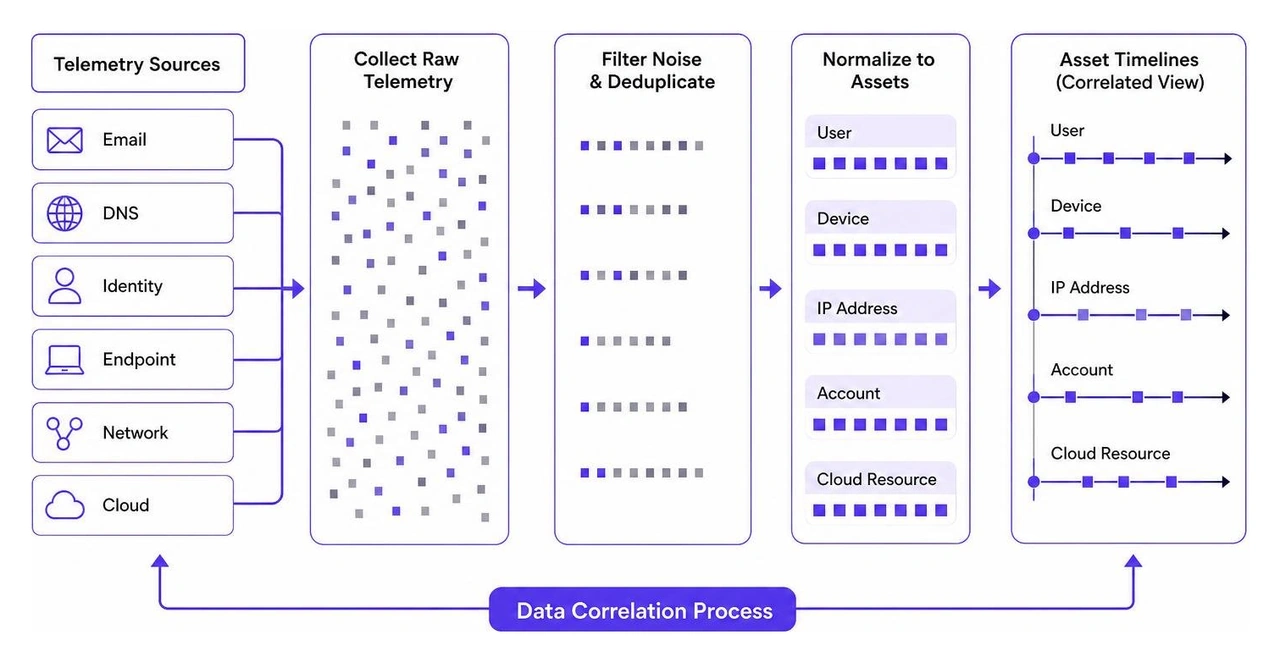
Unify your security with an XDR cybersecurity platform that correlates endpoint, network, and cloud threats for faster, managed response.