
Cybersecurity
August 26, 2026
Learn how XDR risk reduction eliminates blind spots across endpoints, identity, and cloud to slash detection time and stop attacks faster.
Cybersecurity incident response training gives your team the skills to detect, contain, and recover from attacks — fast. Here are the top programs worth knowing in 2026:
| Program | Provider | Best For | Format |
|---|---|---|---|
| IR-200 (OSIR) | OffSec | SOC analysts, technical IR roles | Online, self-paced |
| LDR553 (GCIL) | SANS Institute | Security managers, IR leaders | Instructor-led or self-paced |
| CERT IR Process Certificate | SEI / Carnegie Mellon | CSIRT team members | Online, instructor-led |
| Cybersecurity Incident Command | Antisyphon | IR managers, team leads | On-demand |
| CISA IR Training (100/200-level) | CISA | Government, critical infrastructure | Free, online |
| Incident Response Lifecycle | Cybrary / NICCS | Intermediate security professionals | Online, self-paced |
A ransomware attack hits a new target every 14 seconds. Yet only 38% of organizations have a dedicated incident response team. That gap is dangerous — and expensive. The average data breach now costs $4.88 million, but organizations with strong incident response capabilities can cut those costs by up to 65%.
The problem isn't just tools. It's people who know what to do when everything is on fire.
That's where structured incident response training comes in. Whether you're building a SOC team from scratch, developing leadership under pressure, or benchmarking your organization's readiness, the right training program makes a measurable difference. Organizations with a formal incident response plan experience 50% less downtime during breaches compared to those without one.
This guide breaks down the best programs available in 2026 — by audience, format, depth, and real-world applicability — so you can make a confident, informed choice.
I'm Shahin Pirooz, a senior cybersecurity and technology executive with over two decades of experience building managed security and cloud services. I've spent my career working at the intersection of operational resilience and cybersecurity incident response training, helping organizations move from reactive chaos to structured, repeatable defense. Let's dig in.

Choosing the right training program depends heavily on your role. Are you the one digging through logs in a SIEM, or are you the one briefing the board while the website is down? In 2026, the market has matured to offer specialized paths for both.
OffSec’s IR-200 is a powerhouse for those who want a technical, hands-on deep dive. It focuses on the foundational incident response practices required for SOC analysts. With 34 hours of content across 13 modules, it’s not just about theory; it integrates ITIL standards with technical analysis. You’ll learn how to track attacker activity in simulated enterprise environments using tools like Splunk. The 8-hour proctored exam ensures that when you earn the OSIR, you’ve actually proven you can handle evidence and extract malicious executables under pressure.
If the OSIR is for the "doers," SANS LDR553 is for the "leaders." This course addresses the non-technical challenges that face leaders during high-pressure events. We often see that technical brilliance is wasted if the leadership can't provide strategic direction. LDR553 uses nine detailed case studies—ranging from Business Email Compromise (BEC) to cloud management console attacks—to teach the Cyber Incident Management Toolkit (CIMTK) framework. It’s about building the team, managing stakeholders, and integrating Cyber Threat Intelligence to stay ahead of the curve.
Offered by the Software Engineering Institute at Carnegie Mellon, this program is the gold standard for benchmarking a Computer Security Incident Response Team (CSIRT). It combines two core courses: Foundations of Incident Management and Advanced Topics in Incident Handling. It’s particularly effective because it uses a team-based approach, where participants work together through escalating scenarios. This mirrors the reality that Attackers Will Get In: Speed Is Your Defense.
For those looking for an intermediate-level, self-paced option, the Incident Response Lifecycle from Cybrary is excellent. It focuses on the NIST framework—Preparation, Detection, Response, and Recovery—and emphasizes the "pre-incident" setup. It teaches you that success isn't just about how you react, but how you’ve configured your people, processes, and technologies before the first alert ever fires.
This 16-hour course fills a unique niche: the Incident Commander (IC). The IC is the "air traffic controller" of a breach. This training isn't technically heavy but focuses on the strategic level—managing business units like legal, marketing, and facilities, while ensuring the technical teams have what they need to remove the threat actor.
For the frontline defender, cybersecurity incident response training must be rooted in technical reality. A SOC analyst needs to move beyond "seeing an alert" to "understanding the story."
Technical analysis training, such as Incident Response 101 from CISA Learning, provides a critical starting point. These courses focus on:
Following a structured Cybersecurity Incident Response Workflow is vital. Training programs now emphasize the importance of log management—DNS logs, firewall traffic, and OS events—as the primary "evidence locker" for any investigation.
When a major breach occurs, the technical fix is often the easiest part. The hardest part? Managing the humans.
Modern cybersecurity incident response training for leaders focuses heavily on crisis communications and stakeholder engagement. You might be the best coder in the room, but if you can't explain the risk to the CFO in plain English, the recovery will stall.
Key leadership competencies include:
A great way to practice this is through the Using the CISA Incident Response Playbook at your Organization (IR211) training. It uses a tabletop discussion format to guide students through the official CISA checklist, helping organizations standardize their shared practices across different business units.
In 2026, we've moved past "death by PowerPoint." The most effective cybersecurity incident response training now leverages Cyber Ranges and Artificial Intelligence.
CISA and other providers now offer "200-level" courses that are highly interactive. Instead of just hearing about a ransomware attack, you are dropped into a realistic cyber range environment. You have to use SIEM tools, analyze full packet captures, and implement containment strategies in real-time. This "step-action" learning is where the real skill is built. You can explore these options at Incident Response Training | CISA.
AI is a double-edged sword, but in training, it’s a massive force multiplier. Modern courses, like SANS LDR553, teach leaders how to build and test their own GenAI tools to draft briefs, summarize technical logs for executives, and even simulate attacker reactions during a tabletop exercise. AI can reduce the administrative workload during an incident, allowing the humans to focus on high-level decision-making.
We always tell our partners: Prepare to Be Hacked. Tabletop exercises are simulated "war games" where your team sits around a table (virtual or physical) and works through a scenario. It reveals the "cracks" in your plan—like discovering the person who has the admin password is on a cruise with no Wi-Fi.
Training shouldn't be a one-off event; it should be part of a broader strategy for operational defense. The goal is to reduce "dwell time"—the amount of time an attacker sits in your network before being caught.
By investing in Proactive Incident Response Services—which are included as standard features in MDR, XDR, and Delta Detection & Response (DDR) solutions—organizations can move up the maturity curve. This involves:
If you don't train, you risk falling into the Breached and Vulnerable: The Cycle of Repeat Attacks. Attackers often leave backdoors; without the forensic training to find them, you're just waiting for the next "Day Zero."
Is the investment worth it? The data says yes.
By understanding the Incident Response Lifecycle from Cybrary, organizations can better allocate their resources—investing in the skills that actually stop the bleeding rather than just buying more "blinkly light" boxes.
100-level courses are generally one-hour webinars designed for a broad audience. They cover "what" a threat is (e.g., "What is DNS tampering?"). 200-level courses are four-hour (or longer) interactive sessions with hands-on labs. They focus on "how" to stop the threat (e.g., "Here is a compromised server; find the malicious process and kill it").
Certifications like the GCIL or the CERT Professional Certificate signal to employers that you can handle the "soft skills" of a crisis—leadership, legal compliance, and communication. For managers, these are often more valuable than purely technical certs because they demonstrate the ability to protect the business's bottom line and reputation.
Not entirely. While AI can generate scenarios and simulate technical responses, it cannot replace the human-to-human communication and political navigation required during a real breach. AI is a great tool for the exercise, but the goal of the exercise is to test the people.
In 2026, the question is no longer if you will be targeted, but how well your team is trained to handle the inevitable. Cybersecurity incident response training is the bridge between a catastrophic loss and a managed, minor disruption.
At WhiteDog, we believe in a co-managed approach to security. Our Unified Cybersecurity Platform provides the tools, but our 24/7 SOC provides the expertise. We offer modular integration that works with your existing environment, incorporating Open XDR for unified visibility and Delta Detection & Response (DDR) for the most advanced threat protection. We avoid a "rip and replace" approach, instead providing a curated, actively managed security layer where best-in-class tools are correlated to produce prioritized detections.
Because incident response is included in our MDR, XDR, and DDR offerings, you have immediate access to expert defense without the need for separate service agreements. Our mission is to reduce your risk and dwell time by providing a single, correlated security timeline—not a pile of disconnected alerts. Whether you're looking for More info about WhiteDog solutions or looking to level up your internal team's skills, remember: speed is your best defense, and training is how you achieve it.
Stay safe out there.


Learn how XDR risk reduction eliminates blind spots across endpoints, identity, and cloud to slash detection time and stop attacks faster.
Learn how AI driven threat detection predicts and stops attacks in minutes, with autonomous response across hybrid environments.
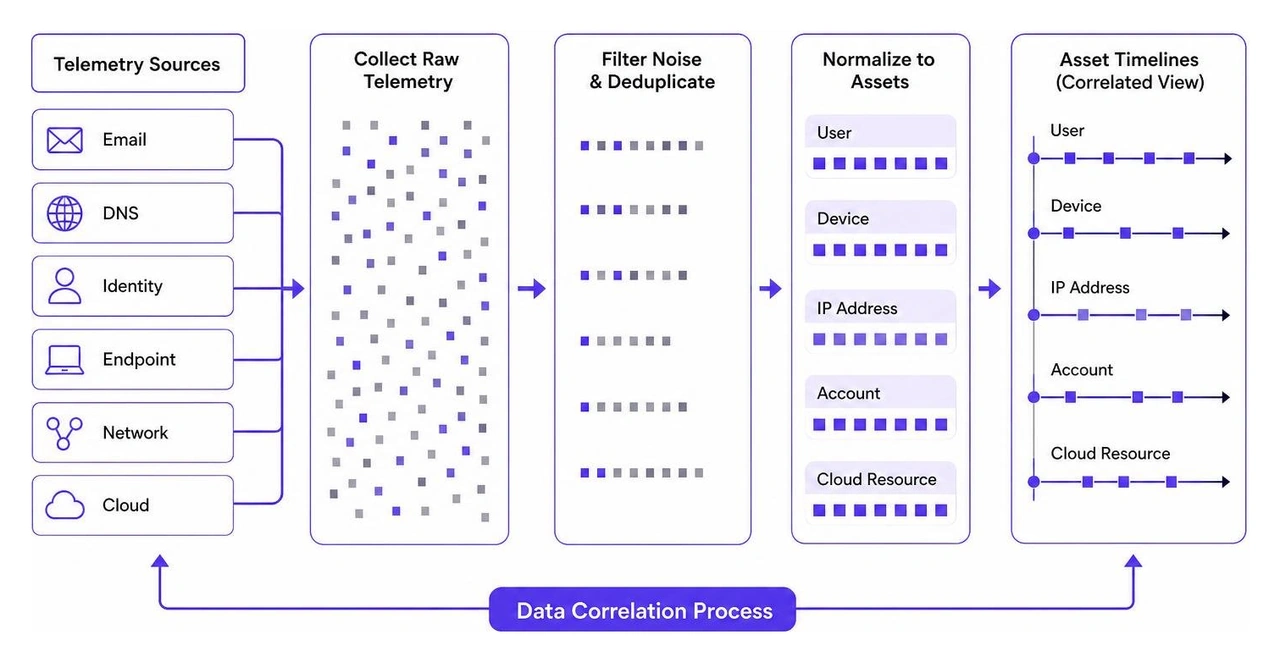
Unify your security with an XDR cybersecurity platform that correlates endpoint, network, and cloud threats for faster, managed response.
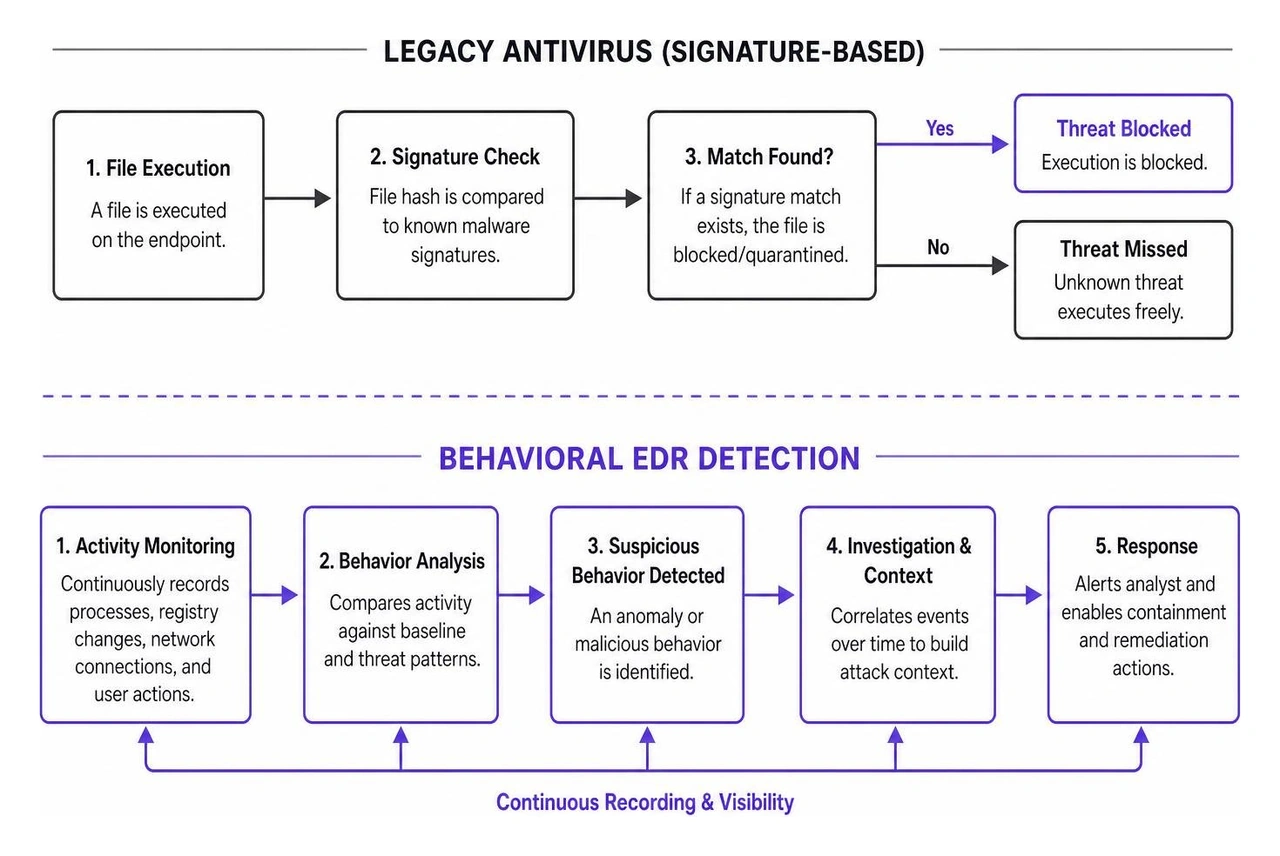
Compare EDR, XDR, and MDR solutions in this guide to endpoint detection & response, featuring WhiteDog's unified platform with 24/7 SOC and incident response.
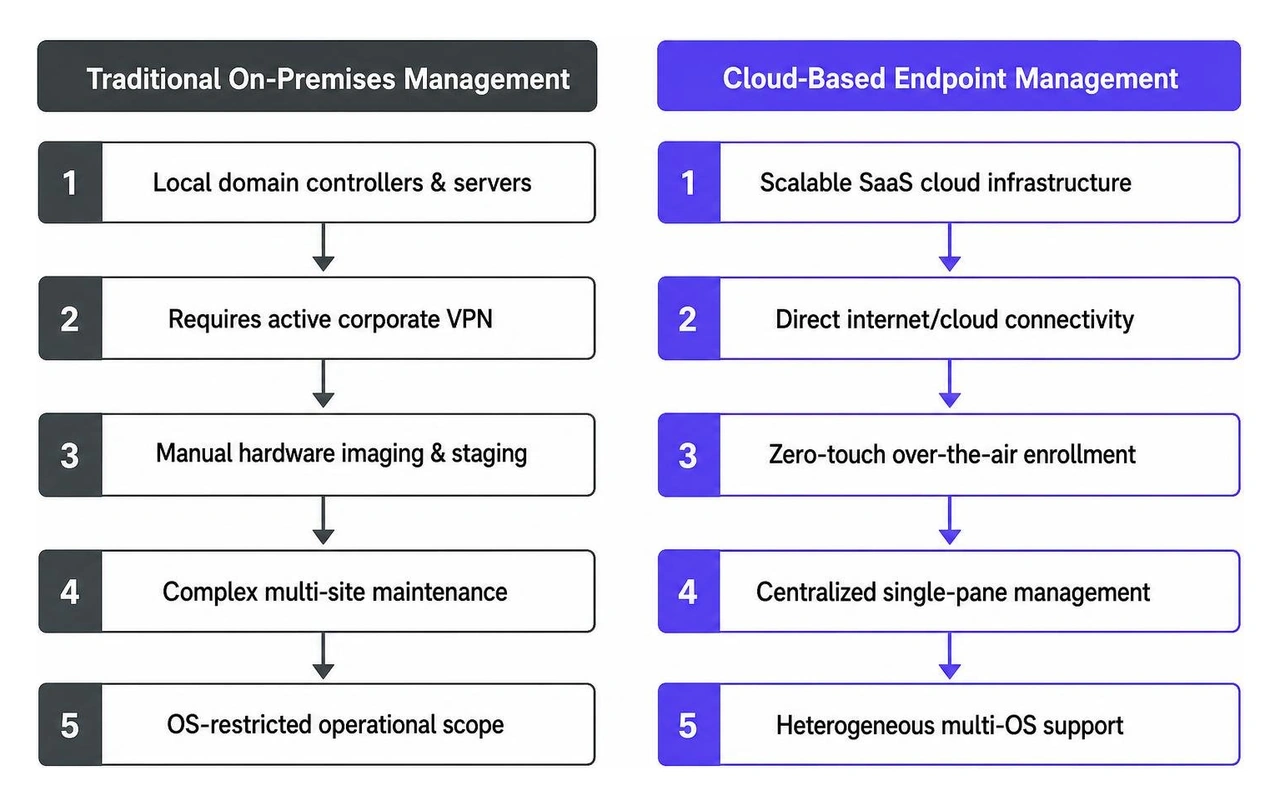
Compare cloud based endpoint management options with this checklist covering security, remote workforce support, and operational efficiency.

Compare MSP MDR detection services to reduce dwell time and boost efficiency with a unified 24/7 SOC platform.