Cybersecurity
August 28, 2026
Learn penetration testing basics: ethical hacking methods, black-box scoping, and 7-phase workflows to reduce risk before attackers strike.
For enterprise IT and security leaders, N-SOC means a next-generation Security Operations Center: a modern, managed security operations capability built to detect, investigate, and respond to threats faster than traditional SOC models.
That distinction matters in 2026. Threat actors move faster, attack surfaces span endpoints, identities, SaaS tools, cloud workloads, and networks, and internal security teams are under constant pressure to do more with less.
A modern N-SOC brings these moving parts into one operational model. Instead of treating logs, endpoint alerts, identity signals, and cloud events as separate problems, it centralizes telemetry, correlates related activity, prioritizes incidents, and enables rapid human-led response.
I'm Shahin Pirooz, technology executive at WhiteDog Cyber, and I've spent over two decades building managed security and cloud services — including the kind of N-SOC architectures that help MSPs and enterprise teams cut through complexity and stay ahead of threats. In this guide, I'll walk you through what N-SOC means in cybersecurity, how it differs from legacy SOC models, and how it supports modern managed detection and response.
In cybersecurity, N-SOC stands for Next-Generation Security Operations Center. It represents the evolution of traditional SOC operations from reactive alert monitoring into unified, intelligence-led threat detection and response.
Traditional Security Operations Centers were often built around legacy SIEM platforms, generating thousands of uncontextualized alerts each day. Analysts spent most of their time chasing false positives, moving between disconnected tools, and manually piecing together what happened across endpoints, users, cloud systems, and networks.
A modern N-SOC changes that operating model. It ingests raw telemetry from across the environment, deduplicates repeated events, normalizes activity against specific assets and identities, and correlates related signals into a single security timeline.
| N-SOC Capability | Cybersecurity Function | Why It Matters |
|---|---|---|
| Unified telemetry | Collects endpoint, identity, network, SaaS, and cloud signals | Reduces blind spots across the attack surface |
| Automated normalization | Filters, deduplicates, and enriches noisy events | Cuts analyst fatigue and speeds investigation |
| Threat correlation | Connects related alerts into incident narratives | Helps teams understand full attack chains faster |
| 24/7 monitoring | Provides continuous analyst coverage | Ensures threats are reviewed and escalated quickly |
| Active response | Supports containment actions such as host isolation or token revocation | Reduces dwell time and limits business impact |
| Threat hunting | Proactively searches for suspicious behavior and hidden compromise | Finds activity that static rules may miss |
A traditional SOC often relies on alert queues, static detection rules, and manual investigation. That model can still identify known threats, but it struggles when attackers use stolen credentials, legitimate administrative tools, or multi-stage techniques that appear harmless when each event is viewed in isolation.
An N-SOC shifts the focus from simple log storage to unified visibility, automated telemetry correlation, and active threat mitigation. Instead of forcing human analysts to sift through disconnected logs, an N-SOC builds a contextual view of the incident: what asset was affected, which identity was involved, what changed, and what action should happen next.
Combined with robust MDR in Cyber Security services, an N-SOC provides around-the-clock detection, proactive threat hunting, and rapid incident containment to drastically lower enterprise risk.
For MSPs, an N-SOC helps standardize security operations across multiple client environments without forcing every customer into the same tool stack. For enterprise teams, it provides the operational maturity needed to manage modern threats without overwhelming internal staff.
The result is a more resilient security program: fewer disconnected alerts, faster triage, clearer incident ownership, and stronger containment when suspicious activity appears.
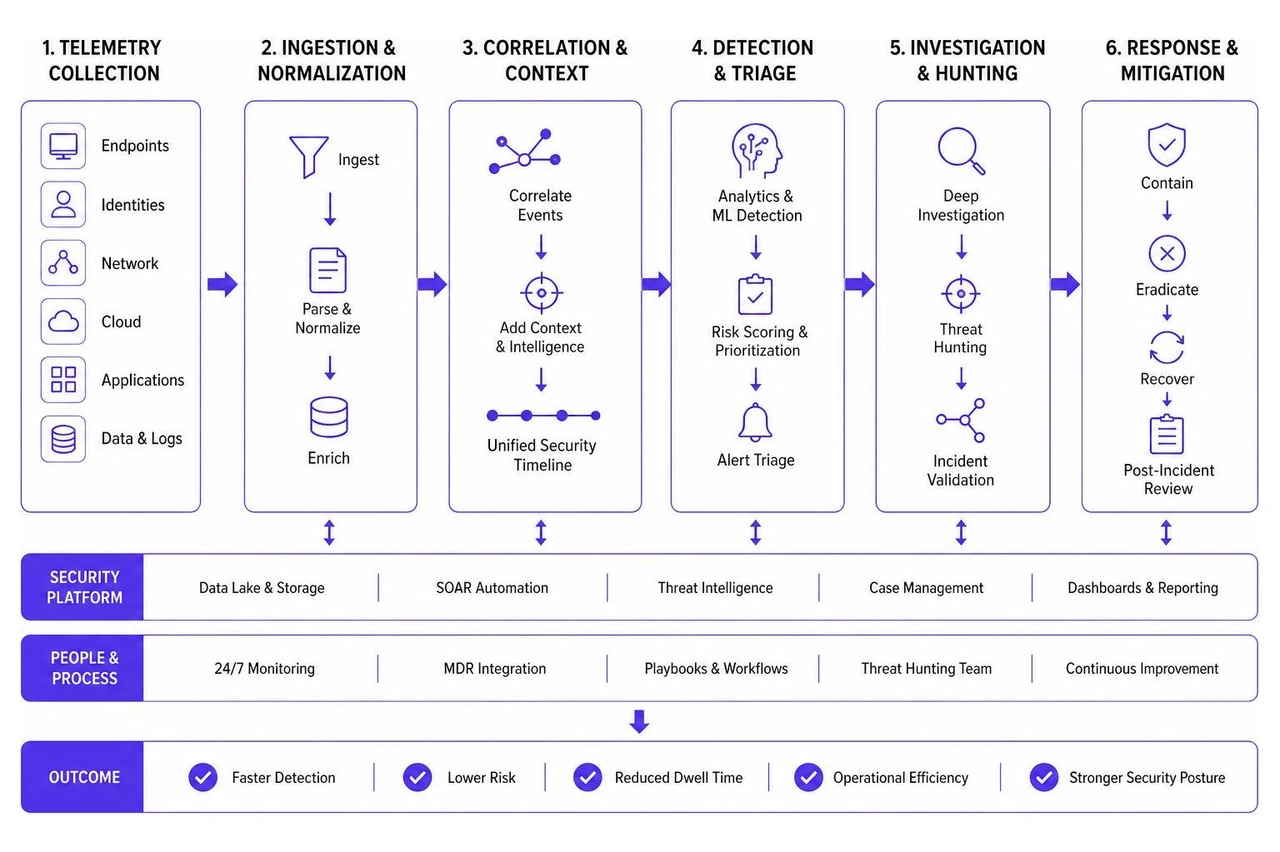
Building a resilient enterprise security posture requires moving beyond fragmented point solutions. A modern n-SOC architecture establishes a centralized, multi-layered threat detection framework designed for complete operational efficiency.
Rather than overloading security analysts with unverified alerts, an n-SOC transforms massive volumes of raw security telemetry into actionable, prioritized response actions.
To deliver reliable defense, an n-SOC relies on two fundamental architecture pillars: comprehensive telemetry normalization and a single unified security timeline.
Enterprise infrastructures generate millions of security events every day across endpoints, identity providers, firewalls, and cloud platforms. Collecting raw logs is step one, but raw data alone creates massive administrative noise.
An advanced n-SOC ingests raw logs and telemetry streams from across your entire environment. It then filters, deduplicates, and normalizes those events against specific digital assets.
By enriching normalized data with real-time threat intelligence, the platform distinguishes routine system behavior from true adversary activity. Why does this matter? Because plain alert context is rarely sufficient on its own. As detailed in our guide on Why Alert Enrichment Isn't Enough, enrichment must be tied directly to dynamic asset correlation and behavioral analysis to reveal true attack patterns.
One of the biggest obstacles facing modern security teams is tool sprawl. When security operators must jump between separate consoles for EDR, identity monitoring, email filtering, and cloud logging, response times slow down drastically.
An n-SOC framework eliminates fragmented dashboards by consolidating all cross-stack telemetry into a single, correlated security timeline. When an incident occurs, analysts see the complete kill chain—from initial access credential abuse to lateral movement and endpoint execution—on one screen.
This consolidated visibility slashes dwell time, reduces false positives, and enables security teams operating a 24x7 SOC for MSPs to isolate compromised hosts before lateral movement occurs. To explore how human expertise combines with automation to streamline operations, read our analysis on AI in the SOC: What's Real, What's Hype, and What's Next.
Selecting the right operating model for your n-SOC depends on your organization's internal resources, security maturity, and operational requirements. Organizations typically evaluate three primary managed security offerings: Open XDR, Managed Detection and Response (MDR), and our top-tier offering, Delta Detection & Response (DDR). Incident response (IR) is built-in and included across all three models: MDR, XDR, and DDR.

Understanding the distinction between Open XDR and MDR helps IT leaders align security investments with their team's operational capabilities.
Organizations seeking end-to-end security management without adding internal headcount frequently partner with a provider offering an MSP SOC as Service to handle monitoring and active containment around the clock.
At WhiteDog, we take managed security a step further through our top-tier offering: Delta Detection & Response (DDR). Standard MDR models often struggle when sophisticated attackers use legitimate administrative tools (living-off-the-land techniques) that bypass signature-based rules.
DDR leverages our n-SOC platform architecture to track continuous behavioral baseline changes across your environment—detecting subtle "deltas" in system behavior, identity access, and network traffic.
Key benefits of our unified n-SOC platform model include:
To learn more about how continuous behavioral tracking protects your assets, explore our guide Introducing Delta Detection & Response and see how our 247 Threat Response Services safeguard modern enterprises.
In cybersecurity, n-SOC stands for Next-Generation Security Operations Center. It refers to a modern security operations model that unifies telemetry, threat detection, analyst triage, and response across endpoints, identities, cloud systems, SaaS tools, and networks.
No. A traditional SOC often centers on monitoring alerts from separate tools and manually investigating each queue. An n-SOC is designed to correlate signals across the full environment, reduce duplicate or low-value alerts, and give analysts a clearer incident timeline so they can respond faster.
An n-SOC reduces alert fatigue by filtering routine noise, deduplicating repeated events, enriching alerts with asset and identity context, and grouping related activity into a smaller number of high-confidence incidents. Instead of reviewing thousands of disconnected notifications, analysts can focus on the events most likely to represent real risk.
MSPs, MSSPs, and enterprise security teams benefit most when they need 24/7 monitoring, faster triage, and consistent incident response across complex environments. For MSPs especially, an n-SOC can standardize security operations across multiple client stacks without forcing every customer into the same toolset.
WhiteDog Cyber uses the n-SOC model to support unified cybersecurity operations, proactive threat hunting, managed detection and response, and included incident response. That approach helps partners reduce tool sprawl, improve visibility, and respond to threats quickly without adding hidden response fees.

For cybersecurity leaders, N-SOC is more than another acronym. It describes the next evolution of security operations: unified visibility, intelligent telemetry processing, continuous monitoring, and immediate human response when threats appear.
Legacy security models built on unmanaged log collection and fragmented point tools can no longer keep up with modern attack speeds. Building a modern, resilient enterprise defense requires centralized security timelines, proactive threat hunting, and incident response that can move as quickly as the attacker.
At WhiteDog Cyber, we empower MSPs and enterprise leaders with an all-in-one unified cybersecurity platform backed by continuous 24/7 security operations, proactive threat hunting, and complete incident remediation. With our 30-day onboarding guarantee and zero hidden fees, we help you eliminate tool sprawl, drastically reduce threat dwell times, and protect your business with confidence.
Ready to transform your security operations? Learn more about WhiteDog's Unified Cybersecurity Platform today.

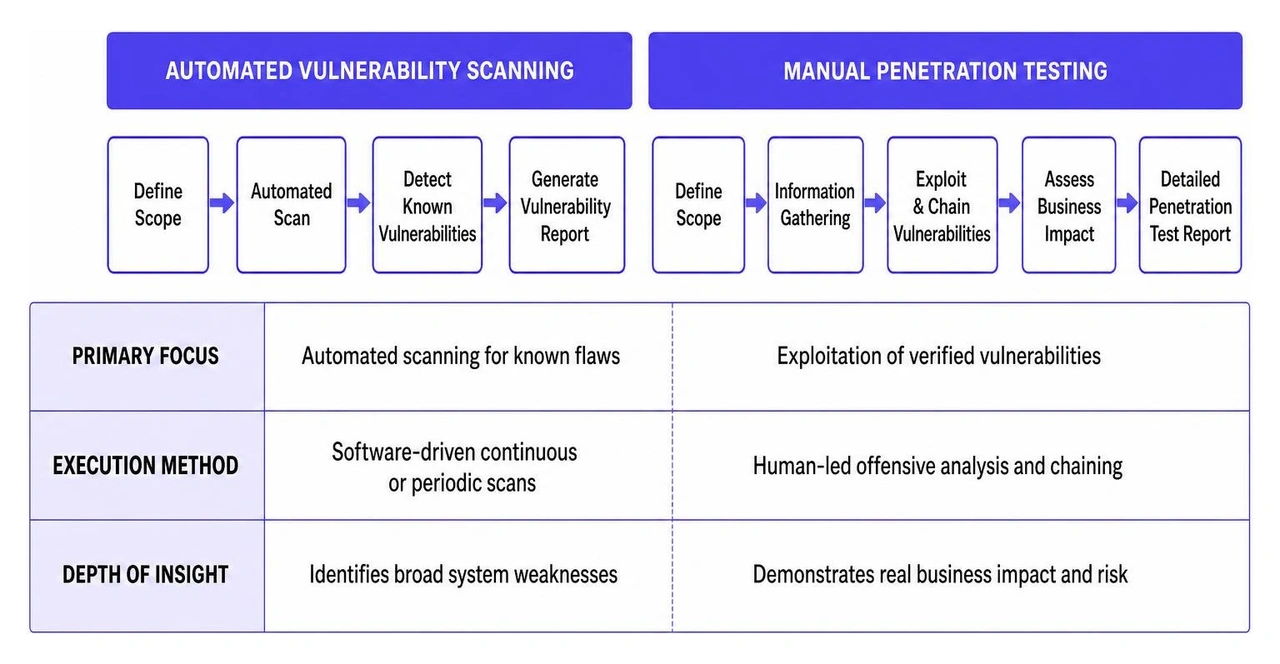
Learn penetration testing basics: ethical hacking methods, black-box scoping, and 7-phase workflows to reduce risk before attackers strike.

Learn how XDR risk reduction eliminates blind spots across endpoints, identity, and cloud to slash detection time and stop attacks faster.

Learn how AI driven threat detection predicts and stops attacks in minutes, with autonomous response across hybrid environments.
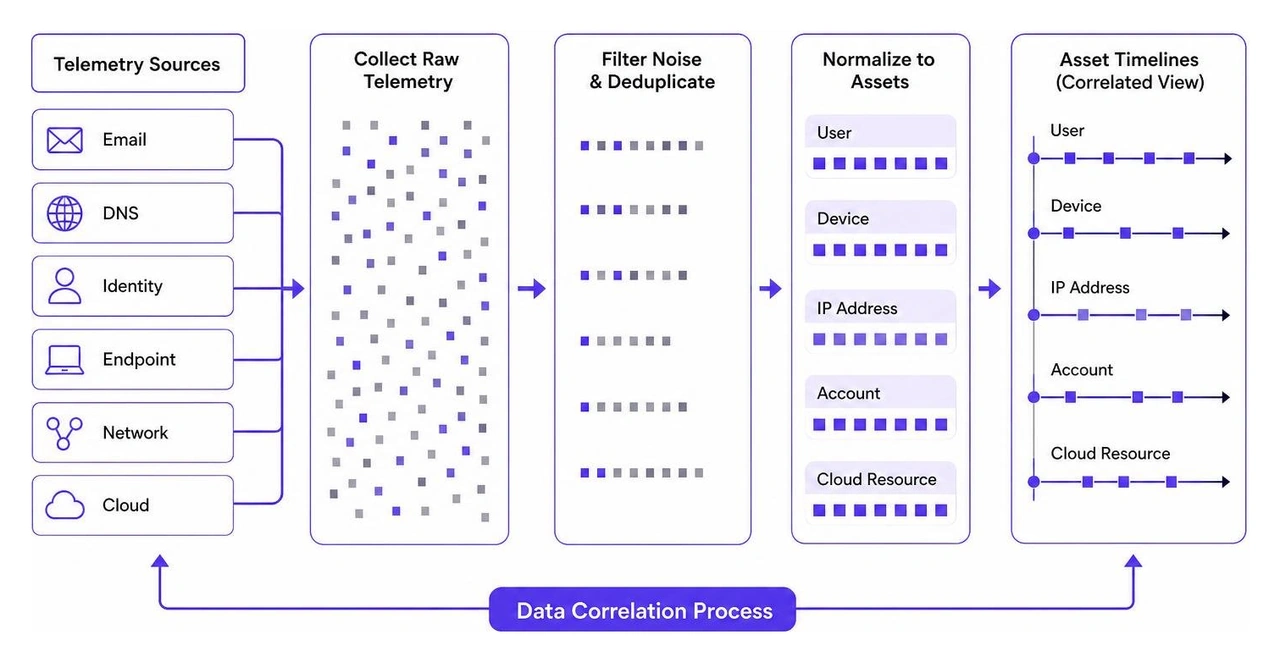
Unify your security with an XDR cybersecurity platform that correlates endpoint, network, and cloud threats for faster, managed response.
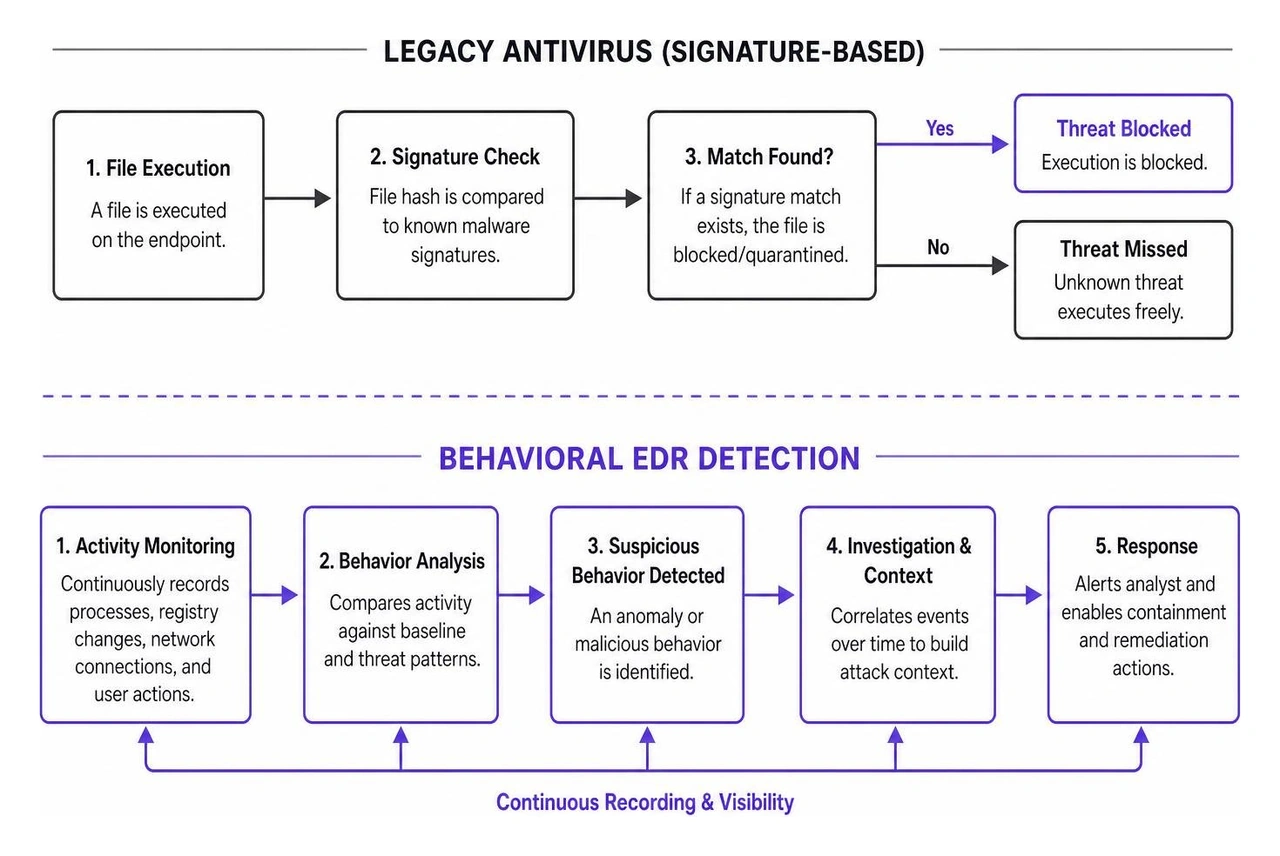
Compare EDR, XDR, and MDR solutions in this guide to endpoint detection & response, featuring WhiteDog's unified platform with 24/7 SOC and incident response.
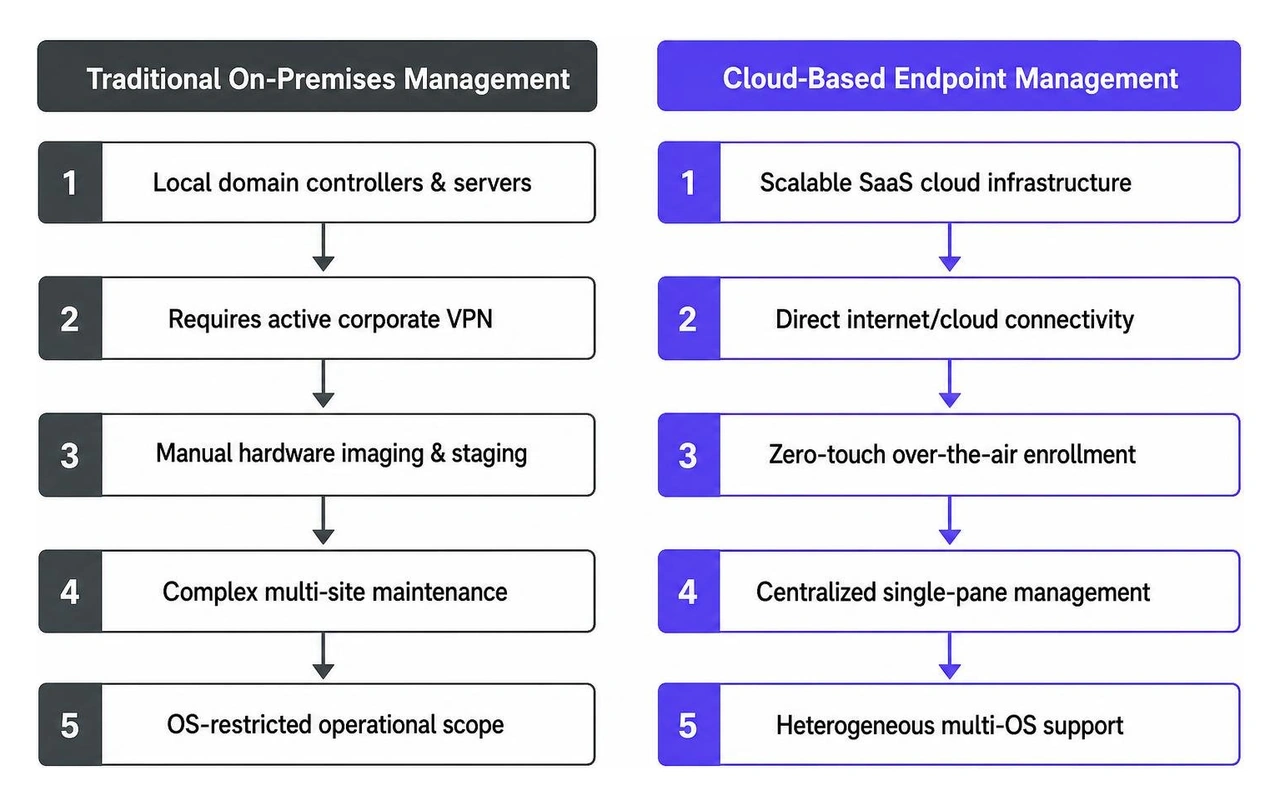
Compare cloud based endpoint management options with this checklist covering security, remote workforce support, and operational efficiency.