Cybersecurity
August 14, 2026
Compare MSP MDR detection services to reduce dwell time and boost efficiency with a unified 24/7 SOC platform.
Internet threat protection refers to the layered set of technologies, policies, and processes that defend users, networks, and data from cyberattacks originating online. Here is a quick breakdown of what it covers:
| Layer | What It Does | Example Technologies |
|---|---|---|
| Perimeter defense | Blocks threats at the network edge | NGFW, IPS |
| Endpoint protection | Secures devices from malware and exploits | EDR, AMP |
| Identity and access | Verifies users before granting access | MFA, Zero Trust |
| Threat intelligence | Turns unknown threats into known ones | CTI feeds, SIEM |
| DNS and web filtering | Blocks malicious domains before connection | DNS filtering, URL filtering |
| Incident response | Detects, contains, and recovers from breaches | Included in MDR, XDR, and DDR |
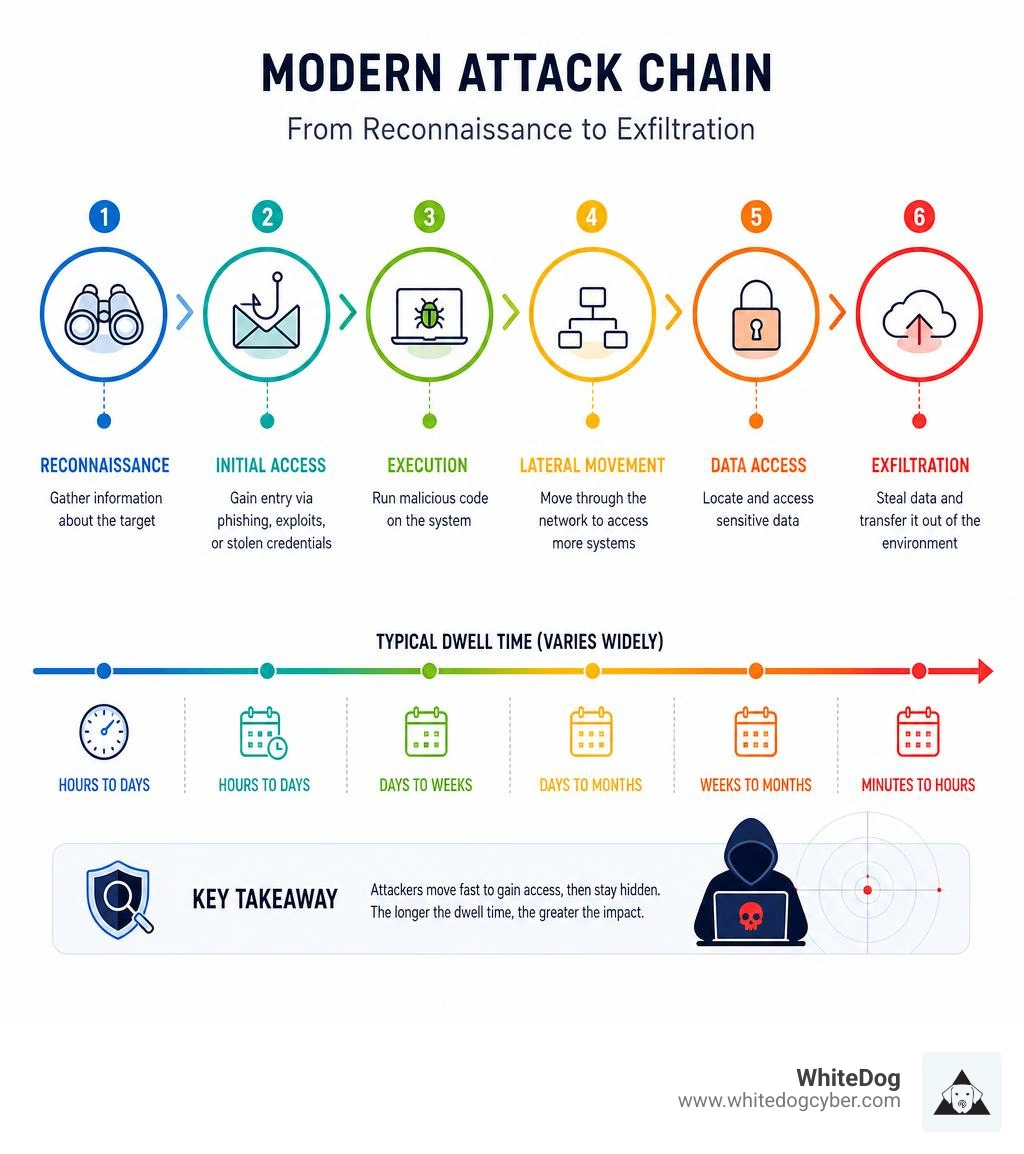
Effective internet threat protection is not a single product. It is a coordinated strategy that addresses every stage of a cyberattack — from initial compromise to lateral movement to data exfiltration.
Cyberspace is uniquely difficult to secure. Malicious actors can operate from anywhere in the world. Threats hide inside encrypted traffic. Ransomware now targets hospitals, schools, and critical infrastructure. And the numbers are stark: 86% of threats hide in encrypted traffic that traditional firewalls cannot inspect at scale. 56% of enterprises were hit by a VPN-related attack in 2023 alone. IoT and OT attacks surged 400% in the past year.
These are not hypothetical risks. They are the everyday reality facing IT leaders, MSPs, and security teams right now.
The challenge is not just stopping attacks. It is doing so without drowning in tool alerts, burning out your team, or grinding network performance to a halt.
This guide walks through how modern internet threat protection works, what the core technologies are, and how organizations can build a defense that is both effective and operationally sustainable.
I am Shahin Pirooz, a senior cybersecurity executive with over 20 years building managed security and cloud services, and internet threat protection sits at the center of everything I have spent my career working on. I will share the frameworks and strategies that actually work for enterprise teams and MSPs managing complex security environments at scale.
Internet threat protection glossary:
The internet was built for connectivity, not security. In fact, as we often remind our partners, The Internet Was Never Meant to Be Secure. It was designed as an open trust network for research institutions, meaning security protocols had to be bolted on after the fact. Over the years, this structural foundation has made defending enterprise networks an uphill battle.
As we navigate May 2026, the complexity of modern networks has grown exponentially. Organizations no longer operate within a neatly defined physical perimeter. The rapid adoption of hybrid work, multicloud environments, and edge computing has expanded the attack surface beyond recognition. Today, global malicious actors—ranging from financially motivated ransomware syndicates to state-sponsored advanced persistent threats (APTs)—exploit these complex network vulnerabilities around the clock.
Furthermore, the convergence of cyber networks with physical systems (such as IoT, smart buildings, and operational technology) has elevated the stakes. A breach is no longer just a digital headache; it can disrupt supply chains, halt manufacturing lines, or compromise physical safety. Understanding the sheer variety of Internet Security Threats is the first step toward building a defense that can withstand modern automated campaigns.
Traditional, perimeter-centric defenses are fundamentally broken. For decades, the standard playbook was simple: build a strong firewall "moat" around the corporate network and trust everything inside. Today, that model is not only obsolete—it is dangerous.
Several major shifts explain why legacy approaches fail to protect modern enterprises:
In this environment, IT leaders must adopt a shift in mindset: Prepare to Be Hacked. Assuming that your outer defenses will block 100% of incoming threats is a recipe for disaster. When organizations fail to plan for the inevitability of an intrusion, they fall victim to the devastating cycle of Breached and Vulnerable: The Cycle of Repeat Attacks. True internet threat protection is designed around the reality of compromise, focusing on rapid containment, continuous verification, and drastically reducing dwell time.
To build an effective defense, we must understand how modern adversaries operate. Attackers do not rely on a single exploit; they use multi-stage campaigns designed to bypass disparate security tools.

Here are the primary threat vectors that organizations must defend against:
Because no single security tool can stop every attack vector, a resilient security posture relies on a defense-in-depth model. If one layer fails, another must be in place to catch the threat. This is why understanding the Anatomy of a Cyber Attack: Why Layered Protection Matters is so critical for modern IT leaders.
A strong security posture begins with fundamental cyber hygiene. The Cybersecurity and Infrastructure Security Agency (CISA) and other leading authorities emphasize several non-negotiable best practices, including guidance reflected in CISA's Cross-Sector Cybersecurity Performance Goals:
Implementing these practices reduces the low-hanging fruit for cybercriminals, but protecting enterprise networks requires combining these habits with advanced technical controls. This is Why a Layered Defense Is Critical to surviving in today's threat landscape.
To build an enterprise-grade threat prevention architecture, several core technologies must work in unison:
Deploying these technologies in silos, however, leads to management complexity. Leading security architectures leverage advanced integrations to orchestrate inline threat blocking across the entire environment, ensuring that threat data is shared instantly across all security controls.
Threat intelligence transforms security from a reactive struggle into a proactive defense. By gathering, analyzing, and applying global threat data, organizations can anticipate attacker behaviors and block emerging campaigns before they strike.
Threat intelligence is categorized into three distinct operational levels:
Integrating real-time threat intelligence feeds allows security tools to dynamically update their signatures and rulesets, protecting the enterprise from the latest zero-day exploits and malware variants.
One of the biggest problems facing enterprise security teams is "tool sprawl." The average enterprise runs dozens of standalone security tools, each generating its own stream of alerts. This creates a fragmented view of the environment, leading to alert fatigue and missed detections. Rather than a disruptive "rip and replace" approach, modern security strategies focus on modular integration—connecting and enhancing your existing tools to build a unified defense.
When a sophisticated attack occurs, the indicators are often scattered across multiple logs: an unusual login on an identity provider, a suspicious PowerShell script on an endpoint, and an encrypted outbound connection at the network edge. In a siloed environment, these events look like minor, unrelated anomalies.
This is where a unified cybersecurity platform changes the game. By collecting raw telemetry from across your entire infrastructure—endpoints, networks, cloud workloads, and identity providers—the platform filters out the noise, deduplicates repetitive alerts, and normalizes data against specific assets. It then enriches this data with global threat intelligence to produce a single, correlated security timeline.
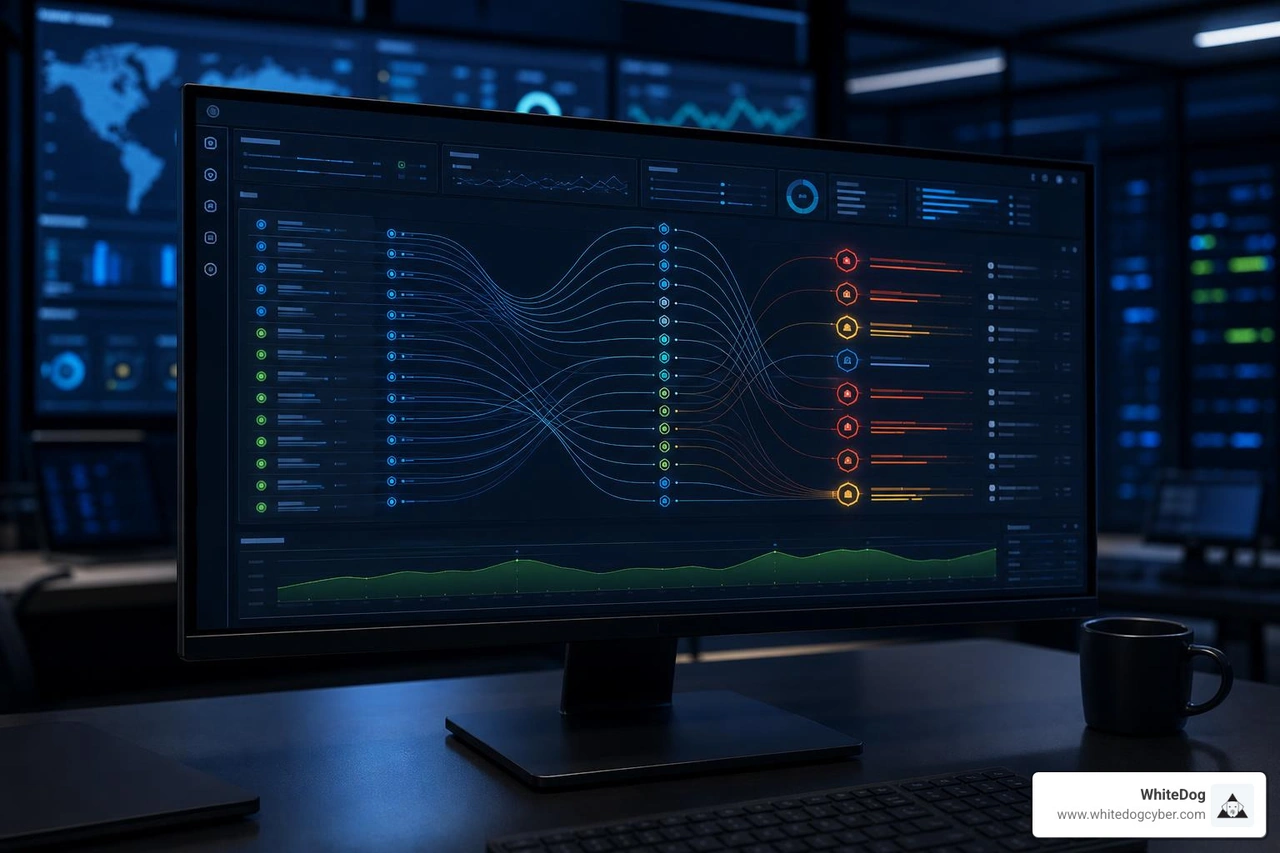
This operational approach drastically reduces dwell time—the period an attacker remains undetected inside your network. As we emphasize in our industry research, Attackers Will Get In: Speed Is Your Defense. By consolidating your security stack into a correlated timeline, your security operations center (SOC) can immediately identify the root cause of an incident and execute rapid, coordinated containment.
A common concern for IT leaders is that robust threat prevention—particularly deep packet inspection and decryption—will slow down network performance and impact user experience. To avoid this, organizations must move away from legacy hardware appliances and adopt modern, cloud-native architectures.
Using a cloud-native proxy architecture allows for full inline TLS/SSL inspection at scale, leveraging global points of presence to secure remote and mobile users without backhauling traffic to a central data center. Combined with smart network segmentation, organizations can isolate sensitive workloads and prevent lateral movement without introducing latency.
| Feature | Legacy Perimeter Security | Modern Zero-Trust Threat Prevention |
|---|---|---|
| Architecture | Hardware-bound, centralized | Cloud-native, distributed proxy |
| Inspection Capability | Limited SSL/TLS decryption | Inline decryption at scale |
| Access Control | IP- and network-based | Identity- and device-posture-based |
| User Experience | Latency-heavy VPN backhauling | Direct-to-cloud, low-latency pathing |
| Segmentation | Coarse, static VLANs | Dynamic microsegmentation |
Traditional firewalls operate at the network layer, filtering traffic based on simple rules like IP addresses, ports, and protocols. Modern threat prevention platforms operate at the application layer, using deep packet inspection, inline decryption, behavioral heuristics, and machine learning to identify and block malicious payloads, zero-day exploits, and unauthorized applications in real time.
Zero Trust is the strategic framework, while threat prevention provides the technical enforcement. Zero Trust establishes the principle of "never trust, always verify," requiring continuous authentication of users and devices under least-privilege access. Threat prevention tools inspect the actual data payload of those verified connections, ensuring that even authenticated users cannot accidentally transmit malware or exfiltrate sensitive data.
Because the threat landscape changes within minutes, static signatures are no longer enough. Real-time threat intelligence continuously feeds security tools with updated indicators of compromise (IOCs), threat actor tactics, and zero-day signatures. This allows organizations to proactively adjust their defenses and block active, global campaigns before they reach their internal networks.
Securing a modern, distributed enterprise against sophisticated cyber threats requires moving past legacy perimeter models. True internet threat protection demands a coordinated, layered defense that inspects all traffic, continuously verifies identities, and leverages real-time global intelligence.
At WhiteDog Cyber, we deliver a co-managed, white-label cybersecurity platform designed specifically to eliminate tool sprawl and operationalize your defense through modular integration, avoiding any costly "rip and replace" of your existing security investments. Our curated security stack integrates best-in-class tools through advanced correlation, all backed by our 24/7 Security Operations Center (SOC) that continuously investigates, triages, and responds to threats.
Whether you are looking for unified visibility and cross-layered detection through our Open XDR framework, or comprehensive, fully managed threat hunting via our top-tier Delta Detection & Response (DDR) offering, we help you reduce risk, improve operational efficiency, and slash attacker dwell time. Crucially, incident response (IR) is fully included across all of our MDR, XDR, and DDR offerings to ensure seamless protection when you need it most.
Ready to simplify your security stack and strengthen your defenses? Explore our Unified Cybersecurity Platform and see how we can secure your organization today.


Compare MSP MDR detection services to reduce dwell time and boost efficiency with a unified 24/7 SOC platform.
Compare MSP MDR platform architecture vs. tool sprawl to reduce risk, improve detection, and scale your security operations.

The Ultimate Guide to Cybersecurity for Small Business - Learn about cyber security for small business

Beginner's Guide to IoT DDoS Risks and Security - Learn about internet of things ddos

An Essential Guide to Understanding n-Soc Meaning and Its Applications - Learn about n-soc

For MSPs and security teams, the challenge is rarely a lack of tools. It is the opposite: too many disconnected systems producing too many alerts without enough context.