Cybersecurity
September 29, 2026
Master AWS Security Hub for unified cloud security posture, compliance automation, and streamlined SecOps workflows.
A white-label EDR solution lets managed service providers (MSPs) and MSSPs deliver fully branded endpoint detection and response services — without building the underlying technology themselves. Here's a quick breakdown of what that means in practice:
What is a white-label EDR solution?
Top reasons MSPs choose white-label EDR:
Running a security practice in 2026 is harder than it looks from the outside. Cyber threats move faster. Client expectations keep rising. And the pressure to deliver enterprise-grade protection — under your own brand, at a price SMBs will actually pay — can feel impossible to meet with a patchwork of tools and a lean team.
That's exactly where a white-label EDR solution changes the game. Instead of assembling a security stack from scratch, MSPs can partner with a platform provider to deliver sophisticated endpoint detection, behavioral analytics, and real-time response — all under their own brand. With the cybersecurity market on track to exceed $500 billion by 2030, the opportunity to offer these services is real. So is the risk of falling behind if you don't.
I'm Shahin Pirooz, a cybersecurity and managed services executive who has spent over two decades building the cloud and security models that MSPs rely on today — including the subscription and CSP frameworks that now underpin white-label security delivery. In this guide, I'll walk you through everything you need to evaluate, adopt, and grow a white-label EDR solution as a core part of your managed services portfolio.
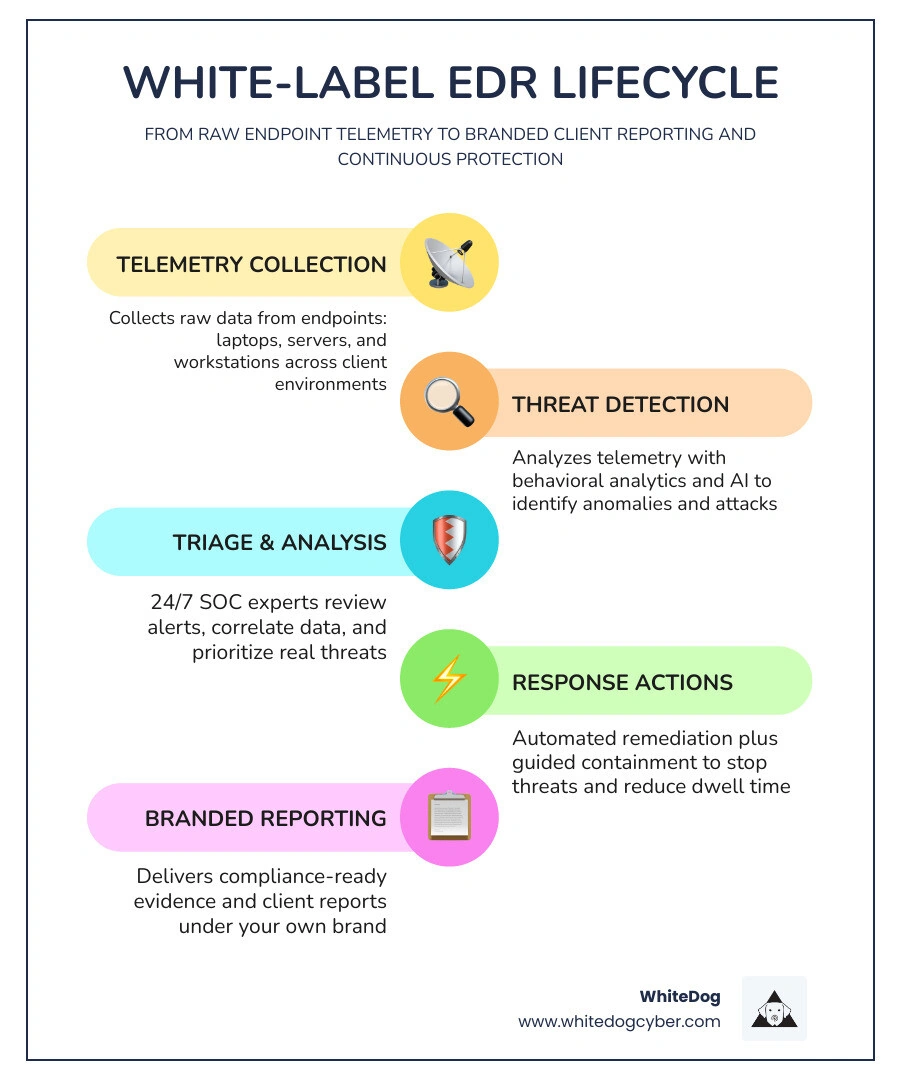
In the current landscape, an EDR Solution Meaning goes far beyond just "antivirus plus." It represents a continuous loop of monitoring, detection, and mitigation. For an MSP, a white-label EDR solution is the engine that allows you to provide this high-level security under your own banner.
By utilizing a MSP White Label Security Stack, you aren't just reselling a box; you are providing a curated experience. This involves the collection of raw telemetry from every endpoint—laptops, servers, and workstations—and feeding it into a sophisticated correlation engine. This telemetry is the "fuel" for MDR in Cyber Security, where the data is analyzed to find the needle in the haystack.
The beauty of the white-label model is its impact on your speed to market. Building a proprietary EDR platform requires years of research and millions in development costs. By the time you’ve built it, the threat landscape has already shifted. White-labeling allows you to skip the R&D phase entirely, gaining immediate access to deep learning models and behavioral analytics that have been trained on trillions of data points. This operational scalability is essential as the cybersecurity market is projected to exceed $500 billion by 2030. You need to be ready to capture that growth now, not in three years.
Traditional EDR is often "off-the-shelf." You buy a license, you install it, and the client knows exactly which vendor is protecting them. If the client decides they don't like that vendor, they might decide they don't like you, either.
White-label EDR shifts the value proposition back to the MSP through several key differentiators:
The primary goal of any security professional is to reduce risk while maintaining operational efficiency. When you adopt a white-label approach, you are essentially "renting" a multi-million dollar security infrastructure.
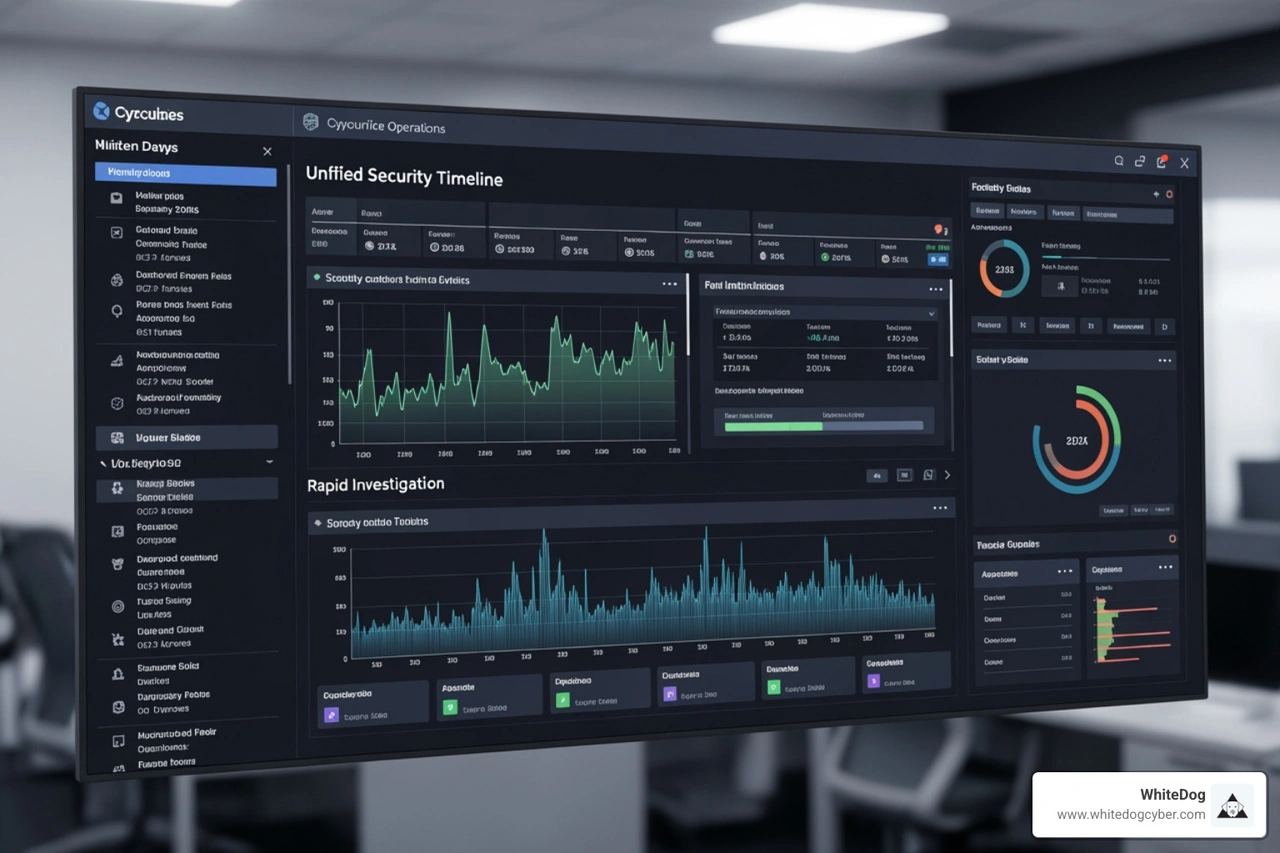
One of the most significant advantages is the ability to offer MSP SOC as Service. Most MSPs simply cannot afford to staff a 24/7 Security Operations Center with Tier 3 analysts. By using a white-label platform, those analysts become an extension of your team. This leads to a massive reduction in "dwell time"—the period an attacker spends in a network before being detected.
Furthermore, we provide a SOC Onboarding Guarantee to ensure that your transition into these advanced services is seamless. Instead of a "rip and replace" approach, we emphasize modular integration with your current stack, allowing you to be up and running in 30 days. This predictability allows you to focus on growing recurring revenue rather than troubleshooting integration issues.
Not all white-label platforms are created equal. When you are looking for a white-label edr solution, you need to look under the hood. A "pretty" dashboard is useless if the detection engine is outdated. Look for these core capabilities:
In 2026, we are seeing a shift from "tool sprawl" to a curated, integrated security stack. A white-label edr solution should be the cornerstone of this evolution. It’s no longer enough to just watch the endpoint; you need to correlate that data with network logs, cloud activity, and identity providers. This is the path toward XDR (Extended Detection and Response).

By using Proactive Incident Response Services, we move away from the "firefighter" mentality. Instead of just reacting to fires, we are constantly hunting for "smoke." This involves searching for Indicators of Compromise (IoCs) across your entire client base simultaneously. Because incident response is included in our MDR, XDR, and DDR offerings, there is no need for separate incident response retainers.
A major concern for many clients today is data sovereignty. They want to know where their data is stored and who has access to it. A high-quality white-label platform provides options for data residency and ensures that the MSP maintains control over the customer relationship. This helps protect clients from the ever-evolving array of Internet Security Threats while meeting strict governance standards.
For many MSP owners, the temptation to "build it ourselves" is strong. However, the Total Cost of Ownership (TCO) for an in-house SOC is often prohibitive. Let's look at the numbers:
| Expense Category | In-House SOC (24/7) | White-Label EDR Platform |
|---|---|---|
| Staffing | Minimum 8-12 analysts for 24/7 coverage | Included in platform subscription |
| Infrastructure | High (SIEM, storage, compute) | Zero (SaaS or Private Cloud) |
| Training & Retention | Constant (high turnover in security) | Managed by the partner |
| R&D / Threat Intel | Massive ongoing investment | Included in platform updates |
| Time to Market | 12 - 24 months | 30 days or less |
| Scalability | Linear (more clients = more staff) | Elastic (scales automatically) |
The talent shortage in cybersecurity is not going away. Finding and keeping qualified Tier 2 and Tier 3 analysts is a full-time job in itself. By leveraging a white-label partner, you shift that burden. This is particularly valuable for providers offering Cincinnati Managed Security Services or serving other regional hubs where local talent may be scarce or expensive. The ROI becomes clear when you realize you can deliver enterprise-grade security for a fraction of the cost of one full-time senior security engineer.
Compliance is a massive driver for cybersecurity sales in 2026. Whether your clients are in healthcare (HIPAA), finance (PCI-DSS), or government contracting (NIST/CMMC), they need proof that they are monitored.
A white-label EDR solution supports this by providing:
Flexibility is key for MSPs serving diverse industries. Most white-label EDR solutions offer several deployment models:
Yes, and it should! We advocate for an "Open XDR" approach. This means the white-label edr solution acts as a primary source of high-fidelity telemetry, but it can also ingest logs from other sources like firewalls, email gateways, and identity providers (like Okta or Azure AD).
By using an API-first design, the platform can:
The transition from a traditional MSP to a true security-first provider is a journey, but you don't have to walk it alone. At WhiteDog, we provide a Unified Cybersecurity Platform that is specifically designed to empower MSPs. Our co-managed, white-label approach means you keep your brand, your clients, and your margins, while we provide the heavy lifting.
With our 30-day onboarding guarantee, we remove the friction of adopting a white-label edr solution. Our 24/7 SOC doesn't just pass alerts to you; we investigate, triage, and respond. Incident response is fully included in our MDR, XDR, and top-tier Delta Detection & Response (DDR) offerings, ensuring you never need separate IR retainers. This represents the pinnacle of managed security, providing a fully correlated security timeline that stops threats in their tracks.
Don't let the complexity of modern cybersecurity hold your business back. Embrace the efficiency, branding, and protection that only a world-class white-label platform can provide.


Master AWS Security Hub for unified cloud security posture, compliance automation, and streamlined SecOps workflows.

Learn how AWS delta detection response stops cloud alert noise by tracking state drift and securing Delta Lake workloads.

Master modern threat detection with unified visibility across cloud, identity, and AI agents for faster response.

Learn how cloud security protects your data in 2026, covering shared responsibility, zero trust, and posture management to prevent breaches.

Verify AWS KMS FIPS compliance with this step-by-step guide covering FIPS 140-3 HSMs, endpoints, and auditing for regulatory alignment.

Navigate security compliance requirements across ISO 27001, SOC 2, and GDPR with a strategic blueprint for sustainable compliance management.