
Cybersecurity
September 26, 2026
Learn how AWS delta detection response stops cloud alert noise by tracking state drift and securing Delta Lake workloads.
Cyber security services for companies are no longer optional — they are a core business function. Here is a quick overview of what they include and who they are for:
What cyber security services for companies typically include:
Who needs them most:
The threat landscape has shifted dramatically. More than 47% of organizations now have a policy to pay a ransom — up 13% from the previous year. Meanwhile, only 35% of organizations build security into digital transformation from the start. A striking 18% only add security measures after a breach has already occurred.
That gap is exactly where attackers operate.
Antivirus and firewalls alone are no longer enough. Attackers are faster, smarter, and more automated than ever. Companies — and the MSPs that serve them — need a layered, managed approach that covers endpoints, identities, cloud workloads, and compliance, all tied together in a single correlated security operation.
That is what modern cyber security services deliver.
I'm Shahin Pirooz, technology executive and visionary at WhiteDog Cyber, with over 20 years of experience building Managed Security and Cloud Services — including pioneering some of the earliest subscription computing and MSP models in the market. My career has been focused on helping companies navigate exactly the challenge this guide addresses: delivering enterprise-grade cyber security services for companies without the overhead and complexity of doing it all alone.

In 2026, companies are no longer shopping for a single tool. They are evaluating an operating model.
Modern services usually combine:
The big shift is this: buyers increasingly want these capabilities connected, not scattered across ten dashboards and three vendors. Tool sprawl creates blind spots, duplicated alerts, and a lot of expensive confusion. No CIO has ever said, "What we really need is six more consoles."
For many organizations, MDR is the center of gravity. It brings together telemetry from endpoints, identities, cloud workloads, email, network controls, and sometimes SaaS platforms, then turns that noise into prioritized detections and response actions.
A modern 24/7 service should do more than forward alerts. It should:
That process is why a unified platform is so valuable. Instead of isolated alerts, teams get a single correlated timeline showing what happened, where it started, what else it touched, and what to do next. For broader background on how detection and response evolved, the MITRE ATT&CK framework is a useful external reference for understanding adversary behaviors and mapping defensive coverage.
If you want a deeper breakdown, see our guides on MDR in cyber security and 24x7 SOC for MSPs.
Technology is only half the story. The other half is direction.
A vCISO helps companies build governance, communicate risk to leadership, prioritize investments, and align security with business goals. That includes:
This is especially important for mid-market firms that need senior security leadership but do not need, or cannot justify, a full-time CISO.
Detection is critical, but resilience is broader than monitoring. Companies should also evaluate:
These services answer practical questions: What is exploitable? How fast can we contain an incident? Who makes decisions during a breach? Can we recover without improvising under pressure?
Our resources on Proactive Incident Response Services and Cybersecurity Incident Response Workflow go deeper into how readiness reduces disruption.
Outsourcing does not mean giving up control. It usually means gaining coverage, speed, and specialization.
Why the shift? Because the math is hard for internal teams:
At the same time, attackers are moving faster. And when over 47% of organizations have a ransom payment policy, it is clear many businesses still do not feel operationally ready. The better path is usually to improve detection, response, governance, and resilience before a crisis.
A fully in-house program can make sense for very large enterprises. But for many mid-market firms, it is slow to build and hard to scale.
Here is the practical comparison:
| Area | In-house team | Managed provider |
|---|---|---|
| Coverage | Often business hours plus on-call | True 24/7 operations |
| Hiring | Recruiting and retention burden | Team already in place |
| Tooling | Separate procurement and integration | Curated stack and integrations |
| Speed to launch | Can take months | Faster onboarding |
| Burnout risk | High for small teams | Shared operational load |
| Cost predictability | Variable staffing and tool spend | More structured service model |
The biggest hidden cost in-house is not just salaries. It is the operational drag of tuning tools, handling alert noise, and maintaining coverage during vacations, weekends, and turnover.
MSPs face a related challenge: clients expect enterprise-grade security, but margins and headcount are finite. White-label delivery helps MSPs expand security offerings without building a full SOC, IR team, and compliance bench internally.
That model works best when the provider offers:
A curated stack matters. Managing 2 to 3 trusted solutions per category is usually far better than juggling dozens of disconnected products. It reduces operational overhead and makes service quality more consistent.
For more on that approach, see MSP White Label Security Stack and MSP SOC as a Service.
This is where many buyers get stuck. They may own strong point tools but still lack operational clarity.
A unified platform does not have to rip and replace existing tools. In an open XDR model, the goal is visibility and detection across tools, not pretending one product solves everything. The platform should:
The result is a single correlated security timeline rather than isolated alerts from every product shouting for attention at once.
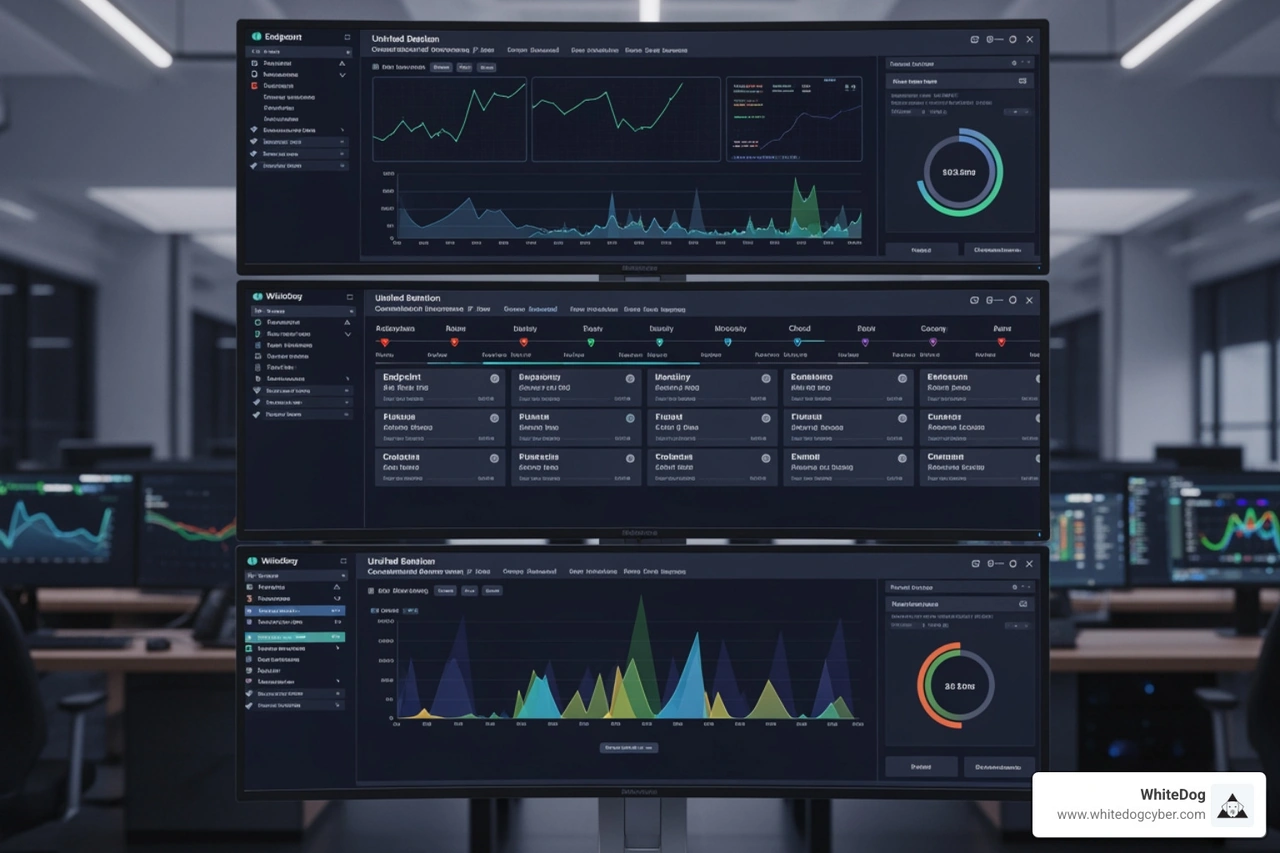
Many providers promise monitoring. Fewer deliver an operational model that is actually easy to buy, easy to onboard, and easy to live with.
The strongest services tend to differentiate through:
These terms overlap, so buyers should clarify exactly what is included.
A good provider should explain whether incident response is included, how escalation works, and what authority exists for containment actions. Our guide on EDR Solution Meaning helps clarify one of the most commonly confused pieces of the stack.
Compliance is no longer a side project. It influences sales cycles, cyber insurance, contract eligibility, and board reporting.
Providers should be able to support requirements such as:
That support often includes policy mapping, evidence collection, gap analysis, remediation plans, and audit preparation. For regulated sectors, this expertise can be as important as the monitoring service itself.
Before choosing a provider, we recommend asking:
Onboarding quality matters more than most buyers realize. Our SOC Onboarding Guarantee explains what a disciplined rollout should look like.
Good security programs are not built by buying random tools in a stressed mood. They are built through frameworks, prioritization, and continuous improvement.
The most useful models for companies today include:
The Cybersecurity Pyramid is helpful because it shows security as layers rather than isolated products. It lets us explain to executives where gaps exist and what should come next.
Typical layers include:
This framework is useful for both enterprise roadmaps and MSP client conversations because it ties recommendations to maturity, not product hype.
Framework mapping turns security work into evidence. That matters for audits, customer due diligence, and insurer renewals.
A mature provider should help map technical and administrative controls to:
This creates a more coherent program and reduces the scramble that often happens right before renewals or assessments.
The best roadmaps balance quick wins with structural improvements.
A practical 12-month plan usually includes:
The roadmap should measure outcomes such as coverage expansion, reduced alert noise, improved response times, and higher audit readiness.
AI is now a real part of security operations, but it is not magic glitter for dashboards. Used well, it helps teams move faster, correlate more data, and reduce noise. Used badly, it just creates faster confusion.
Modern SOC services use AI and automation for:
Some providers now describe agentic or autonomous SOC models, where AI handles more of the repetitive analysis and orchestration. That is useful, but human responders still matter for judgment, incident command, and business-context decisions.
A strong detection pipeline follows a disciplined flow:
That pipeline is how we reduce alert overload and produce action, not just activity.
Automation is excellent for:
Humans are still essential for:
In other words, automation is the accelerator. Human expertise is still the steering wheel.
When selecting a provider in 2026, buyers should look beyond today's endpoint alerts and ask how the service will evolve.
Key trends include:
Industry research continues to show that many AI initiatives are deployed faster than they are secured, and AI-related breaches often trace back to weak access controls. That reinforces a core truth: identity is now central to modern defense. For broader context, see our article on Internet Security Threats.
Pricing models vary, but buyers should focus less on the cheapest sticker and more on predictability, inclusions, and operational outcomes.
Common service approaches include:
The model affects how stable your spend will be. Common structures include charging by:
What matters most is understanding:
For many buyers, clearer packaging beats "cheap" every time.
ROI in security is not just about avoided catastrophe. It also shows up in operational efficiency and business enablement.
Useful metrics include:

The best outcomes are practical, not dramatic. Think fewer blind spots, faster triage, cleaner reporting, and more confidence during audits and incidents.
Enterprise teams should expect:
MSPs should expect:
At WhiteDog Cyber, we focus on that model: a unified, actively managed platform with integrated tools, 24x7 security operations, threat hunting, and incident response. We also keep onboarding simple with our 30-day guarantee and no added fees. For more, see Cincinnati Managed Security Services and our solutions.
For lean teams, we usually recommend starting with:
These services cover operational defense, strategic direction, and resilience without requiring a large internal bench.
Ask direct questions:
"24/7 monitoring" can mean very different things. Some models watch alerts after hours. True 24/7 support investigates and responds.
That depends on maturity, urgency, and internal capability.
A risk-based rollout often makes sense if:
A full-stack model is often better if:
The right answer is the one that improves coverage and response without creating more complexity.
The market for cyber security services for companies has matured quickly, and that is a good thing. Buyers now have access to services that combine 24/7 operations, strategic guidance, compliance support, and incident response in a much more integrated way than even a few years ago.
The smartest path is usually not more tools. It is better operations.
That means:
If you are evaluating providers, start with the outcomes you need: faster detection, faster response, cleaner compliance evidence, and less operational drag on your internal team.
If you want a unified cybersecurity platform built for MSPs and companies that need a curated, actively managed stack, explore WhiteDog Cyber solutions.


Learn how AWS delta detection response stops cloud alert noise by tracking state drift and securing Delta Lake workloads.

Master modern threat detection with unified visibility across cloud, identity, and AI agents for faster response.

Learn how cloud security protects your data in 2026, covering shared responsibility, zero trust, and posture management to prevent breaches.

Verify AWS KMS FIPS compliance with this step-by-step guide covering FIPS 140-3 HSMs, endpoints, and auditing for regulatory alignment.

Navigate security compliance requirements across ISO 27001, SOC 2, and GDPR with a strategic blueprint for sustainable compliance management.

Learn how AI phishing detection stops next-gen attacks that bypass traditional defenses, with practical capabilities to evaluate.